
$1.2 billion rare earth plant targets US magnet supply gap

Subscribe to our free newsletter today to keep up to date with the latest manufacturing news.
USA Rare Earth has broken ground on a $1.2 billion rare earth metal and magnet manufacturing facility in Blacksburg, South Carolina, as the US works to expand domestic capacity in one of the most concentrated parts of the global rare earth supply chain.
The company plans to build the 800,000-square-foot plant on a 124-acre site at Bailey Industrial Park in Cherokee County. It expects the project to create about 490 manufacturing jobs, with commissioning due to begin in 2028.
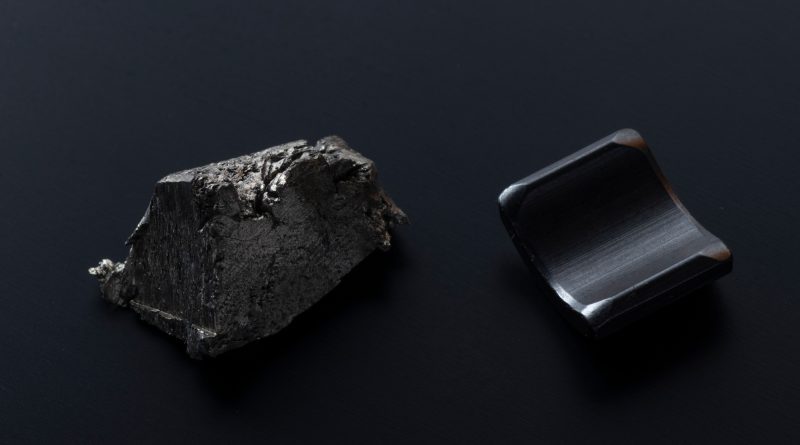
Once operational, USA Rare Earth is targeting annual production capacity of 6400 metric tons of sintered neodymium-iron-boron, or NdFeB, permanent magnets and 5000 metric tons of strip-cast rare earth metal and alloy.
The investment points to a wider change in US rare earth strategy. Much of the focus in recent years has been on securing mines and raw materials. A major supply constraint, however, remains further downstream, where rare earth materials must be separated, refined, converted into metals and alloys, then manufactured into high-performance magnets.
Global production becomes more concentrated at each of those stages.
The bigger rare earth gap sits beyond the mine
China accounted for about 60% of global mined production of magnet rare earths in 2024, according to the International Energy Agency. Its share rose to 91% in refining and 94% in sintered permanent magnet manufacturing.
Those figures show why higher mining output alone will not give the US or its allies a more diversified rare earth supply base.
Rare earth ores pass through several stages before becoming finished magnets. After mining and initial processing, individual rare earth elements must be separated. The resulting oxides are then refined into metals before being made into alloys or powders for magnet production.
Each stage requires its own equipment, technical skills, investment and customer base.
The IEA has identified magnet manufacturing as one of the main constraints on efforts to diversify supply. Projects announced outside China as of early 2026 represented about 18,000 metric tons of planned metal, alloy and finished magnet production on a rare earth content basis. That was only about one-third of projected diversified mining capacity.
Permanent magnets are also used across a wide range of industrial products. NdFeB magnets can be found in electric motors, wind turbines, robotics, aerospace equipment, defense systems, electronics and other advanced manufacturing applications.
Recent trade restrictions have shown how concentration at the magnet stage can affect manufacturers.
China introduced export controls covering seven heavy rare earth elements, related compounds and magnets in April 2025. The IEA reported that export volumes fell sharply in April and May. Some automakers outside China reduced production rates or temporarily stopped production as access to magnets tightened.
The episode showed that access to mined material does not prevent shortages when refining and magnet production remain concentrated elsewhere.
USA Rare Earth is building capacity across several stages
The Blacksburg project is part of USA Rare Earth’s wider plan to develop a more integrated rare earth supply chain.
The South Carolina operation will complement its existing magnet manufacturing plant in Stillwater, Oklahoma. USA Rare Earth commissioned the first commercial production line at Stillwater in March 2026.
Together with a planned expansion in Oklahoma, the company expects the two sites to provide 10,000 metric tons a year of domestic NdFeB magnet manufacturing capacity.
Its wider business also includes mining, processing, separation and metal production assets or projects in the US and overseas.
That structure reflects the complexity of rare earth production. Mines need processing capacity. Processing plants need downstream buyers. Magnet factories need reliable access to separated rare earth elements, metals and alloys.
USA Rare Earth said it considered nearly 275 potential locations before selecting Blacksburg. It cited South Carolina’s manufacturing workforce, power supply, transport infrastructure and proximity to customers and suppliers.
The site also places the project near the Interstate 85 manufacturing corridor, which supports large automotive and industrial supply chains across the Southeast.
South Carolina has attracted other investment in permanent magnets. e-VAC Magnetics previously announced plans for a magnet manufacturing plant in Sumter County, adding to the state’s role in the growing US rare earth manufacturing network.
Reaching commercial output will be the real test
The groundbreaking marks the start of construction, but planned capacity is not the same as commercial production.
The Blacksburg plant must still move through construction, equipment installation, commissioning and production ramp-up before its planned output becomes available to customers.
That distinction applies across the wider rare earth sector.
Governments and companies have announced new mines, processing plants and manufacturing facilities as they seek to reduce dependence on a small number of suppliers. The IEA, however, continues to identify a large gap between planned mining capacity and downstream production outside China.
Closing that gap will depend on whether projects can reach commercial scale and operate at costs customers can support.
It will also require better coordination between different parts of the supply chain. A magnet plant needs reliable metal and alloy supply. Those suppliers need separated rare earth oxides. Processing facilities, in turn, need secure sources of mined material.
The Blacksburg project is therefore part of a broader effort to build the industrial stages between a rare earth deposit and the finished components used by manufacturers.
If commissioning begins as planned in 2028, the facility will add capacity at one of the points where global supply remains heavily concentrated.
For the US rare earth industry, that is becoming an important measure of progress. The issue is no longer only how much material can be mined outside China. It is also how much can be processed, converted and manufactured into usable products within a more diversified supply chain.
Source
