
A legacy of precision weighing expertise meets future ambition as Adam Equipment rebrands and expands

With 50 years of expertise in the design and manufacture of high-quality precision scales and accessories, Adam Equipment has built a global presence through its weighing know-how and assembling a network of dealers. Although it has achieved remarkable growth since forming as a family business in 1972, the UK-based firm has big plans to continue its expansion – providing a range of sustainability-focused weighing scales and laboratory balances to clients all over the world.
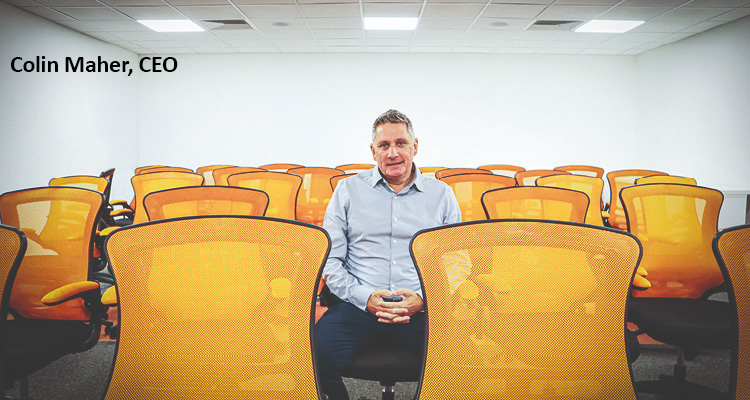
Founded by Alan Storey, the company began exporting Adam products early on, entering overseas markets and commencing manufacturing in China during the 2000s, which was the springboard for establishing international operations across the US, South Africa, Australia and Europe. Following its 2019 acquisition by Swedish group, Indutrade, Adam has entered a new phase of strategic development and today, the company generates around $17.5 million in global revenue. CEO Colin Maher describes Adam as ‘the Amazon of the weighing world’ and he sits down with Manufacturing Today to explain more about its five-year roadmap and forward-thinking brand refresh.
“We can deliver to customers within the next day,” Colin opens. “We have more stock globally than our competitors, in the locations that are required – that is our biggest strength.” Adam differentiates itself through a strict distribution-only model. “We don’t sell direct which is incredibly unique for a manufacturer,” he continues. “Everything we do is through distribution.” With over 2000 distributors worldwide, the company focuses on enabling partner success rather than competing for end customers – a strategy aligning closely with its operational strengths. This inventory-led model supports high-volume sales through catalog and online channels, such as RS Components, Amazon and Farnell.
Project 20 by 30
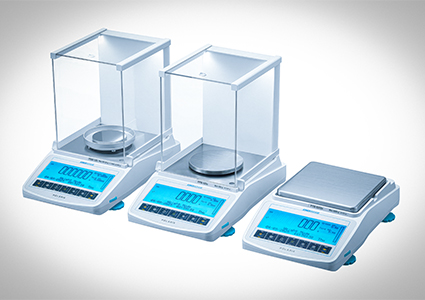
Since joining the business in July 2025, Colin introduced a five-year strategic plan labelled Project 20 by 30, targeting $8 million in additional revenue. “It’s a multi-channel approach,” he says. “You can’t rely on a single initiative – you have to pursue multiple actions if you want to grow a business and achieve your goal.” A central element to the roadmap is repositioning the company, including the launch of a new brand identity in May, which Colin says will replace its long-standing, outdated identity. “The highlight for me was changing the perception of the business. The logo was quite dated, for instance, so this is a considerable investment and a bold move to make.” At the same time, the company is significantly increasing its investment in product development, allocating ten percent growth to research and development. This began with the launch of a new range of analytical and precision balances at the start of 2026. This was a significant milestone, because it was the first all-new lab product launch by the company in over five years.
“We launched our Polaris balance range in January and we are expecting product launches to accelerate, with a long-term goal of introducing new solutions every three months,” notes Colin.
With an emphasis on strengthening its distribution network, the group’s strategy includes a new dealership program which introduces performance-based incentives and additional support mechanisms, alongside a Marketing Development Fund – allowing partners to invest in campaigns, exhibitions and promotional activity with financial backing from Adam. Additionally, it aims to address a major industry challenge: the shortage of skilled service engineers. “The difficulty of finding and recruiting service engineers is one of the biggest frustrations for our customers,” states Colin. “To tackle this, we’re launching the Adam Academy, which will provide structured training and certification, and a Service Network Agency will give distributors access to a shared pool of qualified engineers. I believe that if you make things easy for people, then they’re far more likely to do it!”
Adam is also integrating AI to improve efficiency and decision-making across the business. Applications include automating order processing, identifying fraudulent inquiries and optimizing lead allocation across distributors. “AI is capturing decades of technical knowledge from experienced engineers to create a searchable support system,” elaborates Colin. “It will analyze information and work out what the issue is, which is increasing our first-time fix rate and reducing downtime.”
Geographic expansion is another priority for the company, with targeted growth in Central and Eastern Europe while also strengthening its presence in Australia by expanding beyond Perth into Sydney. On the manufacturing side, it is investing in a larger, cutting-edge facility in Wuhan, China, to support increased production and bring more processes in-house. “The reason we manufacture in China is the same reason that Apple and Intel manufacture in China – the cost,” Colin discloses. “The quality of products out of China has improved over the last 20 years.” The new facility will enable capabilities such as CNC machining and injection molding, while maintaining competitive pricing for distributors. Beyond traditional weighing, Adam is shifting into inline inspection technologies, including checkweighers, metal detection and X-ray systems. “These systems are essential in food production, ensuring compliance and detecting contaminants. We want to make technologies affordable and accessible to smaller manufacturers, essentially leveling the playing field. By lowering costs, the company enables smaller suppliers to meet retailer standards and compete for major contracts.”
Despite its global reach, Adam maintains a lean structure and a strong culture of engagement. Employing around 160-170 staff, long tenure is a defining feature. “Five percent of employees have been here for more than 30 years,” concludes Colin. “That’s quite rare in an organization.” He also emphasizes transparency and employee involvement, where teams are actively encouraged to contribute ideas and suggest improvements – an inclusive approach that has supported the company’s transformation efforts and energized its workforce. “Everybody is tremendously excited to welcome the new brand,” he ends. “It’s not just about the logo – it’s also about new products and investing in other areas of the business. You must take chances sometimes and, right now, modernizing is the right thing for us to do.”
