
Aligning unparalleled passion with technical excellence, Dynamic Metals does whatever it takes to support its customers

For businesses operating in the most demanding industries, reliability starts with the quality of the materials behind every component. That’s where Dynamic Metals has built its stellar reputation. As one of the UK’s largest independent stockists of aerospace-grade metals, the company combines extensive industry expertise with a customer-focused approach, supplying high-performance materials to sectors across the UK, Europe, and worldwide – from aerospace to motorsport, power generation, and beyond.
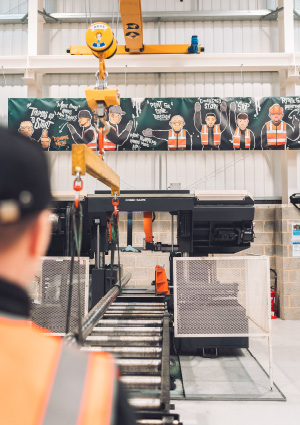
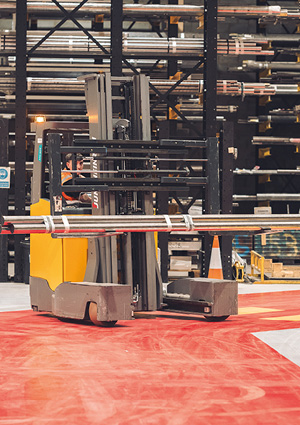
Headquartered in Leighton Buzzard, UK, Dynamic Metals operates from a strategically located 50,000-square-foot distribution center where offices and production work side by side to maximize efficiency and responsiveness. Supported by a dedicated Conversion Centre in Sheffield, positioned close to a well-established subcontractor network, the company is able to maintain exceptional flexibility, quality control, and rapid turnaround times. From titanium and stainless steels to nickel alloys, alloy steels, aluminum, and even hard-to-source exotic metals, Dynamic Metals delivers more than just materials. With no minimum order quantities, same-day or next-day delivery options, and sourcing exclusively from aerospace-approved mills, the company provides customers with confidence, precision, and service they can depend on.
In spite of its operational strengths, however, Dynamic Metals – like most UK metals distributors and manufacturers – is soon to be hit with an onslaught of unprecedented challenges ahead of new government legislation. From 1st July 2026, the UK Government will introduce major changes to steel import rules by significantly tightening tariff-free quotas on steel products that can be manufactured domestically. Under the new system, overall tariff-free import quotas will be reduced by 60 percent compared with the current steel safeguard measures, with some steel categories facing reductions of up to 90 percent. Imports that exceed these quota limits will face increased tariffs rising from 25-to-50 percent.
Driving excellence
Dynamic Metals prides itself on being a true steward to the wider industry and, for Alex Bailey, Operations Director and Sam Excell, Sales Director, this passion extends beyond company operations and into day-to-day advocacy. The two are committed to championing the industry’s future and sharing knowledge that isn’t always widely known. As the UK manufacturing industry enters one of its most tumultuous eras of recent decades, we sit down with Alex and Sam to learn more about how Dynamic Metals drives excellence, while diving deeper into the impending impacts of the new government measures.
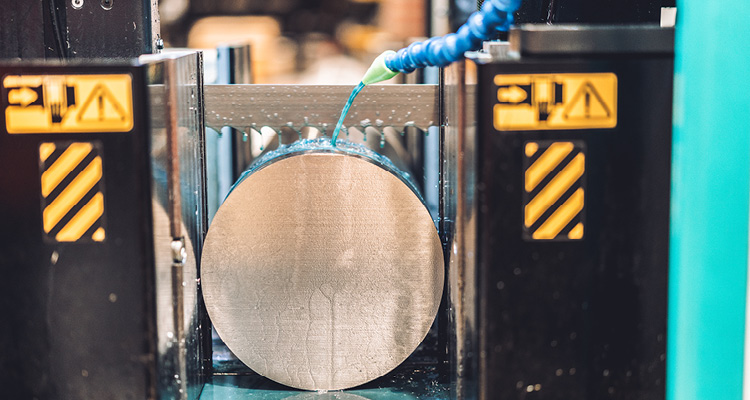
“We have relationships with multiple mills and have long-term stocking programs where we’re able to feed customers the materials they need as they need them, so they don’t have to hold huge quantities on their shelves,” Alex begins. “We also have our own custom saw shop, which we built two years ago. It’s a very high-efficiency shop that runs across multiple shifts, with a fleet of ten band saws and a vertical plate bandsaw too. It’s one of our unique selling points: we can offer very fast delivery for our customers, often same day or next day.
“We’ve got our own fleet of five delivery vehicles so that, while we do use couriers, we’re not reliant on them. That’s where we thrive in the aerospace sector where there are often a lot of unexpected changes in requirements,” Sam adds. “Another thing that sets us apart is our conversion facility in Sheffield, which encompasses the technical know-how to make bespoke parts for customers. We have an in-house metallurgist, which is highly unusual for a company like us. We’re qualified as an aerospace manufacturer under AS9100 and a stockholder under AS9120.”
Through its ability to create bespoke conversion routes for non-standard or out-of-stock materials on short lead times, the company can meet specific customer requirements quickly and efficiently. Supported by an extensive subcontractor network, Dynamic Metals also delivers products tailored to national, international, and customer-specific specifications.
However, despite continued growth and investment in specialist services, the company – along with many manufacturers across the UK supply chain – is now facing significant uncertainty as the new measures threaten to increase costs, extend lead times, and place additional pressure on an already challenging manufacturing landscape.
“We’re on for a record year at the moment, but that’s at threat in July with the looming steel measures, of which the government gave zero consultation to our industry,” Alex reveals. “None of the materials that we supply into aerospace and F1 can currently be manufactured here in the UK – the only mill that could produce some of them here is now in liquidation. They have quoted us a 56-week lead time for the materials they can supply but cannot even tell us when they will be able to start producing. Our estimate is end of the year at the earliest. The manufacturing industry cannot afford to take even a one percent tariff at the moment, and they’re about to take 50 percent.
“Manufacturing is already being sent abroad, and there’s no point in them saving an industry when there’s going to be no one to service at the end of it. We want to see British steel come back to the UK and we want UK manufacturing to succeed, but the government is making that increasingly difficult for us right now.”
While the measures are designed to support UK primary steel production, industry groups warn they could create serious financial and logistical challenges for downstream sectors such as construction, engineering, and manufacturing, many of which rely on imported specialist steel grades that are not readily available in the UK. Businesses have raised concerns that the changes could add millions of pounds in extra costs, disrupt fragile supply chains, and, in some cases, force production stoppages where essential materials cannot be sourced domestically. Industry leaders have also criticized the lack of a formal impact assessment, arguing the policy risks undermining competitiveness, encouraging offshoring, and pushing firms toward cheaper, less sustainable overseas suppliers.
“The irony is that we’re actually on for a record year, but it’s been completely overshadowed by whether or not we’re even going to have an industry next year. We’re tied into contracts for long periods – our aerospace build programs go up to 2029 and beyond,” Alex details. “We’ve fixed prices as far as we could with the mills, but we’re going to be the ones paying as we’re going to have to increase our prices by 50 percent and try to negotiate those price changes with our customers or we won’t be here.”
“Machine components will also come into the UK tariff fee meaning that, as our engineering companies go under, the European manufacturing sector will get stronger as they have the capacity for machining manufacturing,” Sam says.
“They can buy steel without this penalty, make parts in the EU, and ship them back to the UK – and it’ll be more cost-effective than anyone making the parts here themselves, which is fundamentally wrong,” Alex continues.
“We’re proud to be a UK company and we have a very loyal customer base that we’d like to keep,” Alex emphasizes, concluding our conversation. “Manufacturing has been a lifetime’s work for Sam and I and we’re very passionate. We largely agree with what the government are trying to do in protecting British steelmaking, but we’re stuck in very complex supply chains with long material lead times so it’s going to take several years at the very least to turn this around.”
