
Allen Control Systems expands counter-drone manufacturing in Texas

Subscribe to our free newsletter today to keep up to date with the latest manufacturing news.
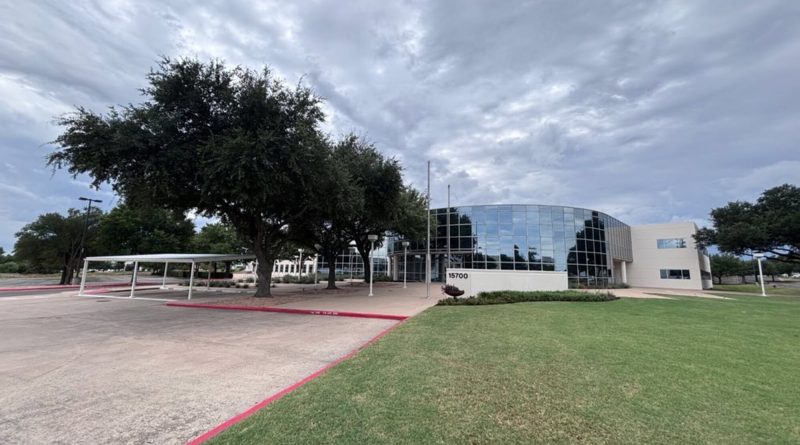
Allen Control Systems is adding a 191,000-square-foot manufacturing facility in Austin, Texas, as rising demand for systems designed to destroy low-cost drones pushes counter-drone technology toward higher-volume production.
The Austin defense technology company plans to use the site to increase production of Bullfrog, its robotic weapon station designed to detect, track and target unmanned aircraft. The company is also opening an engineering office in Mountain View, California, as it expands its workforce and technical operations.
The factory marks Allen Control Systems’ second major Austin expansion this year. In February, it tripled the size of its headquarters to 57,000 square feet. Its headcount has also risen 95% from a year earlier.
That growth follows a $200 million Series B funding round announced in June, which valued the company at $2.2 billion after the investment. Allen Control Systems said the funding would support manufacturing and deployment of Bullfrog.
The expansion points to a broader change in the defense technology sector. Counter-drone companies are no longer focused only on proving their systems work. Military customers also need equipment that can be produced in larger numbers, maintained in the field and supplied at a cost that makes sense against inexpensive drones.
Cheap drones are changing the economics of air defense
Small unmanned aircraft have changed the cost calculation behind air defense.
Militaries have traditionally relied on advanced missiles and other high-value weapons to defend personnel and equipment from aircraft. But using an interceptor that costs hundreds of thousands or even millions of dollars against a drone that costs far less creates a clear financial problem.
The US Army has acknowledged that issue. In congressional testimony on counter-UAS investments, Army officials discussed the need to improve the cost balance rather than rely on million-dollar missiles against drones costing hundreds or thousands of dollars.
The same concern sits at the center of Allen Control Systems’ business model.
Bullfrog combines computer vision, precision robotics and autonomous control with existing weapons. The M240 version uses a 7.62 mm weapon and has a stated maximum effective range of 800 meters. Other Bullfrog configurations are designed around weapons including the M2, M230 and M134.
According to Allen Control Systems, the system can passively detect drones without relying on radar. Its software can detect, track and acquire targets, although the company says an operator command is still required to fire.
The company also says some Bullfrog configurations can reduce the cost of defeating a drone to about $10 per engagement. That figure is a company claim rather than an independently verified measure. However, the wider cost issue is well established in military counter-drone planning.
This matters because drone defense is becoming an industrial economics problem as much as a technology problem. A countermeasure has limited value if forces cannot afford to use it repeatedly against large numbers of inexpensive targets.
Defense startups now face a manufacturing test
Allen Control Systems’ growth shows how quickly the demands facing defense technology startups can change.
The company announced a $12 million seed round in 2024. Two years later, it has raised another $200 million, secured contracts with US military organizations and committed significant space to manufacturing.
The new factory will support Bullfrog production as the company supplies US and allied customers. Recent reporting says 80 Bullfrog turrets have been committed this year, while customers include the Army, Marine Corps and Special Operations Command. Buyers have also been reported in South Korea and the United Arab Emirates.
Moving from dozens of systems to sustained production is very different from developing a successful prototype. Manufacturers need reliable suppliers, quality controls, testing capacity and skilled workers. They also need production processes that can meet military requirements across a range of operating conditions.
That creates a new test for the wider defense startup sector.
Venture funding has helped younger companies develop autonomous systems, drones, sensors and software. Yet military demand increasingly requires those businesses to build conventional industrial capabilities as well. Manufacturing space, component availability and production engineering can become just as important as software development.
Allen Control Systems’ Austin investment reflects that shift.
Counter-drone competition is moving into the factory
The growth of counter-drone manufacturing also gives Austin a larger role in the US defense technology supply base.
Allen Control Systems already operates its headquarters and manufacturing activities in the city. Its decision to add another 191,000 square feet gives the company substantially more room for production while it builds a separate engineering presence in Silicon Valley.
That split is notable. Silicon Valley offers access to software and engineering talent, while Texas provides a growing base for defense production and testing.
For the counter-drone sector, this model may become more common. Developing software that can identify and track a fast-moving drone is only one part of the challenge. Companies must also turn that software into reliable hardware that can be produced repeatedly and deployed in large numbers.
The economics of drone warfare are pushing that change forward. Cheap unmanned aircraft can be produced and deployed in volume. Defensive systems will face pressure to match that volume without relying on far more expensive interceptors for every engagement.
Allen Control Systems’ latest expansion is therefore more than a property announcement. It shows how the counter-drone market is moving from prototypes and field trials toward industrial production.
As procurement grows, manufacturing capacity will become an increasingly important factor in how quickly counter-drone systems can move from development into widespread military use.
Source
