
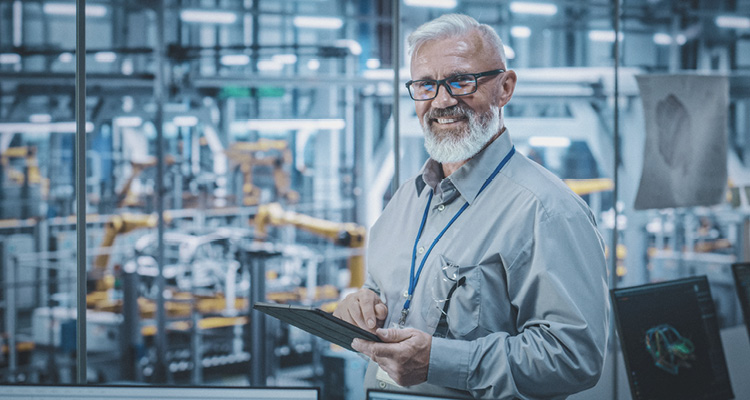
America is building the workforce to match its ambition. By Dave Evans

I’ve spent the last year watching billions of dollars pour into American manufacturing, and it’s an exciting time to be in this industry. New factories are breaking ground. Reshoring is no longer a talking point; it’s a line item. Manufacturing output reached a record $2.91 trillion in value added in 2024, factory construction spending is up nearly 190 percent since 2021, and foreign companies are now committing more capital to U.S. manufacturing than to any other sector in the country – a picture laid out in detail in MISUMI’s recent industry report, The Rise of U.S. Manufacturing.

By almost every measure, we’re in the middle of the biggest industrial buildout in decades, and the momentum is real. It’s well known that the U.S. is projected to need 3.8 million additional manufacturing workers by 2033. That’s a big number, but here’s the part that gives me real optimism: the workforce signal is already starting to catch up. Enrollment at high-vocational community colleges is up nearly 20 percent since 2020. Undergraduate certificate programs have grown for four straight years. Students are making rational choices, and they’re choosing skilled trades.
Our job now is to accelerate that pipeline. It’s why we’re investing heavily in the next generation of engineers, partnering with hundreds of schools around the country to provide the mentorship and hands-on experience students need.
What we can learn from manufacturing leaders abroad
I think about this a lot when I look at countries like Japan, Germany, and South Korea – nations with manufacturing traditions that, in some cases, go back over a century, and that have built extraordinary training infrastructure to match their industrial ambition.
Germany’s dual education system integrates apprenticeships directly into secondary education, so technical training is a respected, parallel track to a university degree. Japan has built a culture where deep specialization within a single craft is a source of real pride. South Korea paired aggressive industrial policy with equally aggressive investment in technical universities feeding directly into its electronics and automotive sectors.
These countries didn’t treat workforce development as separate from industrial strategy. It was the strategy. The good news is that we don’t have to invent this playbook, we just have to learn from it and adapt it quickly.
Building the human infrastructure to support innovation
Here’s the opportunity in front of us: we’re already building the physical infrastructure at a historic pace. The next chapter is making sure we build the human infrastructure to match it. Highly configured, precision manufacturing, the kind increasingly common across advanced industries, runs on skilled machinists, quality engineers, and technicians who understand both the craft and the technology behind it. The good news is that this workforce is trainable at speed, if we invest in the right pathways.
There are already signs of what that investment can look like. Deepening ties between industry and universities takes many forms – sponsoring student robotics teams, working directly with engineering departments, placing coursework on product design, tooling, and manufacturing processes alongside research partnerships. These are the kind of sustained commitments that actually move the needle on skills, long before a graduate ever sets foot on a factory floor. It’s not a substitute for policy, but it’s a preview of what closing this gap requires: sustained investment, not a single program.
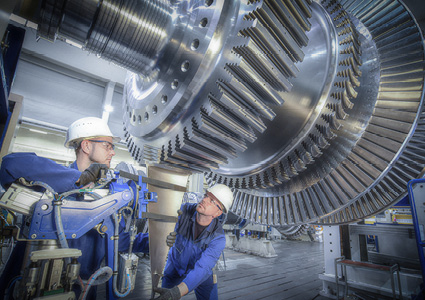
That’s exactly why H.R. 9097, the American Manufacturing Revitalization Exchange Program Act, deserves broader support. This bipartisan legislation would send American manufacturing workers and students to allied nations for six to 12 months of hands-on training in sectors like semiconductors, robotics, and automotive, with a stipend and industry-recognized credentials on completion. It’s a smart, fast way to bring proven expertise home instead of building it from zero.
Bringing the world’s best practices home
One of the most underused tools we have is exposure. American workers benefit enormously from seeing how the best manufacturing operations in the world actually run. Not reading about it but standing on the floor of a Japanese precision shop or a German apprenticeship program and watching how it’s done.
Programs like this tend to bring back more than technical knowledge. They bring back a different relationship to craft, quality, and continuous improvement, and that’s exactly the model H.R. 9097 is built on. It’s a conversation worth having at scale, which is part of why events like the upcoming U.S. Manufacturing Revitalization Summit matter: bringing manufacturers, educators, policymakers, and workers into one room to share what’s working elsewhere and put it into practice here, faster.
Why I’m optimistic
We are living through a genuine industrial renaissance. The investment is real, the construction boom is real, and now the workforce pipeline is starting to move in the right direction too. The task ahead is to keep accelerating that pipeline: the right skills, in the right sectors, reaching workers faster.
The countries that have led manufacturing for the last century built their workforce alongside their factories, not after them. We have every advantage to do the same, faster, because we get to learn from the best examples in the world instead of starting from scratch.
That’s the moment we’re in. And I’ve never been more optimistic about where it’s headed.
Dave Evans
us.misumi-ec.com
Dave Evans is President & CEO, MISUMI Americas, a specification-driven sourcing partner for mechanical components and assemblies, that helps engineering, supply chain, procurement, and manufacturing teams move from concept to production faster. MISUMI Americas provides a full continuum of mechanical component solutions, including standard components, configurable components, custom-manufactured parts, assemblies, and production services.
