As Ardagh Metal Packaging marks a decade, CEO Oliver Graham reflects on building a global manufacturing business and what comes next

Ten years ago, Ardagh Group brought together beverage can assets across three continents to create what is today metal beverage can manufacturer Ardagh Metal Packaging (AMP). The new business provided a strong global manufacturing platform, but not yet a shared identity.
Today, the business produces more than 45 billion beverage cans each year and generates over $5 billion in revenue. For Chief Executive Officer Oliver Graham, the defining achievement of the past decade has been transforming a collection of separate operations into a cohesive organization. “What I am most proud of is that we have brought together talented teams, introduced new ways of working, and fueled growth to give people pride in working for AMP every day.”
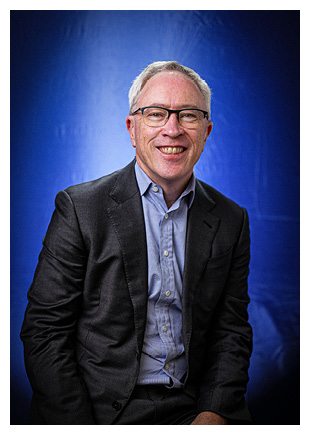
Building one company was never an end in itself. It was the foundation for everything that followed. “It is a tough industry. Today, we stand as a strong competitor, and you see that in both our performance and our industry position.”
AMP’s first decade is, above all, a story of integration. Formed in 2016 after the Ball and Rexam merger led to an asset divestment acquired by Ardagh Group, AMP spent the past ten years building a common operating model across its global manufacturing network, growing quickly and expanding its footprint, revenue, and capacity along the way. The transaction reshaped the beverage can sector by combining operations from businesses that had previously competed.
“Because of the merger, competition authorities mandated a significant divestment,” Oliver states. That divestment became AMP. “When we combined largely Ball’s European and Brazilian operations with Rexam’s US business, we gained a global manufacturing platform and substantial scale from the start.”
The scale was immediate, but integration took much longer. Oliver was ready for both sides of that challenge. Before joining AMP, he was Group Commercial Director at Rexam and spent the first part of his career at Boston Consulting Group. He joined the newly formed business in 2016, became Chief Executive of the metal beverage division in 2020, and was CEO in 2021 when the business floated. “Another big milestone for us was listing on the New York Stock Exchange in 2021. We floated about a quarter of the company, which established AMP as a publicly traded business.
“We now generate more than $5 billion in revenue, have more than 6000 employees, and produce over 45 billion cans per year. We’ve become a very significant competitor in the global beverage can industry.” Those numbers tell part of the story, but Oliver focuses on the behind-the-scenes work, highlighting the momentum that partnerships, scale-up, and innovation have brought to AMP.
That work started with integration itself. At first, AMP integrated teams, manufacturing sites, and support functions that had never worked together before. It inherited facilities on several continents, each with its own approach to operations and decision-making. “We started with strong assets and talented people from Ball and Rexam, but the real challenge was bridging different cultures and ways of working.”
From there, the priority was to build consistency without losing the regional strengths at the heart of the business. AMP brought the business together through common operational standards, procurement strategies, planning systems, sustainability goals, and employee engagement initiatives, supported by an operating model that combines global functions with strong regions, keeping the business close to customers and local manufacturing needs. Separately, the Ardagh Metal Production System provides manufacturing sites with a global approach to operational excellence, sharing best practice and continuously improving performance. “A big part of our success has been building a global team and creating a matrix operating model that connects our regions and global functions,” Oliver explains.
“With that, we have driven major initiatives and grown into a truly global competitor. We wanted strong regions because that is where we deliver, while global functions drive strategy and best practice across the business.”
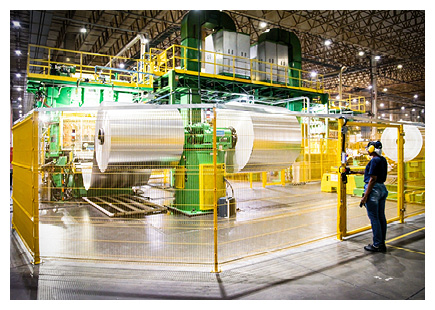
Building consistency across regions took more than just structure. AMP developed a framework for how the business would operate and what it would prioritize, all while preserving local accountability. That process took time and focus, but Oliver believes it has become one of the company’s most important foundations. “We worked hard to create a common set of initiatives and targets across the business. Keeping everyone aligned takes constant attention, but that has been a major factor in our success.”
Looking back, Oliver sees the operating model as one of the defining pieces of AMP’s development and one that needed constant refinement along the way. “With the benefit of hindsight, I would probably have implemented that operating model sooner,” he reflects. “But there was a lot happening at the time, and it is always easier to see those opportunities when you look back.”
While AMP built a more connected global business, demand across the beverage can sector picked up momentum. Over the last several years, beverage cans have benefited from changing consumer preferences, growth in emerging beverage categories, and a bigger focus on sustainability. Oliver points to the surge of new beverage launches and evolving tastes. “The beverage can sector is very attractive right now. Some beverage categories are growing strongly, especially energy drinks, certain soft drink categories, and flavored alcoholic beverages.”
Just as important is the appeal of aluminum itself. This shift became especially clear during the pandemic, when more consumption moved into retail channels and household purchasing patterns changed. “The can is taking share from plastic and glass because of its sustainability credentials and the cost effectiveness of packaging beverages in aluminum.” High demand across the industry led manufacturers to rethink both capacity and flexibility. “The industry was experiencing significant growth, so we invested heavily in new facilities and upgrades to existing sites to capture that demand and support our customers.”
AMP responded with a sustained investment program, expanding capacity and upgrading facilities across its global network. Between 2017 and 2024, AMP invested over $2 billion in these efforts. The next stage of investment will fund additional projects in Spain and the UK to increase production capacity, while investments in North America have also delivered manufacturing flexibility and the ability to serve a wider mix of can formats.
Adding capacity was only part of the challenge. As AMP’s footprint expanded, the company focused more on the systems, processes, and data needed to run a more connected operation. Data, planning, and process improvement now influence manufacturing performance more than ever, especially for businesses operating across multiple regions. “We are making significant investments in the capabilities, processes, and systems that support the business.”
The investments form part of a broader transformation agenda that includes greater use of automation and data-driven decision-making. AMP has partnered with Porsche Consulting to support manufacturing performance initiatives across its global network while continuing to advance the Ardagh Metal Production System throughout its operations.
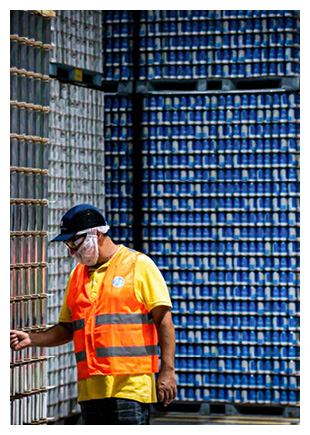
For Oliver, growth, investment, and manufacturing performance ultimately connect back to sustainability. Packaging sits at the center of many customer decarbonization strategies, particularly for global beverage companies seeking to reduce emissions throughout their value chains. He highlights the critical role packaging now plays for both customers and industry progress: “Sustainability is integrated into every aspect of our business and remains a major priority for our customers. As they pursue their own sustainability commitments, we play an important role in helping them achieve those goals.”
The role of the aluminum can in the circular economy remains a major topic. Recycling rates still vary by region, but the ability to recover and reuse material is central to aluminum’s appeal. “We have recycling rates above 75 percent in Europe, approaching 80 percent in places. In Brazil, recycling rates are close to 100 percent, and in every region, we use high levels of recycled material in our cans. For brands, it’s a huge advantage to say it’s a circular product that returns a significant amount of material to the can supply chain.”
AMP keeps pushing decarbonization through more recycled content, renewable electricity, material reduction initiatives, and manufacturing improvements. EcoVadis awarded the company Platinum status for its progress, and green bond financing has connected sustainability targets with capital markets. “We have reinforced the importance of recycled aluminum and circularity through our financing strategy, including issuing green bonds.”
Sustainability is not the only area where customer expectations continue to evolve. Product differentiation has become increasingly important as beverage companies compete for consumer attention. AMP’s innovation now covers decoration technologies, specialty can formats, can-end development, and lightweighting efforts designed to reduce material use without sacrificing performance. The company has earned recognition from several packaging and beverage industry awards in recent years, showing how packaging plays a growing role in both branding and consumer experience.
When Oliver talks about AMP’s progress, he always comes back to partnerships. Capacity investments often depend on coordinated planning, and innovation increasingly happens through joint development. Growth relies on collaboration between manufacturers, suppliers, and beverage producers. “We see a significant runway for investment and growth, both for the industry and for AMP. Over the last ten years, we’ve focused on building strong partnerships with customers and suppliers. That’s paying off in the expansion we’re seeing today.”
Oliver sees future growth coming the same way as before, through investment with customers and long-term partnerships across the supply chain. AMP finds opportunities not just in its own investments but by working with customers as they add filling capacity, launch new products, and expand into new markets. “We’ll keep partnering with customers on their growth plans, investing alongside them as they expand, and helping support the continued growth of the beverage market.”
As AMP enters its second decade, it is balancing ongoing growth initiatives with another significant development. Ardagh Group has announced a process to explore the potential sale of its majority stake in AMP, creating a new backdrop for the business while operational priorities remain unchanged. “We have to continue driving the business well and delivering our global programs.”
In Oliver’s view, the individual milestones matter less than the bigger picture. “The real story is the industry’s growth and how we’ve built a shared culture and a unified approach to seize that opportunity.”
With the business now united, Oliver is looking ahead to scaling AMP’s impact and integration even further. “We see ourselves growing further, becoming even more integrated, and continuing to play a leading role in the success of the beverage can industry.”
Across AMP’s facilities, the anniversary has been marked with local celebrations, bringing employees together to reflect on how far the company has come since its formation in 2016. “It has been an exciting ten years, not always easy, but we have come a long way,” Oliver concludes.