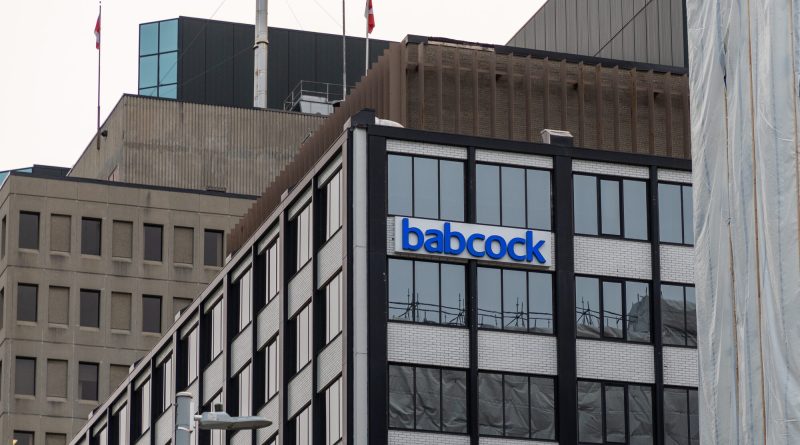
Babcock’s £8.7 billion submarine deal puts skills at the center

Subscribe to our free newsletter today to keep up to date with the latest manufacturing news.
Babcock International has signed the largest contract in its history, a £8.7 billion Gateway Agreement with the UK Ministry of Defence to maintain and support the Royal Navy’s submarine fleet.
The agreement takes effect on Dec. 1, 2026, and runs for 5 years, with the potential to extend to an aggregate term of up to 15 years. It succeeds the Future Maritime Support Programme (FMSP), whose extension ends on Nov. 30. Of the headline value, £8 billion is contract backlog and £0.7 billion is framework work, all covering the first 5 years.
Under the agreement, Babcock will deliver submarine maintenance, engineering, technical services, and naval base operations at HMNB Devonport, Devonport Dockyard, and HMNB Clyde through a single contractual framework. It also spans the period in which the UK moves from its Vanguard Class nuclear submarines to the new Dreadnought Class.
For manufacturers, the most telling part of the announcement is not the contract value. It is the workforce attached to it.
Babcock’s submarine contract is as much about people as vessels
Babcock says the agreement will safeguard 8500 existing nuclear defense jobs and create 3000 new full-time roles. Over the next 5 years, the company expects it to support more than 2500 apprentice and graduate opportunities.
Those figures show where the pressure sits. Submarine support relies on specialist engineering and trade skills that cannot be hired off the shelf, and a contract of this size is only as useful as the people available to deliver it.
The Royal Navy is framing the deal in the same terms. General Sir Gwyn Jenkins, First Sea Lord and Chief of Naval Staff, said: “Through this multi-billion-pound investment, we are backing the highly skilled people who support our fleet, tackling the delays that hold us back and getting submarines through maintenance quicker and back where they belong: beneath the waves.”
Babcock also expects the agreement to generate more than £500 million of social value in communities across the UK. CEO Harry Holt said the company would continue “bringing benefits to communities across the country, including SMEs and local supply chain.”
For smaller suppliers in engineering, logistics, and specialist services, a long-term framework with a single prime contractor can offer something short-term contracts cannot: visibility over several years of demand.
Submarine availability is the measure that matters
The stated purpose of the Gateway Agreement is better submarine availability and operational readiness. In practice, that means faster maintenance and quicker returns to sea.
Holt said the agreement “will enable us, in collaboration with MoD, to continue our support for the deterrent, increase submarine availability and develop the skills, infrastructure and capability to support the Royal Navy’s submarine force for the years ahead.”
This is maintenance, repair, and overhaul at its most demanding. Manufacturers that run expensive, high-value assets will recognize the underlying problem. When one asset spends longer than planned in maintenance, the effects ripple across the whole operation, from scheduling to spare parts to staffing.
Placing maintenance, engineering, and base services under one framework gives Babcock and the MOD a single structure for planning that work across Devonport and Clyde. Babcock says it is also investing in digital tools, data-driven planning, and enterprise-wide performance management to improve fleet availability.
Babcock is building the facilities to match
The contract sits alongside a wider investment program. Babcock points to Project Royal Oak, the MOD’s £26 billion investment across the Royal Navy’s 3 principal bases, and to the Clyde Transformation Programme, which forms the biggest element of it.
Babcock’s own recent investments across Plymouth, Clyde, and Bristol include 2 Scottish Defence Technical Excellence Colleges and a Submarine Operations Centre that coordinates support activity across the UK submarine enterprise.
In Plymouth, the new Babcock Skills Centre at Devonport can support up to 1500 technical staff, apprentices, and trainees each year. A planned Integrated Logistics Hub will consolidate more than 30 logistics locations into a single facility on an 18.8-acre site in Sherford, with the potential to accommodate a 30,000-square-meter operation. A Plymouth Capability Centre will house up to 2000 employees in the city center.
Together, those projects show how a maintenance contract becomes an industrial build-out. Training capacity, warehousing, and office space all have to grow before the extra roles can be filled.
Several questions remain open. Babcock has not published specific availability targets in its announcement, so it is not yet clear how faster turnaround will be measured. The full 15-year term is a potential, not a commitment. And the 3000 new roles depend on Babcock recruiting and training people quickly enough to fill them.
Whether the Gateway Agreement delivers faster maintenance will depend less on its value than on how fast that workforce can be built.
Source:
Babcock International press release