
Balancing constraints and lifecycle demand, Copper Alloys advances materials, processes, and partnerships for engineering systems

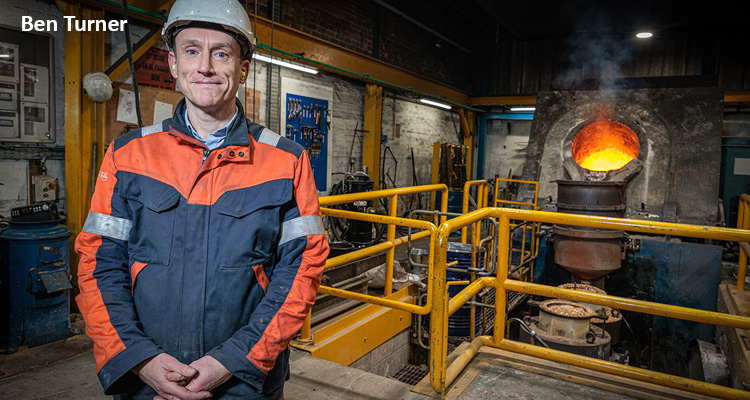
Manufacturing sectors that depend on metals now face a gap between demand and capability. Long project timelines, reduced industrial capacity, and tighter performance requirements place pressure on supply chains that already rely on aging practices. In that context, material selection becomes a deciding factor in whether systems hold up or fail early. Ben Turner, Managing Director of Copper Alloys Ltd., leads a business that sits at the center of that challenge.
From its base in Stoke-on-Trent, Copper Alloys produces copper and nickel alloys for use in sectors such as marine, aerospace, defense, and energy. It traces its linage to work on submarine materials between the world wars, when engineers sought alternatives to materials that could not withstand service conditions. That early work established a mindset focused on solving material limitations under pressure, a mindset that continues to shape how the business operates.
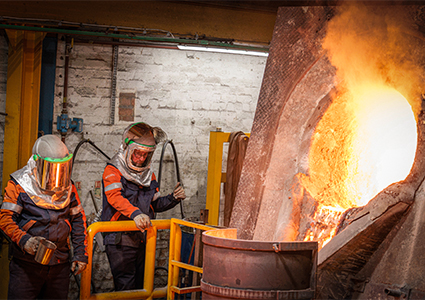
“That focus on research and development has been retained throughout all that time and continues today,” Ben notes. That continuity shows up in the type of work the company takes on. Copper Alloys focuses on problems that fall outside standard manufacturing routes, where material performance must meet multiple demands at once. “The common denominator is that the material technology is complex or difficult in some way,” he observes.
Ben has led the company since 2005. His role spans engineering, production, and market positioning. He oversees how the business invests in capacity, develops new materials, and responds to demand cycles that often extend over decades. His background across engineering, sales, and marketing informs his approach to those decisions, combining technical understanding with commercial awareness.
Production chain
Copper Alloys operates across the full production chain. The company begins with raw elements and continues through alloy development, melting, casting, forging, machining, assembly, and testing. The structure allows the company to control each stage of production and maintain traceability across components used in systems where failure carries risk. “We supply finished assemblies and work all the way back to alloying the raw elements,” Ben explains.
The approach supports development. Engineers can change alloy chemistry or processing methods and test those changes within the same environment. That reduces reliance on external suppliers and allows the business to maintain control over performance outcomes.
Copper Alloys focuses on materials that require control at each stage. These alloys often solve multiple demands at once, such as strength, conductivity, and resistance to corrosion. “People only use them for very specialist applications,” Ben shares. Those applications extend across sectors and environments. “We have parts on the Mars rover and in submarines at the bottom of the sea,” he adds.
In each case, the same pattern appears. Several forces act on one component at the same time. “It is often five or six things all pulling at a piece of equipment,” Ben points out. The complexity defines both the technical challenge and the business model.
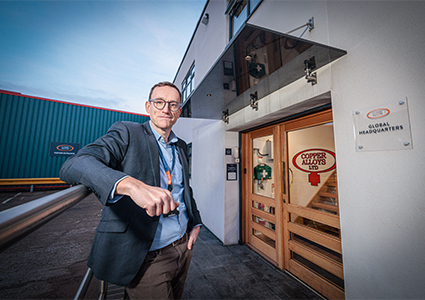
As demand increases, the challenge moves from proving performance to delivering consistency. Copper Alloys must produce materials that behave the same way across different batches and volumes. “Put simply, we standardize the complex,” Ben remarks.
It builds repeatability through process control and workforce structure. Each role is linked to defined targets, and performance is measured across the organization. “Everyone knows where the goals are,” Ben highlights. “The system allows teams to handle variation in product requirements while maintaining consistency in execution.”
The company’s recent expansion reflects the need to scale. It is increasing casting capacity toward 15,000 tons per year, aligned with demand from sectors that rely on long-term programs. “Some of the projects we are working on now will not enter into service for 20 years,” Ben explains.
These timelines shape how the business plans investment and allocates resources. It focuses on sectors where material performance links directly to system life, including defense, marine, and energy. Ben sees a shift across these markets. “End users expect things to last much longer,” he observes.
At the same time, the number of manufacturers capable of producing these materials has decreased. That decline in capability creates pressure on supply. Copper Alloys responds by increasing capacity while maintaining control over its processes.
Copper Alloys’ ability to deliver depends on its workforce. It has expanded its team and introduced a structured approach to training and development. New employees complete an onboarding program that introduces them to the full operation and their role within it. “Everybody is a link in that chain,” Ben affirms.
Each employee follows a development plan, supported by training resources across the business. Leadership participates in the same process, reinforcing the link between development and performance. Ben highlights clarity and ownership. “People need to know the objectives and be empowered to meet them,” he stresses.
The focus connects to a broader shift in how the company approaches improvement. Copper Alloys is working to move away from reactive change toward a culture where teams question processes before failure occurs. That shift depends as much on mindset as it does on systems. “I thought it might take six months, but I think it will take six years,” Ben admits. That shift requires both time and consistency, but it ties directly to the company’s broader goals surrounding performance and reliability.
Copper Alloys frames sustainability through durability. It develops materials that extend component service life and reduce the need for replacement. “The simple concept is to make things last longer,” Ben explains. He connects that idea to the component’s full lifecycle. Producing metals requires energy at each stage, from mining to processing and machining. “When a part fails, that cycle begins again,” Ben points out. Extending service life reduces the frequency of that cycle. The approach shifts the focus of sustainability from process alone to decisions made during design and specification.
Copper Alloys supports the shift through education. It hosts engineers, shares knowledge, and contributes to research that informs material selection. “If engineers do not have knowledge about better materials, how can they make better engineering decisions?” Ben asks.
It has led work such as the British Corrosion Project, which produced research on the performance of materials in marine environments. These efforts aim to influence decisions before manufacturing begins.
The company continues to develop new materials and refine production methods. It works on additive manufacturing while assessing where it fits within alloy production. It advances its material portfolio beyond existing solutions. “We are constantly pushing the boundaries,” Ben notes.
As capacity increases, Copper Alloys aims to align output with demand from sectors that depend on material performance. It seeks closer relationships with customers to support long-term planning and development. “We want closer cooperation with end users and customers,” Ben concludes.
