
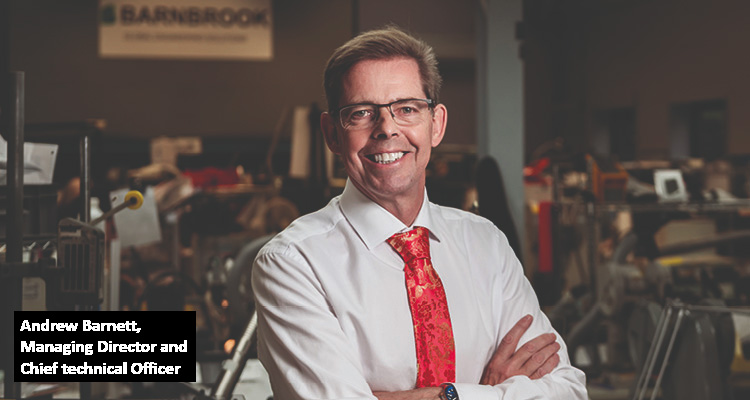
Barnbrook Systems is expanding its international reach while driving engineering focus and manufacturing resilience forward

For engineering solutions supplier Barnbrook Systems (Barnbrook), 2025 marked a turning point. The company opened a US office, secured new work, and moved further into international markets. The shift reveals a new approach to business growth and a fresh perspective on how Barnbrook positions its engineering capability beyond the UK.
Andrew Barnett, Managing Director and Chief Technical Officer, stands at the center of the shift. Andrew leads both the commercial direction and the technical development of the company. That dual role is essential as Barnbrook navigates new demands in defense, rail, and infrastructure systems.

Nearly four years ago, Andrew took the reins of the family-owned business. Since then, he has moved it into international markets Barnbrook had never targeted before. “When I took over the company, I decided I would go out and see what the real world was like, not just what social media or the news was saying,” Andrew shares.
The business still operates from its original UK site. “Oddly, we run the business on a housing estate, not an industrial estate. We were here first, so that is our claim,” Andrew notes. From this site, the team supports applications across aircraft, ships, rail systems, and security infrastructure.
Engineering core
Barnbrook builds relays, switching devices, and integrated subsystems that slot into larger platforms. Andrew explains: “These units connect to monitoring tools that track performance in real time. The company does not just make components; it integrates them.”
The company designs new systems and supports legacy ones through maintenance, repair, and overhaul. Andrew observes, “Our engineers work with a broad range of technologies, from very old systems to IoT, AI, and predictive maintenance.” The product mix reflects that balance. “Some output comes from repeat production lines. A large share involves tailored engineering responses to customer needs. Many of those needs are in environments where downtime is not an option,” Andrew adds.
Andrew describes it as a philosophy, not just a process. “Replacing something doesn’t always fix it,” he remarks. “You need to understand how systems behave over time instead of treating issues as isolated failures.”
Global strategy
The move to global markets has reshaped how Barnbrook engages with customers. The opening of its US office, together with its presence in the Czech Republic, marks a step in building that footprint. Andrew explains, “These offices provide local presence to support growth. Now, a larger share of our output goes overseas, supported by teams in the US and the Czech Republic.”
Barnbrook’s supply chain strategy supports that discipline. During Covid, Barnbrook kept operating while others paused. “Our long-term plan of nearshoring, instead of offshoring, worked because it meant we could keep most operations running and reduce reliance on distant suppliers,” Andrew notes.
Supply chain volatility since 2020 has validated that model. Andrew points out: “Access to components and raw materials remains uneven, driven by energy, logistics, and supply chain pressures.”
At the same time, Barnbrook continues to build relationships in new regions. “Links in Asia and Australia are part of a plan that extends to the end of the decade. We view these markets as an extension of our engineering and support model rather than a retreat from our UK base,” Andrew says.
That global push runs in parallel with new product development at home. Andrew shares, “Building on our pressure sensing experience, Barnbrook is developing hydrogen detection systems and is among only a handful of companies worldwide producing ultra-high pressure sensing technology. This opens the door to applications where monitoring and control are central to system design.”
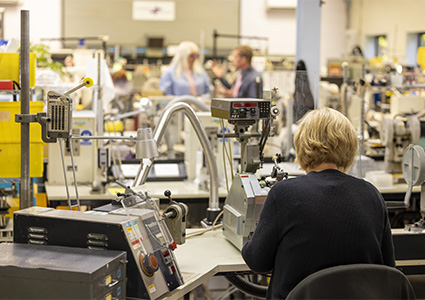
Barnbrook is rolling out new interface technology and expanding its monitoring systems. Andrew adds, “Our smart technology uses an AI engine to anticipate failures, support maintenance planning, and gives us a heads up about potential failure.”
People and practice
Barnbrook’s workforce reflects its technical range. Engineers at all stages of their careers work together. “Our team includes college students all the way through to people in their mid to late seventies. That mix helps us transfer knowledge and maintain systems with service lives spanning decades. Some products trace back a significant number of years and require engineers to work with both legacy and current standards,” Andrew highlights.
Training and education play a key role in this model. Barnbrook works with colleges, universities, and schools to open pathways into engineering roles. “I am keen to encourage youngsters into engineering, and we need to connect classroom learning with hands-on experience,” Andrew affirms.
Inside the business, decision-making draws on both technical input and operational awareness. Andrew stays engaged in both areas, as he explains: “I am a technologist, so I get it, and I get where we are trying to go. That guides how we approach automation and digital tools. Some of our work is still done by hand, and we bring in automation only when it genuinely adds value.”
Sustainability efforts follow a similar approach. Andrew remarks: “In the dim and distant past, we probably would have just scrapped the product. Now, we focus on reducing waste and energy use through operational changes, upgrading equipment, and reworking materials instead of discarding them.”
Barnbrook continues to build its international presence while maintaining its UK manufacturing base. The offices in Europe and the US are set for growth. “Both of these offices will really ramp up. Everything traces back to engineering, because we build systems that remain in use for long periods and need ongoing support. That shapes how we invest in people, technology, and our market presence,” Andrew says.
That engineering-first mindset extends beyond Barnbrook itself. “Through my role as chair of the South Central Defence and Security Cluster, I work with businesses to strengthen links across industry and government. This helps sustain capability within the UK supply chain. Our products are used in safety and security-related market sectors where reliability is absolutely key,” Andrew concludes.
