
Biocomposites is scaling its world-class infection management operation while maintaining quality and culture

Created from the founding vision that calcium compounds could do something genuinely useful inside the human body, Biocomposites has grown into one of the world’s specialists in infection management in bone and soft tissue. Today, the company is part-way through its ambitious operational transformation, which includes a multi-million-pound facility expansion and a comprehensive automation program to ensure its operations can effectively scale alongside demand. To learn more about these investments and how they benefit the business, we speak with Stephen Liptrot, Global Operations Director, who has spent two years overseeing this strategy and fueling operational excellence.
“The genesis of the company began in 1987 when our founder and previous Chairman started to explore the use of calcium compounds in medical devices,” Stephen opens. “A management buyout in 1997 formally established Biocomposites as an independent business, and research into calcium compounds and medical-grade polymer composites led the way for initial product development. Innovation continued in the years that followed, and we developed our core product portfolio.”
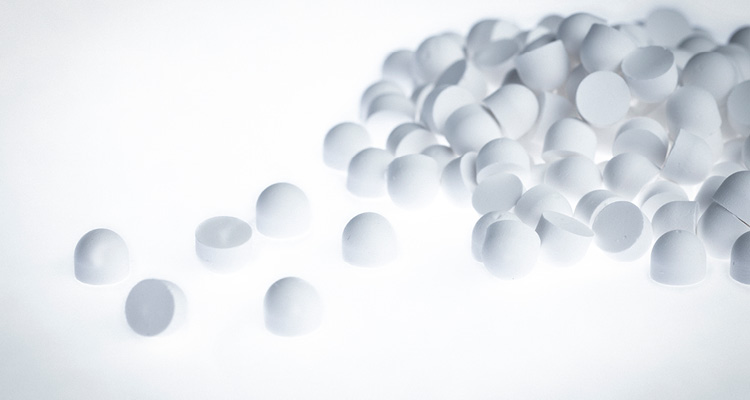
Today, the company’s portfolio spans antibiotic carriers bone graft substitutes, and bone cements. Flagship brands include STIMULAN®, a truly absorbable calcium sulfate antibiotic carrier approved for use in bone and surrounding soft tissue, and the SYNICEM™ range of bone cements, spacers, and antibiotic-loaded intramedullary nails.
The biggest change in Biocomposites’ trajectory came in 2017, when private equity group TA Associates (TA) invested in the business and Mike Harris came onboard as CEO. In 2025, Novo Holdings (Novo) joined as a co-investor, further fueling the company’s growth. “Having joint ownership by two market leaders in healthcare investment puts us in a strong position for investment,” Stephen states. “We’ve expanded our global reach, and we now employ more than 600 people across the group, with manufacturing in the UK, Germany, and Argentina. With distribution and logistics spanning our core markets, including the US, we have a presence in more than 100 countries, and we estimate our solutions have reached more than one million patients.”
Stephen attributes the company’s growth to four factors: investment, product quality, strategic clarity, and culture. “Firstly, the investment and support offered by TA and Novo has not only allowed us to grow organically across the globe but has also fueled acquisitive growth to strengthen our position in the market,” Stephen expands. “Next, although every manufacturer claims their products are the best, we genuinely believe our products are top-rated by healthcare professionals, and we constantly strive to maintain that position.
“In terms of our vision, when Mike joined in 2017, he outlined a very clear and defined strategy which is unwavering ever since. While other business strategies tend to change in line with quarterly results or new leadership, our clarity of purpose guides everyone across the company in the right direction. Lastly, our company culture is at the heart of all our success. We recognize that our employees are crucial to our success, and we’re passionate about supporting them to do their best work, making us truly One Bicomposites.”
Elaborating on company culture and employee engagement, Stephen continues: “We’re partnering with a business excellence consultancy called The Lean Orange, which is a licensed Shingo Institute™ affiliate, to create a shared purpose, vision and ideal behaviors across our teams. The Shingo approach is based on humility and respect, with people pulling lean tools toward them rather than having them pushed by a central function. We’re building the culture from the bottom up, educating and empowering people to explore the use of tools to drive the continuous improvement wheel, which, in turn, delivers the results that we need.”
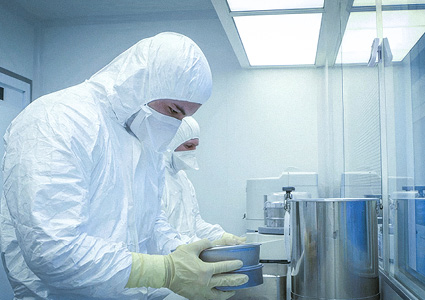
To maintain and fuel continuous growth, TA and Novo are investing significantly in the business, including an ongoing transformation underway at Biocomposites’ Keele facility. “Our investments at Keele are substantial: the ground floor manufacturing footprint is doubling, and we’re adding an entirely new third floor of clean room space above it,” Stephen elaborates. “What makes this expansion particularly valuable is that we’re not only increasing capacity to scale in line with our growth aspirations but also redesigning how the entire site flows by removing obstacles, streamlining processes, and preparing to implement automation. Alongside the benefits to our manufacturing site, we’re modernizing welfare aspects of the building, including our office infrastructure, to boost employee wellness.
“Automation is already underway at the Keele facility,” he adds. “We’re passionate about UK manufacturing, so we’ve partnered with two UK-based automation specialists, 3P and PCE Ltd, to develop dosing, fill, and packaging automation for our highest-volume product line, STIMULAN Rapid Cure. Not only can we achieve scale through automation, which is our primary motivation, but it’s also given us the opportunity to build in quality assurance at source. For instance, we’re incorporating lean techniques like SMED changeover processes and vision systems into equipment design, and we’re exploring new software platforms for monitoring equipment performance.”
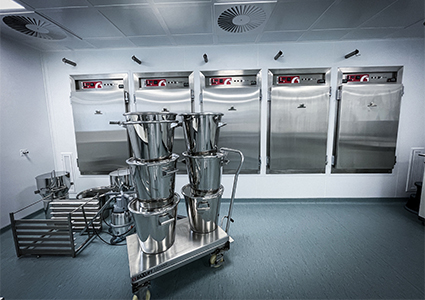
On the topic of quality assurance, Stephen is keen to highlight the importance of safety, quality, and compliance in the medical device manufacturing sector. “We work in a heavily regulated industry and that’s how it should be; our products are used in people’s bodies to repair and heal, and we take that responsibility very seriously,” Stephen shares. “Like all companies in the medical and pharmaceutical fields, we have a defined quality management system, subject to external audit, that sits at the centre of everything we do to ensure compliance.
“However, I believe culture also plays an important role in compliance, as people must feel safe and comfortable to raise concerns or risks at any time. That starts with educating employees, connecting them with the work they do and how it matters to the end patient.”
Aside from operational transformation at the Keele facility, Biocomposites is constantly creating the next generation of products. Internal sales and marketing input, along with people from within the surgical community, shape the company’s research and development (R&D) pipeline, which is currently in clinical development. “We have some tremendously exciting and disruptive products in clinical development, and I’m quietly confident we’ll start to see them come to market over the next two-to-four years,” Stephen confirms. “Although the US is already a core distribution market, our product pipeline is geared towards the specific needs of our US customers.”
With an innovative product pipeline in clinical development and a series of transformative investments underway at its Keele facility, Biocomposites is preparing for further growth as demand continues. Stephen explains that the remainder of 2026 is already clearly outlined. “We’re executing phase one of the facility expansion, as the new third floor must be completed and ready for operation by the end of the year,” he says. “We’ll maintain our focus on lean tool deployment, emphasizing learning and education over results. We’ll also continue to map systems and workflows across entire processes rather than individual nodes to reveal further opportunities for optimization.”
Longer term, Stephen has both personal and professional targets. “I would love for operations, quality, and supply chain to be seen as a world-class lean organization based on everything we’ve discussed,” Stephen concludes. “As a company, I am confident that Biocomposites will achieve its ambitions through both acquisitive and organic growth, alongside the launch of new innovative products. On a more personal note, I’d like to witness team members and leaders within the organization growing and developing at the same pace as the company.”
