Boeing wins $20 billion race to build Navy’s F/A-XX fighter

Subscribe to our free newsletter today to keep up to date with the latest manufacturing news.
Boeing has been selected to develop the US Navy’s F/A-XX sixth-generation fighter, giving the aerospace company its second major next-generation combat aircraft program in less than two years.
The Navy awarded Boeing a contract worth about $20 billion for the full-scale development phase. The agreement is expected to cover several test aircraft for ground testing, airworthiness work, systems integration and weapons testing.
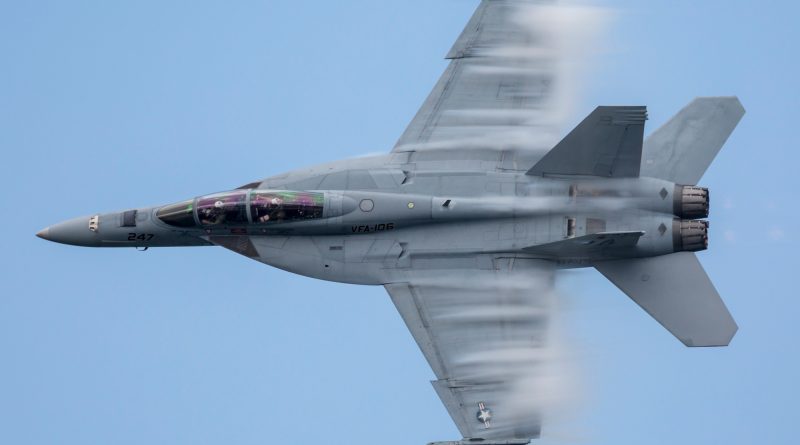
F/A-XX is planned as the replacement for the Navy’s F/A-18 Super Hornet. Boeing said the new aircraft will support open mission systems, advanced mission systems, greater operational reach and increased capacity. Most technical details remain classified.
The award gives Boeing a major role in two of the largest US fighter programs now in development. The company was selected in 2025 to develop the US Air Force’s F-47 fighter and will now work on F/A-XX at the same time.
That presents Boeing with a large opportunity, but also a demanding production challenge. The company must manage engineering teams, suppliers and manufacturing capacity across two advanced fighter programs while continuing work on other defense aircraft.
The next phase will be defined by delivery.
Boeing now has two advanced fighter programs to deliver
Boeing has spent years preparing its defense manufacturing base for new combat aircraft programs.
The company said it planned to support two advanced fighter programs at the same time and invested in facilities, technology and workers with that goal in mind. Construction is continuing on a secure manufacturing facility in St. Louis that will support future combat aircraft production.
Those investments will become more important as both programs move from development into testing and, later, production.
Modern fighter programs depend on far more than final assembly space. They rely on suppliers producing structures, electronics, propulsion systems, sensors and other components. They also need engineers and technicians with specialist experience and the security clearances required for classified work.
Running two major programs at the same time could place pressure on labor, suppliers and factory capacity, even if the aircraft are developed separately.
For Boeing, the F/A-XX award increases the scale of the manufacturing task ahead.
The company must continue work on the F-47 while building the workforce and infrastructure needed for the Navy program. Both aircraft will also require years of testing before they reach large-scale production.
Some work may benefit from shared investment in digital design, advanced manufacturing and production facilities. However, each program will have its own requirements, schedule and supply chain.
Production readiness will therefore play a large role in the future of F/A-XX.
Winning a development contract establishes Boeing’s position in the program. Converting that position into aircraft delivered on schedule will depend on whether its factories and suppliers can support several complex programs at the same time.
F/A-XX forms part of a wider shift in carrier aviation
The Navy’s investment in F/A-XX reflects a wider change in how it expects to operate its carrier air wings.
Operating range is becoming more important as naval forces prepare for environments where ships and aircraft may face long-range missiles and advanced air defenses.
The Navy has continued to identify sixth-generation fighter development as part of its long-term aviation plans. Its fiscal 2027 aviation request totals $34.4 billion and covers 123 aircraft, as well as modernization, spare parts and support.
F/A-XX will eventually join other new aircraft in the carrier air wing, including Boeing’s MQ-25A Stingray.
The Navy awarded Boeing a $562 million contract for the first low-rate production batch of three MQ-25A aircraft. Initial deliveries are expected in 2029. The agreement also includes funding for long-lead parts that will support another three aircraft in the next production batch.
MQ-25 is designed to provide unmanned aerial refueling from aircraft carriers. That capability can extend the operating distance of other carrier-based aircraft and reduce the need to use fighter aircraft for refueling missions.
Viewed together, F/A-XX and MQ-25 show how the Navy is changing the composition of its future carrier air wing.
Longer range, unmanned systems and closer links between aircraft are expected to play a larger role. Boeing now has a position in several parts of that transition.
The company’s growing share of future carrier aviation also raises the importance of its production performance. Delays in one program could affect workforce planning, suppliers and investment decisions across a broader group of projects.
The focus now shifts from winning contracts to delivering aircraft
Major questions about F/A-XX remain unanswered.
Its final performance, production schedule, fleet size and many design details remain classified or have not been disclosed publicly. That makes direct technical comparisons with other sixth-generation fighter programs difficult.
The industrial issues are easier to identify.
Boeing must develop F/A-XX while continuing work on the F-47 and expanding production of MQ-25. Existing military aircraft programs remain part of its wider defense workload.
That will require skilled workers, secure manufacturing facilities and suppliers able to meet demanding aerospace standards.
It will also test investment decisions made before Boeing secured the latest contracts. Manufacturing capacity, engineering systems and supplier readiness can affect how quickly an aircraft program moves through development and into production.
For suppliers, F/A-XX could create years of work if the aircraft progresses into full production. At the same time, companies may have to support several defense programs competing for similar materials, equipment and skilled workers.
The $20 billion development award is therefore the beginning of a much longer industrial effort.
Boeing has secured another major position in future US combat aviation. Attention will now shift from the contract award to development, testing and manufacturing performance.
For the Navy, F/A-XX must move from a classified development effort toward an aircraft that can operate from carriers alongside systems such as MQ-25.
For Boeing and its suppliers, the next measure of progress will be how effectively they turn that program into aircraft ready for fleet service.
Source:
Boeing