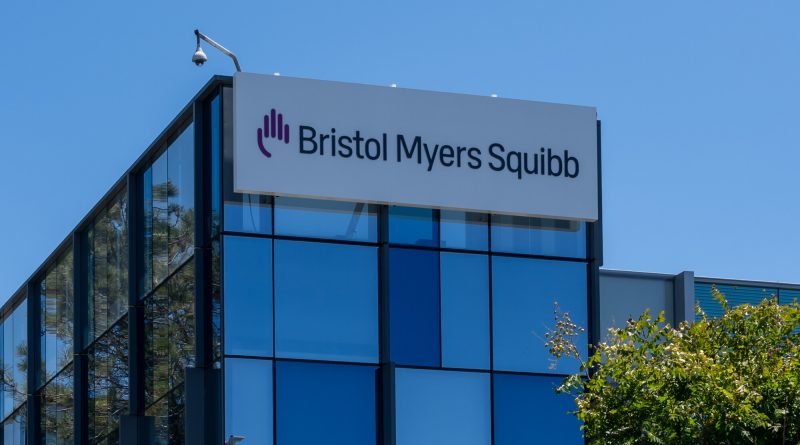
Bristol Myers Squibb expands US manufacturing with $2.3 billion Texas campus

Subscribe to our free newsletter today to keep up to date with the latest manufacturing news.
Bristol Myers Squibb is planning a $2.3 billion manufacturing campus in Houston, adding another major pharmaceutical investment to Generation Park and expanding its ability to produce several types of medicines within the US.
The roughly 600,000-square-foot site is expected to create nearly 500 skilled jobs and manufacture small molecules, biologics and antibody-drug conjugates. BMS also plans to incorporate modular architecture, automation and advanced digital systems, giving the company more flexibility to adjust capacity as its pipeline changes.
The project forms part of BMS’ broader commitment to invest $40 billion in US research, technology and manufacturing over five years.
Its location is equally significant. Eli Lilly has already selected Generation Park for a planned $6.5 billion active pharmaceutical ingredient manufacturing facility. Together, the two projects represent about $8.8 billion in announced pharmaceutical investment at the Houston development.
For BMS, the Houston campus is not simply an expansion of domestic manufacturing capacity. Its design reflects a broader challenge facing pharmaceutical companies: how to build plants that can remain useful as pipelines, production technologies and commercial priorities change.
BMS is prioritizing manufacturing flexibility over a single-purpose model
Large pharmaceutical facilities require long development timelines and substantial capital, often before the eventual commercial demand for a medicine is fully understood.
That creates an operational risk. A plant designed too narrowly around one product or manufacturing process can become less useful if development priorities shift, a medicine fails to secure approval or demand develops differently from forecasts.
BMS’ proposed Houston campus is intended to reduce some of that rigidity.
The company plans to manufacture multiple modalities at the site rather than dedicate the facility to one type of production. Small molecules, biologics and antibody-drug conjugates have different manufacturing requirements, making the planned operating model more complex but potentially more adaptable.
BMS said modular design will allow capacity to be added or reconfigured as pipeline requirements change. The campus is also expected to support medicines moving from late-stage development toward commercial launch.
That capability could help BMS connect development and commercial manufacturing more closely.
Instead of building new infrastructure around every pipeline shift, the company would have a facility designed to absorb a broader range of manufacturing needs.
Automation and digital systems are another part of that model. Process monitoring, data collection and automated production controls can support consistency while reducing dependence on manual intervention. When combined with modular manufacturing space, those systems can make it easier to adjust how a facility is used over time.
The strategic value of the Houston campus will therefore depend on more than its output.
Its longer-term value will come from whether BMS can use the same physical infrastructure across several generations of medicines without repeatedly committing capital to highly specialized capacity.
That makes flexibility a central part of the investment case.
Houston is gaining weight as a pharmaceutical manufacturing location
BMS’ decision also strengthens Houston’s position in US pharmaceutical manufacturing.
Generation Park has already secured Lilly’s planned $6.5 billion facility, which will focus on active pharmaceutical ingredients for small-molecule medicines. BMS is taking a broader multi-modal approach, but the scale of both projects gives the location more relevance in pharmaceutical site-selection discussions.
The combined $8.8 billion commitment is notable because pharmaceutical manufacturing requires more than available land.
Companies need reliable utilities, logistics infrastructure, specialist engineering expertise and access to workers capable of operating highly regulated production environments.
Houston already has deep experience in chemicals, engineering and complex industrial operations. Those strengths do not directly replicate the requirements of pharmaceutical manufacturing, but they provide part of the technical and industrial foundation needed to support large production sites.
The BMS and Lilly projects could also improve the case for further investment if contractors, technical service providers and trained workers become more concentrated around Generation Park.
That outcome is not guaranteed, and two major plants do not by themselves make Houston an established biopharmaceutical manufacturing center.
They do, however, give the region a much stronger base.
The next test will be whether the initial wave of large investments attracts the supporting infrastructure and expertise needed to turn individual projects into a durable manufacturing cluster.
US pharmaceutical investment is moving beyond simple capacity expansion
The Houston project also fits a broader shift in pharmaceutical manufacturing strategy.
BMS has committed $40 billion to US R&D, technology and manufacturing over five years. Lilly has said its US capital expansion commitments since 2020 exceed $50 billion.
Those spending plans show the scale of domestic pharmaceutical investment, but the more important question is what companies are building with that capital.
Adding production capacity can improve supply resilience and reduce dependence on individual sites or geographies. Capacity alone, however, does not solve the problem of rapidly changing drug portfolios.
A highly specialized plant can still become a constraint if future medicines require different processes. Large facilities can also become expensive underused assets if commercial demand falls short of expectations.
That is why adaptability is becoming more important in plant design.
BMS’ Houston campus combines multi-modal manufacturing, modular construction, automation and digital systems in an attempt to create capacity that can respond to changes in the company’s pipeline.
The approach links manufacturing planning more closely with portfolio strategy.
Instead of asking only where an approved medicine should be produced, pharmaceutical companies increasingly need to consider whether new facilities can support medicines still in development and technologies that may evolve over the life of the plant.
For Houston, BMS adds another multibillion-dollar project to a developing pharmaceutical manufacturing base.
For BMS, the more important measure will be how effectively the campus can be used as its portfolio changes.
The value of the $2.3 billion investment will not depend only on how much capacity the company builds, but on how easily that capacity can be adapted to the medicines it needs to manufacture next.
Source