
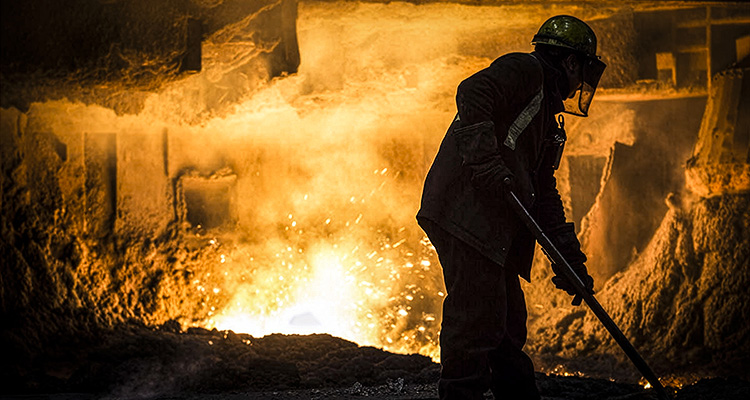
British Steel is playing a pivotal role in securing the UK’s industrial and infrastructure ambitions

Few materials have shaped human civilization quite like steel, with its origins tracing back thousands of years to the earliest experiments in iron smelting. Today, its unmatched strength, durability, and versatility make it indispensable to the modern global economy – not just for construction, railways, vehicles, and energy infrastructure, but also for its high recyclability, a factor that continues to grow in importance.
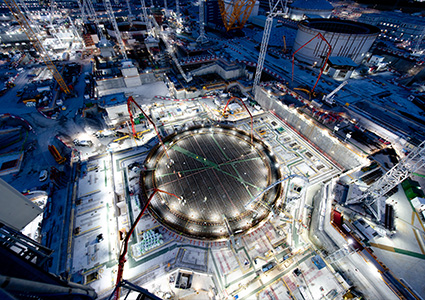
Standing as the UK’s largest steel producer and last remaining primary producer, British Steel is a leading European steel manufacturer with facilities across the UK, supplying premium long products around the world. Headquartered in Scunthorpe, the organization has been making iron since 1864 and steel since 1890, and today it employs more than 4000 people – many of whom come from families that have been working for the business for generations. It manufactures more than 1450 different specifications of steel, which is rolled into wire rod, constructional sections, special profiles, rail, billet, bloom and slab. These products have contributed to some of the UK’s most iconic landmarks, from The Shard and Canary Wharf to Heathrow Airport and the Olympic Stadium – and have built famous skylines across the globe including New York, Hong Kong, Istanbul and the Middle East.
In April 2025 the business faced a crisis, when the UK Government took control of British Steel’s plant in Scunthorpe to prevent it from closing. Saving more than 4000 jobs, this step also protected the UK’s ability to produce virgin steel, produced directly from raw materials rather than recycled scrap.
“The UK Government has invested heavily in the UK’s steel sector because it is a crucial national asset,” states Ben Cunliffe, Director Sustainability at British Steel. “We’re thankful to government for intervening to save us last year and are continuing to work with them to secure the long-term future of the business. It’s crucial that the UK has a functioning domestic steel sector that continues to support major infrastructure and protects us from international volatility.”
Indeed, British Steel’s presence is particularly significant in the UK. “Our energy, infrastructure, transport and defense industries all depend on the reliable domestic supply of steel for their own security, and UK industrial policy suggests that these sectors are set to grow substantially over the next 25 years,” notes Ben. “Currently, around 50 percent of British Steel’s total production serves the construction sector, and we are also the UK’s only remaining producer of heavy sections used in major construction projects. Alongside this, we manufacture a range of high-performance rail products, supplying technical consultancy services to meet the needs of high speed, heavy duty, metro and tramway networks globally.
“In addition, local UK production offers further benefits, including giving customers a two-to-three-month head start compared to imported steel. We are a business that delivers on quality, speed and reliability, and our steel can be on site in as little as three days, with regular rolling of the full range of sizes every two to four weeks.”
While British Steel continues to invest in the UK – supporting local jobs, skills and supply chains – Ben notes that the company is increasingly being excluded from UK private and public sector construction schemes because of carbon-related procurement criteria. “This means that UK construction schemes are increasingly reliant on imported, lower carbon steel made in an electric-arc furnace (EAF) to meet net zero benchmarks, rather than supporting jobs, skills and investment here at home. This simply shifts emissions overseas while excluding British Steel from supply,” he points out. “We’re grappling with the tension at the heart of policy: while government rightly intervened to safeguard domestic steelmaking capacity, procurement frameworks are making it harder for that capacity to be fully used by the construction sector.”
Save Steel, Buy British
In response, British Steel has launched the ‘Save Steel, Buy British’ campaign to call on UK industry to sign a pledge backing the nation’s steel sector. “We’ve been delighted with the response so far, with figures such as Luke Myer MP, Sir Nic Dakin, Mayor Luke Campbell, Mayor Ben Houchen, Mayor Claire Ward and Mayor Andrea Jenkyns setting out their support for secure, sovereign steelmaking.
“Buying British steel protects the social value the industry delivers while we move forward,” Ben continues. “Thousands of skilled jobs, strong communities and secure supply chains depend on it. Importing steel simply offshores jobs and value, and switching to imported EAF steel does nothing to reduce global GHG emissions (as IStructE have recently demonstrated in their report The role of scrap in steel decarbonisation). With the right backing, the industry can deliver its long-term ambition of low-carbon embodied steel made in Britain.”
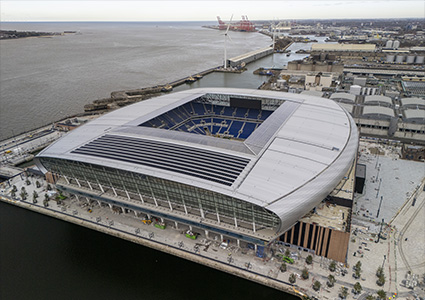
British Steel is committed to decarbonizing, but there are challenges in the long-term strategy, particularly the time required to transition. “Building a new steel plant takes several years and closing off the steelmaking sector before it has had chance to transition, would not speed up decarbonization – it would simply mean losing thousands of UK jobs, and total devastation within the communities which depend on us.” Increasing pressure on UK producers to decarbonize by removing their markets is not the answer; what is needed is support from industry and the customer base during this transition. While working on plans to move towards lower-carbon production in the future, the business is also maintaining and improving current operations through a significant investment strategy.
“A recent £50m investment in a new billet caster allows us to deliver higher quality billet for our downstream rolling mills, allowing access to higher-end quality markets and providing an all-round enhanced offering to our customers,” reveals Ben. “Equally, we have recently opened a new £26m Service Centre at our Skinningrove plant in the Northeast of England, which firmly establishes us as one of the world’s leading manufacturers and processors of value-added profiles for the forklift truck mast industry. Our extended range of products is designed and manufactured to precise customer tolerances, which few global competitors can rival.
“Other recent investments include a £27 million investment in three new cranes at our port facility, Immingham Bulk Terminal. The new machinery uses the latest technical advances in dig depth optimization to ensure continuous peak performance. Meanwhile, a £14.6 million investment is enhancing our energy operations, including projects to improve the way we recycle works arising gases and generate electricity.”
In fact, energy is a topic at the top of the agenda for British Steel, given the high cost of energy in the UK. “We need to create the conditions that allow our business to thrive and this includes ensuring access to competitive energy prices that support industrial growth,” emphasizes Ben. “In the UK, our typical industrial costs of energy are 30 percent to 40 percent higher than our competitors in Europe, and if we are to safeguard a capability that the UK cannot afford to lose, we must ensure ongoing collaboration with government and industry. We’re also concerned by the impact of tariffs on domestic steel production. New trade barriers will carry real consequences for an industry already under strain. If we want a steel sector that can support our infrastructure, energy and defence needs, we need measures that protect its long term viability.”
Now that the UK Government has stepped in to safeguard British Steel and the jobs it supports, the business is working with policy makers to set out a long-term plan to ensure that Britain retains the capability to make its own steel. Ben remains optimistic about the future: “The demand for steel to support UK infrastructure requirements is set to grow substantially up to 2050, and this presents a tremendous opportunity for the UK economy and its supply chains and for future generations of workers to embark on a career in a regenerated steel industry. With modernized equipment improving reliability and costs, the opportunities for the UK steel sector to once again become the backbone of a successful British manufacturing sector could pave the way for a very exciting future for our communities and our supply chains.
“Our priority is to ensure the business has a viable future and that industry continues to buy British steel. We’re proud that we contribute well-paid jobs where they are needed most. Our sites are in some of the most deprived areas of the country, providing crucial employment in our communities. We’re working with Oxford Economics at the moment on new research which highlights the extent of this socio-economic impact in the UK, which calculates that our steel enables £9.8 billion in GDP and 142,000 jobs.
“We’re continuing to highlight our campaign – ‘Save Steel, Buy British’ – to encourage support for the sector so that British-made steel can be used in the projects that matter most – schools, hospitals, housing, roads and rail – for many years to come.”
