
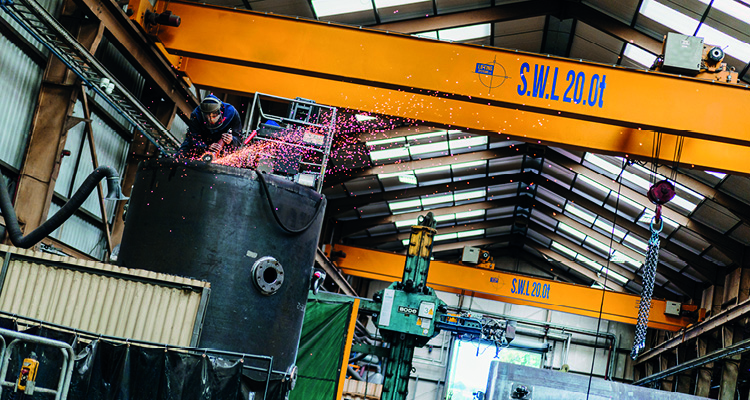
Byworth Boilers combines manufacturing heritage with digital transformation to redefine industrial steam services

Long before it powered factories, railways, and manufacturing plants, steam solved a different industrial challenge. Early steam applications helped remove water from flooded coal and tin mines, keeping Britain’s industries running. Over the centuries, steam played a key role in industrialization, adapting to new demands, technologies, and ways of working.
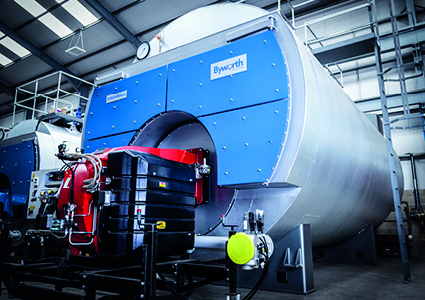
Even today, steam remains vital for food and beverage, pharmaceuticals, healthcare, and manufacturing, but many people still see it as a relic instead of an evolving technology.
Rob Baldwin wants to change that perception. As Managing Director of Byworth Boilers (Byworth), a third-generation family business his grandfather started in 1968, he leads new investments in technology, manufacturing, service delivery, and leadership. His goal is simple: keep this historic industry relevant for today’s world.
“Everyone thinks of steam trains, so people see the industry as stuck in the dark ages. If we do not push ourselves to bring steam into the modern world of machine learning and IoT, we will never get there. We have some key people driving this transformation,” he says.
Rob believes the industry must rethink what customers are actually buying if steam wants to shed its legacy image. “Now, the conversation is not just about boilers. It is about uptime, visibility, support, and performance across an asset’s whole lifecycle. It is not about convincing customers that steam is still relevant. It is about showing that the companies supplying it can offer more than just equipment.”
The shift in mindset drives much of Byworth’s recent growth. The company has evolved beyond just manufacturing, now offering full lifecycle support including installation, commissioning, maintenance, training, spare parts, and boiler rental.
With about 185 employees and roughly $28 million in annual revenue, Byworth now focuses on keeping customers connected throughout the equipment’s lifecycle. Byworth’s investment in connectivity is not just about technology; it is about building stronger relationships. “You do not need 24/7 breakdown cover; you need to trust your equipment. We want real data to understand when and why things fail, so we can educate customers,” he points out.
Rob wants Byworth to be there for every customer beyond the point of sale. “We do not want to sell a boiler and then disappear for 15 or 20 years. We want to be on the journey with our customers, understand how they use the boiler, and help them get the most out of it through digital services.”
That philosophy drives one of the biggest transformation efforts in Byworth’s history. Several years ago, the company started replacing a scattered mix of systems for finance, manufacturing, inventory, sales, and service. As Byworth grew, these limitations became hard to ignore. “We realized we needed to invest in IT and find a system that could handle everything. Running three outdated systems that did not talk to each other was holding us back,” Rob notes.
Byworth chose an integrated Microsoft platform covering finance, operations, customer engagement, field service, e-commerce, and customer portals. At the same time, it connected its Unity control system to the broader business. “Our boilers and Unity control system will let us feed information back into the main system,” Rob explains.
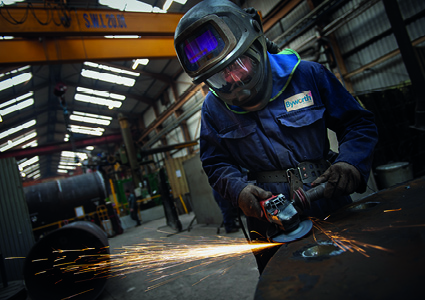
But technology is only part of the story. The bigger goal is to create a connected environment that links customers, service teams, and operational data. At the center is the Unity control system, which Rob views as a bridge between equipment performance and long-term customer support. “The aim is not just more data, but better decisions, stronger reliability, and a closer connection between how equipment operates and how it is serviced.”
Byworth’s physical investments follow the same reasoning. The company recently added a 24,000-square-foot manufacturing facility in Keighley and continues to invest in production to boost throughput and support growth. As demand for boiler rentals and long-term leases rises, Byworth is expanding its rental fleet. “Manufacturing always has tight margins, so we constantly search for ways to improve efficiency,” Rob observes. “We have invested heavily in infrastructure and manufacturing capability over the last five or six years, and we keep going. More customers now hire boilers or choose long-term leases instead of buying. There is a clear shift toward OpEx over CapEx.”
Growth drove changes in Byworth’s leadership. New leaders across service and delivery now create smoother transitions between manufacturing, installation, commissioning, and aftersales support. For Rob, leadership development is not about hierarchy. It is about building a culture where people can test ideas. “We want strong people who can challenge the director team, and that works well. Sometimes that challenge brings frustration and sparks competitiveness, but we all share the same goal.”
Rob’s willingness to question the status quo shapes his vision for British manufacturing. As England’s only industrial boiler manufacturer, Byworth takes its responsibility to invest in skills, engineering, and local manufacturing seriously. “We are passionate about British manufacturing. We put ‘Made in Britain’ branding on our new building. British manufacturing is on the map for being the best at what we do, making steam boilers, pressure vessels, and heavy engineering. Safeguarding jobs is just as important as creating more.”
Several years of investment are now beginning to converge. New systems are being embedded across the business; connected services are moving from concept into operation, and manufacturing capacity has expanded to support future demand. Rob sees the next phase as turning that work into a service-led model that changes how customers interact with industrial steam.
“We have been in the trenches now for three or four years doing this development work, and it is tough. It tests people. We know where the end is; we know what we are trying to achieve.” He expects the connected service package to gather momentum over the next 12 to 18 months. “There are not that many boiler manufacturers left in the world, so we want to be the best. We are a small town in Yorkshire, but why should we not aim to be world leaders?” Rob concludes.
