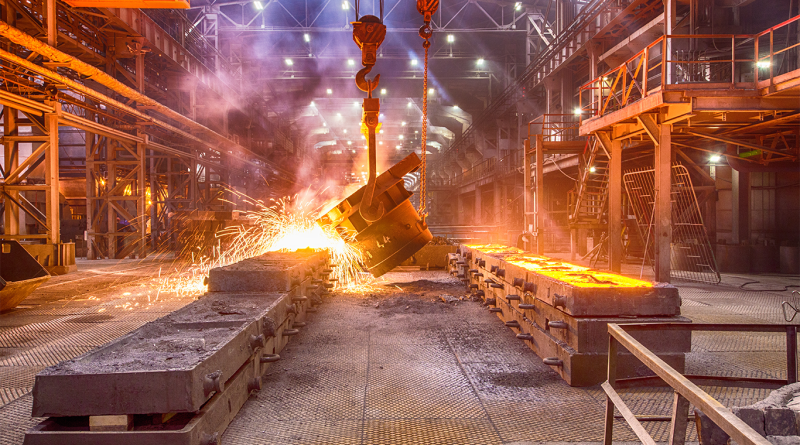
Cleveland-Cliffs changes course on $1B steel project for Middletown Works

Subscribe to our free newsletter today to keep up to date with the latest manufacturing news.
Cleveland-Cliffs is preparing to spend $1 billion modernizing Middletown Works in Ohio with support from a $500 million US Department of Energy award, but the project now bears little resemblance to the industrial decarbonization program that secured federal backing two years ago.
The original proposal called for Cleveland-Cliffs to replace Middletown’s blast furnace with a hydrogen-ready direct reduced iron plant and two electric melting furnaces, creating a production system intended to reduce emissions while positioning the facility for wider use of hydrogen as supplies became commercially available. Under the revised plan, the company will retain and rebuild its blast furnace while investing in new process controls, material-handling equipment and on-site power generation.
The explanation offered by the Department of Energy puts one of the central problems facing low-carbon manufacturing into commercial terms, as Cleveland-Cliffs determined that the original project no longer had a viable business case because customers were unwilling to pay a sufficient “green premium” for steel produced through a lower-carbon process.
That shift turns Middletown into more than a story about capital spending at one Ohio steel mill, since it illustrates the gap that can develop between technical progress in industrial decarbonization and the willingness of downstream customers to support the higher costs associated with deploying those technologies at commercial scale.
The economics of green steel have collided with customer demand
When Cleveland-Cliffs announced the original project in 2024, the proposal represented a fundamental change in the way iron would be produced at Middletown Works, with the company planning to replace the existing blast furnace with a hydrogen-ready direct reduced iron, or DRI, plant capable of producing about 2.5 million tons annually.
The project also called for two 120-megawatt electric melting furnaces that would feed molten iron into much of Middletown’s existing downstream steelmaking infrastructure, creating a production route that could initially operate with natural gas before moving toward increasing quantities of clean hydrogen as supply and economics improved.
Cleveland-Cliffs said the natural gas configuration could reduce ironmaking carbon intensity by more than 50%, while the eventual use of clean hydrogen offered the potential for reductions exceeding 90%. Federal estimates projected that the project could cut greenhouse gas emissions by roughly 1 million metric tons annually, while earlier planning documents suggested the natural gas configuration could reduce steel slab production costs by about 20%.
Those figures gave the original proposal a commercial argument alongside its environmental case, since Cleveland-Cliffs projected that the new configuration could generate substantial annual operating savings while reducing emissions and creating a pathway toward hydrogen-based production.
The company had estimated annual savings of about $450 million compared with the existing production route, while its net capital commitment was expected to be approximately $1.3 billion after federal support and avoided spending on older blast furnace and coke infrastructure.
The revised project shows that those calculations have changed substantially, with the Department of Energy saying Cleveland-Cliffs concluded that customer demand did not support the green premium required to maintain the business case for the original configuration.
The issue extends well beyond Middletown because industrial decarbonization projects often require significant upfront investment, additional energy infrastructure and changes to production systems that have been refined over decades, leaving manufacturers with a limited number of ways to absorb any increase in cost.
If lower-carbon steel remains more expensive to produce, the manufacturer must either absorb the difference, find sufficient operational savings elsewhere or pass some of the cost to customers that are prepared to pay more for material with a lower emissions profile.
The Middletown decision suggests that the last of those options remains difficult even in sectors such as automotive manufacturing, where major companies have made public commitments to reducing emissions across their supply chains but continue to operate under strict cost, margin and pricing pressures.
Middletown will modernize rather than replace its blast furnace
The revised Cleveland-Cliffs program is less transformative from a steelmaking technology perspective, but it still represents a substantial modernization of one of the company’s major US production facilities.
The company plans to rebuild and upgrade the Middletown blast furnace while installing advanced material-handling infrastructure, introducing artificial intelligence-based process controls and constructing a cogeneration facility that will capture blast furnace gas and use it to produce electricity and steam for the plant.
Cleveland-Cliffs expects those investments to improve energy efficiency, lower operating costs and reduce the facility’s dependence on electricity purchased from external suppliers, while construction is expected to take place over roughly four years and the blast furnace rebuild is scheduled for completion in the first quarter of 2030.
The Department of Energy has said the project will protect about 2300 jobs at Middletown Works, while local reporting has indicated that approximately 1500 construction jobs could be created during the modernization program.
From an operational perspective, retaining the existing blast furnace allows Cleveland-Cliffs to invest in productivity and efficiency improvements without taking on the simultaneous commissioning risks associated with a new DRI plant, new electric melting furnaces and the supporting energy infrastructure required to operate an entirely different ironmaking system.
Blast furnaces remain mature industrial assets supported by established supply chains, maintenance practices and workforce expertise, so rebuilding the existing furnace gives Cleveland-Cliffs a route to upgrade the plant while relying on a production process that it already operates at commercial scale.
The decision should not be interpreted as an end to modernization at Middletown, since the company is still directing substantial capital toward energy use, process control and plant infrastructure, but it does represent a different balance between investment risk, operating certainty and emissions reduction.
Under the original proposal, Middletown was expected to eliminate coke from iron production and establish a production route capable of increasing its use of hydrogen over time, whereas the revised plan continues to depend on a blast furnace using coal-derived coke even as other investments improve efficiency throughout the plant.
Hydrogen steel now faces a commercialization test
Cleveland-Cliffs’ change in direction is particularly significant because the company has already demonstrated that hydrogen can be incorporated into steelmaking operations, including a hydrogen injection trial at Middletown in 2023 and later work at its Indiana Harbor No. 7 blast furnace.
By 2025, the company said the Indiana Harbor furnace was technically prepared to use hydrogen when the fuel became commercially viable, which points to a broader distinction between proving that a technology can work and establishing that it can operate competitively at industrial scale.
Hydrogen can reduce emissions in ironmaking, but large-scale adoption depends on factors that extend far beyond the furnace itself, including the price and availability of hydrogen, the cost and carbon intensity of electricity, infrastructure requirements, capital spending and customer willingness to pay for the resulting steel.
A producer can therefore demonstrate that hydrogen performs successfully within an industrial process without demonstrating that the economics are strong enough to justify replacing existing assets or committing billions of dollars to an alternative production system.
The original Middletown proposal was designed in part to manage that transition risk by allowing the DRI facility to begin operations using natural gas before moving toward larger quantities of clean hydrogen, and Cleveland-Cliffs had argued that the natural gas configuration could deliver substantial emissions reductions while lowering operating costs.
The decision to replace that approach with a blast furnace modernization program indicates that investment decisions are being evaluated against a wider set of commercial conditions, including capital requirements, steel pricing, customer behavior, execution risk and the expected return from emissions reductions.
Those pressures extend into the supply chain because automakers and other large steel buyers may want to reduce Scope 3 emissions while their procurement teams continue to face strict cost targets, competitive pricing pressure and margin requirements.
The green premium therefore becomes a practical measure of how much customers are prepared to pay for emissions reductions embedded in the materials they purchase, and the current Middletown plan suggests that the price difference remains difficult to sustain at the scale required for a major steelmaking conversion.
Cleveland-Cliffs has retained federal support, protected a major domestic steelmaking operation and committed to a modernization program intended to improve productivity and energy performance, but the revised project no longer offers the emissions trajectory that was envisioned when the hydrogen-ready proposal received federal backing in 2024.
The Middletown site also faces separate environmental obligations after the Justice Department announced a proposed settlement in April requiring Cleveland-Cliffs to undertake at least $12 million in corrective measures related to hazardous-waste contamination across the 2600-acre facility, although that proceeding is separate from the current modernization project.
The wider industrial question is whether Middletown represents a temporary delay in hydrogen-based steelmaking or a more persistent signal about the economics of deploying the technology across the US steel industry.
Cleveland-Cliffs has already shown that hydrogen can form part of its technical roadmap, but the company has not found enough customer demand at a price that supports the original investment structure, according to the Department of Energy’s explanation of the revised award.
For hydrogen steelmaking to move from trials and planned projects into mainstream US production, lower-carbon processes will need to compete more effectively on cost, attract stronger demand from downstream buyers or benefit from a combination of both, and Middletown suggests that commercial viability may remain the more difficult threshold to cross.
Source:
WYSO