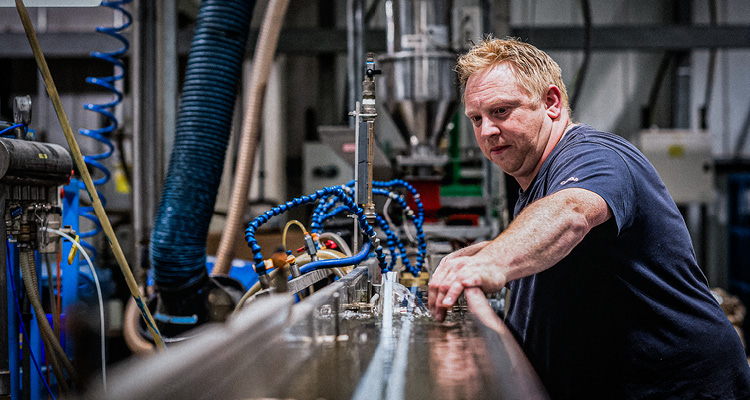
COBA Plastics Group is changing how the automotive industry thinks about sealing

Independently owned since its inception in 1966, COBA Plastics Group (COBA) is an international engineering-led plastics component manufacturer working across extrusion and injection molding processes. Its intercontinental engineering and manufacturing presence allows the group to design, develop, and manufacture bespoke components for various industries. Goncalo Leonel, Technical Director, and Steve Richardson, Sales Director, explain what that means in practice.
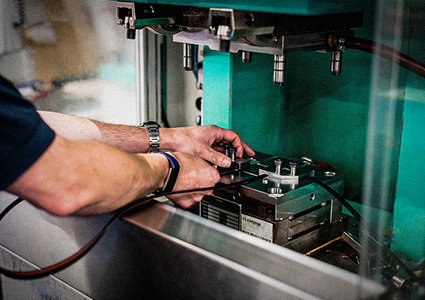
“Through our in-house engineering capability, we can act as either a full-service supplier or a make-to-print partner,” Goncalo opens. “We offer end-to-end services from design concept through tool manufacture, serial production, and aftermarket support. Our products are typically developed according to customer-specified design or solution requirements for bespoke applications. The industries we serve differ drastically, but the requirements we encounter from industry-specific customers tend to be aligned around quality, environmental impact, and technically and commercially viable propositions. Whatever the sector, we approach every project with the same level of meticulous detail. We are certified to ISO 9001 and IATF 16949, and we apply the stringent standards of automotive component manufacturing to every enquiry we receive. That gives our customers confidence that their projects are valued and well taken care of.”
COBA’s growing international footprint, with sites across the UK, Slovakia, Romania, and South Africa, and most recently in Morocco, the group empowers itself to deliver that consistency of approach to many OEMs across the world. Steve highlights the benefits of this global presence, which has become one of the group’s most important commercial assets. “Our international footprint gives global OEMs access to local manufacturing and commercial support through a single established group. With six production sites across four countries, we can support customers closer to their own facilities while drawing on shared engineering, extrusion, and manufacturing expertise across the business. For OEMs, that means shorter and more resilient supply chains, consistent quality expectations, and a more coordinated route from design and development through to high-volume production. This is all managed through one supply partner across multiple regions, saving clients the headache of managing separate supplier relationships in each market.”
2026 marks COBA’s 60th anniversary, a major milestone for a company that began with a single extrusion line and technical thermoplastic solutions. Over six decades, the group has evolved considerably, both technologically and geographically, with north of £10 million invested in technology and people over the last five years alone. That investment has expanded the group’s capability with more innovative and cost-effective materials while modernizing its production systems, thereby strengthening the team’s ability to serve an increasingly demanding customer base. “We are constantly working to improve our value proposition by offering cleaner, lighter, and more technically refined solutions. With the exception of raw material procurement, COBA is vertically integrated, which means we can positively influence both cost and lead time. Ultimately, that gives us the flexibility to act as a development partner that can meet specific requirements, contribute design-for-manufacture input, and consistently deliver on time and in full,” Steve adds.
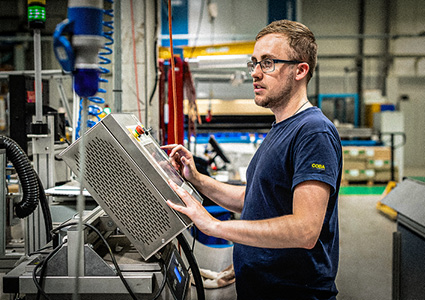
One of the most significant recent investments has been in automation and computer vision-based quality inspection. Goncalo explains how this development changes what the group can credibly promise customers in terms of consistency and reliability. “Our investment in automation and advanced in-line inspection gives customers greater confidence that quality is being controlled continuously rather than checked only at the end of a production run. We use non-contact laser measurement of extruded profiles in real time, supported by Statistical Process Control, with thousands of measurements taken every hour without slowing the production line. Combined with 100 percent process-control principles and long-term storage of inspection data for customer reporting, this helps us to detect variation earlier, prevent non-conformances, and maintain consistent output at volume. Commercially, that means more dependable lead times and lower costs associated with scrap, rework, and sorting, as well as reduced manual inspection and disruption. We are also investigating the use of AI-enabled vision systems to inspect and digitally capture every part at the end of the production line, which would strengthen traceability significantly and move us closer to our ambition of zero-defect manufacturing,” he outlines.
The shift to electric vehicles is another force shaping COBA’s direction, driving demand for lighter, more efficiently engineered plastic components suited to new vehicle architectures. As the market continues to evolve, some customers are taking a considered approach to investment decisions, given that priorities and technologies have developed meaningfully since 2021. COBA understands that any new offering must therefore combine technical performance with commercial viability and a clear return on investment. Hence, the group is adapting its materials, processes, and capabilities accordingly to support established manufacturers as their requirements become clearer.
A core priority for COBA as it looks forward sits at the intersection of materials science and sustainability. “One of the most significant developments we are pursuing is our ambition to change the global mindset around automotive sealing systems,” Steve says. “By applying our materials expertise, design-for-manufacture approach, and advanced extrusion capabilities, we strive to help OEMs move away from traditional EPDM solutions towards lighter-weight, cleaner, and more cost-effective thermoplastic alternatives. The objective is not simply to substitute one material for another, but to engineer sealing systems that deliver the required performance while reducing component weight, improving processing efficiency, and offering greater recyclability at end of life. We see this as a meaningful opportunity to support our customers’ commercial and sustainability goals, while positioning COBA at the forefront of the next generation of engineered sealing solutions,” Steve ends.
From zero-defect manufacturing ambitions to rethinking automotive sealing systems entirely, COBA is using its engineering heritage to push into territory most plastics manufacturers have not yet considered.