
Committed to innovation, sustainability and Maranhão communities, AVB is a global model for green steel

Beginning in 2008, Aço Verde do Brasil (AVB) was built from the original concept of producing steel without the use of fossil fuels – in fact, the company name translates to ‘green steel from Brazil’ and alludes to its sustainable process, including hydroelectric energy, solid residues recycling and reforested charcoal.
Although AVB was launched 20 years ago, the family-owned business has been prevalent in the industry since 1976 and has decades of experience in transforming iron ore and charcoal into pig iron and steel. This expertise and dedication to the environment led to AVB becoming a very low carbon emission steel producer, with its state-of-the-art mill in Açailândia, State of Maranhão. CEO Silvia Nascimento tells Manufacturing Today why the company chose this location, and how business has progressed since the mill opened in 2015.
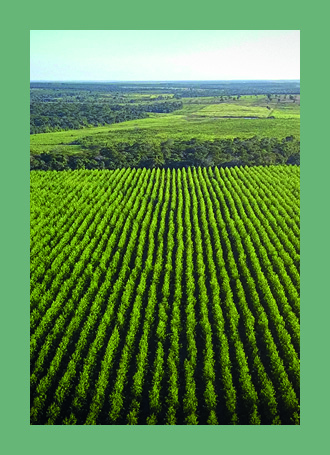
“After many years of being a supplier to other steel mills, we decided to build our own,” she opens. “Operating in Maranhão means we are close to Carajás – the largest iron ore mine in Brazil, run by Vale – and allows us access to high-quality iron, which enables us to produce exceptionally high-quality steel.” Today, AVB focuses on long steel products for the civil construction industry, producing items such as wire rods, rebars, meshes and columns, using reforested eucalyptus charcoal instead of coking coal. “Reforested charcoal is considered a net zero CO2 emission product, which is the main difference when sourcing energy from it,” reveals Silvia. “Studies confirmed that the tree absorbs more CO2 through photosynthesis throughout the seven years it needs to grow, than it emits when you produce the charcoal. Therefore, it’s agreed by international standards that it’s a zero-emission raw material. However, this only applies to charcoal from reforested areas. It is prohibited to cut native trees.”
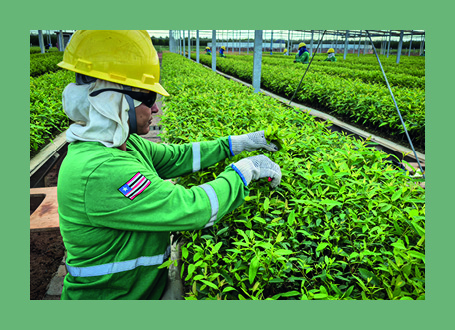
Silvia describes reforested charcoal as AVB’s most important raw material, alongside iron ore. “Eighty-five to 90 percent of my costs go into charcoal and iron ore,” she states. “They are the heart of our company. We buy the iron ore from Vale, our sole supplier. With the charcoal, we decided to control the planting, harvesting, and manufacturing ourselves, rather than buying from market, as this gives us more control in terms of quality, availability and traceability. We bought 220,000 hectares of land, with around 80,000-90,000 trees planted and, due to Brazil laws, the remainder of the land is a completely preserved area.”
Low carbon emission
Certified annually by SGS audit company through World Steel Association and GHG Protocol methodology since 2018, AVB has achieved a low carbon emission certification, after its emissions were found to be very low on a commercial scale – even lower than the steel mill projects planned in Sweden, Germany, and the US. “For us, that is incredibly important,” Silvia adds. “We think that’s very important because it gives us a competitive edge and differentiates us from the others.”
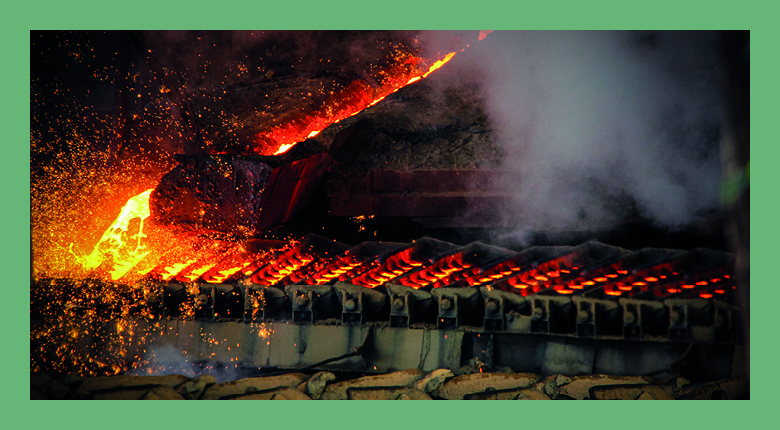
As environmentally conscious pioneers in the steel sector, AVB also embraces groundbreaking new technologies within its processes; most notably being one of the first large steel mill to use reforested charcoal in a blast furnace to make green steel. “Most of the equipment was built together with Danieli, Siemens, and Primetals,” continues Silvia. “Some technologies were created by ourselves to adapt specifically to our operation. When you combine the raw materials inside a blast furnace, it reduces the iron ore with char-coal to get liquid pig iron, which is charged into equipment called converters in the melt shop, where most of the silicon and manganese content are oxidized with a supersonic oxygen lance to produce the liquid steel. Gases are formed throughout all these processes, and we’ve developed technology to collect and clean the process gas generated into a gas holder or pipelines which can be used to move turbines to produce renewable electrical energy. Much of the breakthrough technology in our company was developed by our group of engineers alongside our equipment suppliers, allowing us to operate without the use of fossil fuels – they don’t exist anywhere else.”
These supplier partnerships are integral to AVB, such as its long-term relationship with iron ore producer Vale, and technology companies Danieli and Primetals. “We cover huge industrial areas, and we strive to be valuable friends with our suppliers, as those companies are essential for raw material, maintenance of our equipment, spare parts and new technologies. They aren’t just suppliers, they’re our partners and we help each other out.”
The strong relationship with communities in North Brazil is also a fundamental part of AVB. Located in Maranhão, Silvia describes the state as one of the poorest in the country and the company’s social impact on the region has been immense. “First, to have a company with more than 3000 employees in the state is very gratifying because you create secure jobs in a city that greatly requires those jobs,” she shares. “In addition, we carry out a lot of social work in the city, helping schools, helping the elderly, partnering with the Mayor and the Governor to help pay for and organize better healthcare and infrastructure. Last year alone, our social initiatives tended to more than 64,000 people in our area.” Technical training programs are also rolled out to generate job opportunities for local people. “Açailândia has one of the lowest Human Development Indexes in the country – at AVB, we pay higher than the minimum salary, offer health insurance, dental insurance, life insurance, schooling, food and transportation to our employees and their families living in this underprivileged area. To see this project changing the lives of so many people is very re-warding.”
Following the recent investment and startup of an innovative oxygen plant, 2026 is about cost management for AVB. “It is a challenging time for us with the huge amounts of imported steel with high CO2 emissions from China into Brazil,” declares Silvia. “However, our brand-new oxygen plant is top-of-the-line, and we are also investing heavily in AI to speed up logistics, improve customer service, reduce capital spending and decrease the unnecessary usage of raw material. In the next five years, we plan to expand in terms of volume and types of products. The current economic climate of Brazil is slowing down growth, but we’re growing very organically by opening more product lists, rather than producing more of the same. Our aim is to enter different markets and reach full capacity without sacrificing margins.”
