Despite building its name on window hardware, Titon’s ventilation systems and Cool Plus are now driving growth

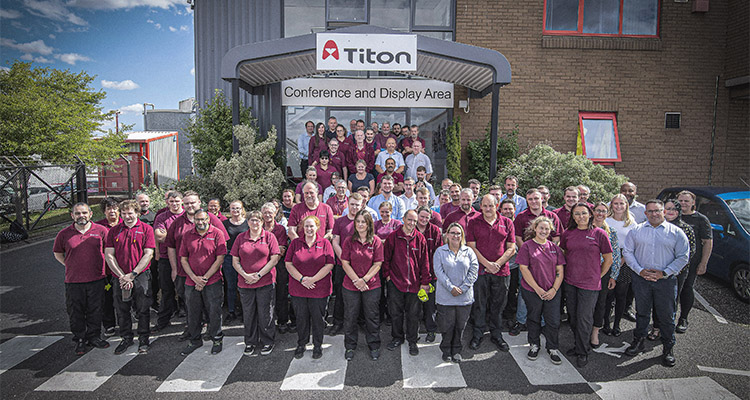
Established in 1972, Titon has grown from its family-founded origins into the business it is today. The company built its early success making window and door hardware and trickle vents for the double glazing industry, a market it served very successfully from the 1970s through to the 1990s. In the 2000s, Titon launched a second business unit known as Ventilation Systems, which sells mechanical ventilation and heat recovery products. Unlike passive ventilation, mechanical systems use a small motor to assist airflow in and out of a building, and Titon now offers a large range across this category. Alongside its factory in the UK, the company has a small office in the US and a representative in China, though it remains primarily a British business with around 90 percent of its revenue generated in the UK. Tom Carpenter, Chief Executive Officer, sheds light on the full Vntilatioscope of what the company offers today.

“Ventilation Systems is our growth engine, selling predominantly into residential new build. As part of the end-to-end service we offer our customers, if a developer is building a block of flats, we will design the full ventilation system for that building and deliver the entire solution. The business is driven by regulation, and building regulations and environmental health standards are becoming increasingly stringent. All of our products are designed to help customers meet the latest requirements around fresh air and overheating,” he explains.
The most recent product to be released in line with that focus is Cool Plus, a pseudo air conditioning unit that has generated significant traction since its launch late last year, becoming a major driver of sales in 2026. Cool Plus serves as a direct response to a new building regulation centered on overheating in residential buildings. Titon is seeing its customers pay far greater attention to the internal temperatures of the homes they build, and the company’s multiple solutions in this space represents one of its most promising growth engines going forward.
That offering has been further enhanced by the recent acquisition of G-Pack Manufacturing (G-Pack), a strategic move that delivers value in more ways than one. “G-Pack is a great fit for us. Their turnover is around £1.4 million, which would be of little interest to a larger business but represents a meaningful addition for a company of our size. What makes the deal particularly attractive is that G-Pack currently outsources all of its injection molding. We have a lot of spare capacity in our own injection molding plant, so we can bring their production in-house, eliminating the third-party contract manufacturer and improving their gross margin in the process. At the same time, it allows us to make much better use of an underutilized asset. We are planning to move back to three-shift operation in our injection molding plant to accommodate these products, and three-shift working brings real economies of scale and overhead absorption benefits. The other important point is that G-Pack operates in exactly the same market and customer base as our trickle vent business, but their products do not overlap with ours at all. It is entirely accretive, and we can add a great deal of value to them,” Tom continues.
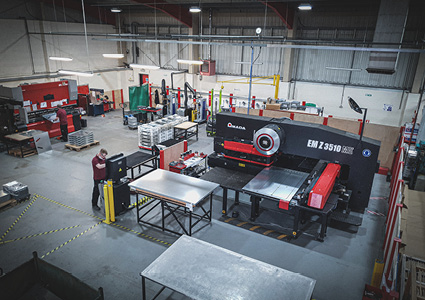
With the integration plan already underway, Titon is in the process of bringing G-Pack’s production into its Haverhill facility. G-Pack owns all its own tooling, so Titon is working with G-Pack’s contract manufacturer on a gradual program of tooling transfers and building up stock ahead of full in-house production.
Alongside the G-Pack integration, Titon continues to invest in in-house testing and R&D capabilities, which have long been a core driver of the business. This year, the company invested in an advanced UV weathering chamber, adding to a testing infrastructure that already includes automated testing, salt fog testing and flow analysis. “Both of our business units have extensive in-house testing capability,” Tom informs. “When we are developing a new product, we test it in our dedicated lab in conjunction with customers’ windows by opening and closing automatically 10,000 times, applying load weights, and running all the relevant durability and performance tests. UV testing is essential for products that go outside and are exposed to the elements, and salt fog testing ensures reliability in coastal environments.
“On the Ventilation Systems side, flow testing and thermal efficiency measurement are essential. Our products must not only perform reliably in service, but also demonstrate, through rigorous testing, that they meet demanding requirements for specific fan power, heat recovery efficiency and other relevant standards. For our customers, that evidence is critical: it gives them confidence that the ventilation systems they specify will support compliance with building regulations. This combination of proven product performance, technical validation, and regulatory expertise is an important part of the value Titon provides.”
Doing things properly also includes sustainable processes for Titon. As such, the company has partnered with a third party to carry out a thorough analysis of its carbon footprint, and while its energy consumption is not large, Titon has a clear set of internal metrics and an ambition to become carbon neutral in the future. The key metrics are aligned with the company’s commercial goals rather than treated as a separate initiative, with the aim of becoming more profitable by being green.
After five decades navigating the ebbs and flows of the British construction industry, Titon has emerged stronger than ever. The strategic acquisition of G-Pack brings in new products and strengthens the company’s position in the market, while Cool Plus continues to gain traction and in-house testing drives further product development. Through those recent investments, Titon is proving that old businesses can still move quickly.