
Discover how AIS expanded its geographical footprint internationally while following the energy transition

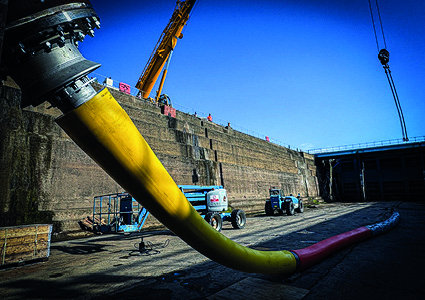
As a material science business, AIS leverages six core technologies to produce protective products applied across a range of industries. The majority of its work sits within the energy sector, including oil and gas, though the company is actively following the energy transition into offshore wind and nuclear as well. This deliberate and well-timed diversification is opening up significant new opportunities for AIS.
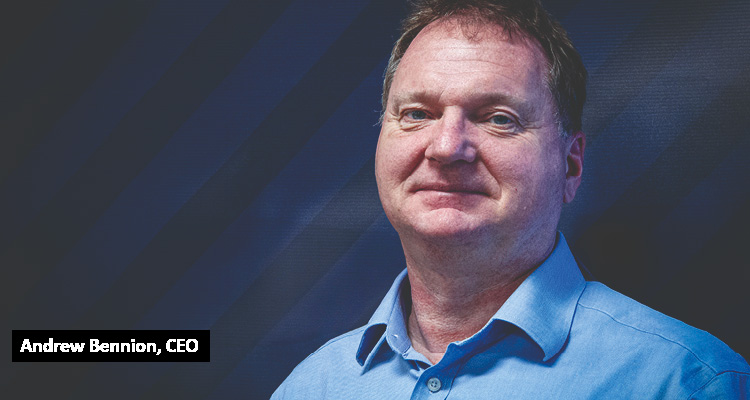
Working within such a broad range of sectors and geographies requires a clear internal structure to maintain consistency across a diverse customer base. Andrew Bennion, CEO, explains how the team maintains a cohesive focus to manage that. “We have technology leaders for each of our core technologies, and on the sales side, we work in product groups with teams focused on selling specific products in specific areas. Across our global offices, we have developed specialisms in certain markets. The way it works in practice is that our regional sales teams look for opportunities across all of our products, and when an inquiry comes in, they pass it to the relevant specialist team to develop the right solution, costing and pricing. We are effectively combining broad regional coverage with a highly specialized treatment of the opportunities that come through.”
Over the past year, that model has led to tremendous growth, driven by a combination of diversification and international expansion across the Americas, Europe and Africa. In Norway, AIS has made a number of acquisitions and is currently in the process of integrating them. The priority now is to grow sales in the region by cross-selling products that their Norwegian businesses do not currently have access to. So far, this route has proven highly successful. In Africa, the company’s presence is focused on Angola, where the goal is to make sure AIS is well represented as new deepwater offshore oil and gas projects come up and to maximize its share in that market. Meanwhile, AIS currently has limited manufacturing capability in the Americas, so its focus is on acquisitions that would allow it to establish local production. This has become increasingly important given the current US administration’s tariff environment, where manufacturing locally is clearly more advantageous.
Through this global footprint, AIS has become much more effective at serving its customers day to day. “We have representatives in all the major energy hubs around the world who can deal directly with customers on the ground. Effectively, we are local, even though a large proportion of our manufacturing is based in the UK. It also helps with time zones, meaning that our engineering team in Malaysia can serve our customer across East Asia, while our team in Brazil takes care of our operations in the Americas. Having local coverage across the globe makes a real difference to how responsive and accessible we can be,” Andrew enlightens.
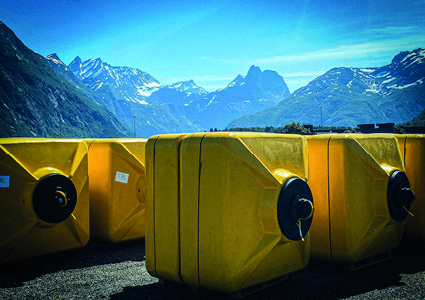
In March 2026, this global footprint was strengthened further with the acquisition of Imenco Aqua, a Norwegian aquaculture technology firm. Acquiring Imenco Aqua has unlocked various cross-selling opportunities for AIS, as Andrew outlines. “In Norway, we manufacture marine floats that are sold into aquaculture, and our intention is to design a version for the Chilean market and begin selling there. Imenco Aqua brings strong capabilities in underwater cameras and a patented oxygenation product that performs very well in Chile, and we are looking to expand that offering into Norway too. On top of that, we are looking to apply our own material science expertise to develop new products for the aquaculture market. We have a list of products we want to commercialize, and this acquisition gives us a strong platform from which to do that,” he continues.
In a similarly strategic move, AIS has also bought 100 percent of the capital of Matrix Composites and Engineering (Matrix), a listed business in Australia that used to compete with AIS across around 20 percent of its product range prior to the acquisition. The rationale behind the acquisition is straightforward but significant. “This is a market consolidation play,” Andrew clarifies. “When the acquisition of Matrix is completed, our combined business will have the largest capacity for buoyancy products in the world. It gives us a strategic asset in Australia, Australian revenues and complementary technologies and supply chains that we can optimize together to establish ourselves as one of the leading technology providers in the country. The shareholder vote was completed earlier this month [at time of writing], and the acquisition was completed on the 23rd of July 2026. We are expecting to see a lot of benefits and synergies from bringing the two businesses together at that scale,” he concludes.
Rather than waiting for the market to present opportunities for growth, AIS is proactive in its approach to diversification. From Angola’s deepwater fields to Chilean aquaculture farms and Australian buoyancy markets, the company has spent the past year positioning itself ahead of the next wave of demand. While its acquisition of Matrix will give it the largest buoyancy capacity in the world, AIS did not get there overnight; this achievement has been years in the making through a consistent focus..
