
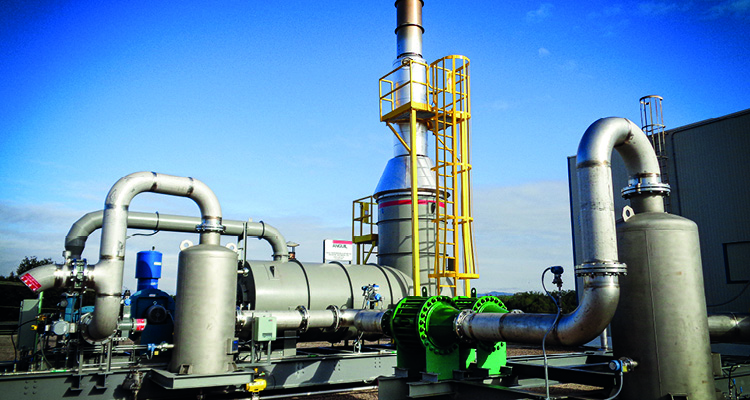
Discover how Anguil Environmental Systems’ technology agnostic approach is paying off globally

Balancing environmental footprint with production demands and profitability can be challenging for manufacturing facilities and industrial sites. Many of these clients turn to Anguil Environmental Systems (Anguil) for quality air and water solutions engineered to keep complex industrial operations both compliant and running. Chris Anguil, President, tells us more about how the company approaches that challenge.
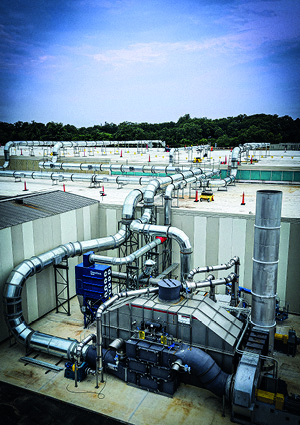
“My father started the company back in 1978, originally working in the heat and energy recovery market. Following the Clean Air Act enactment, he saw a clear need for VOC abatement, and in 1981 delivered his first catalytic oxidizer to industry. The company was originally called Anguil Energy Systems, but as our focus shifted increasingly towards environmental solutions, he renamed it Anguil Environmental Systems in 1987 to better reflect our core mission. Headquartered in Milwaukee, Wisconsin, we have grown over the years into a global company. We have been working in China and Taiwan for over 30 years with the same partner, Anguil Asia Environmental. Moreover, we operate in Europe through a license arrangement, and in 2020 we formed our newest wholly owned subsidiary, Anguil Environmental Systems Private Limited, in India. Our growth in these regions has been significant, and what started as a small family company has now become a brand recognized globally, thanks to our focus on engineering innovative thermal and catalytic oxidation technologies. We are committed to serving any industry regulated for solvent-based emissions or hazardous air pollutants. To that end, we take a technology-agnostic approach, working across six different oxidizer technologies rather than pushing customers towards a single product,” he opens.
To remain resilient in the face of market fluctuations, Anguil has deliberately built diversity into its customer base, working across a variety of industries; from chemical processing to pharmaceutical, automotive, food, petroleum, metals and more. Carbon fiber and semiconductor manufacturing have also become significant growth areas for the business. As markets and regulations evolve, Anguil’s multiple technologies allow it to help customers stay compliant with established environmental regulations and emerging ESG requirements for greenhouse gas reduction.
Back in 2013, Anguil expanded beyond air pollution control into wastewater treatment. The company does not work with municipalities or drinking water, but it does support many industrial wastewater clients. Unlike the air side of the business, where Anguil engineers, designs, manufactures, sells and services its own solutions, water treatment is not a single end-of-pipe solution; it is a treatment train, typically involving several different technologies to achieve the level of water quality required before discharge to sewer or municipal treatment. Rather than manufacturing its own products in this space, Anguil operates more as a solution partner, sourcing proven technologies, integrating them under a single control system and providing a sole point of service to support clients throughout. That same emphasis on long-term support has driven significant growth on the air side of the business too. While selling equipment keeps the business moving, Anguil’s oxidizers are built to last 25 to 30 years, which means service becomes just as important as the initial sale. Air permits are often directly tied to this equipment, which means that if it is not running, the client’s plant is not running either. Consequently, Anguil has built up a substantial service team that now accounts for about 40 percent of the business. That service extends beyond Anguil’s own equipment. The company will service any manufacturer’s oxidizer globally, which has opened up a considerable amount of additional market opportunities.
Anguil’s global reach continues to expand its presence across the globe, with India representing one of the most significant recent developments. Chris explains how that journey began. “Our first installation in India was 1996 but we didn’t start truly focusing on this region until the early 2010s. From a demographic standpoint, the country has well over a billion people, and while a lot of the population still faces real challenges around poverty, food and water, a growing middle class is driving increased demand for goods and services, and with that, a rise in manufacturing. Initially, we were trying to sell into the Indian market from the US without any local presence, and while we found opportunities to quote, we struggled to convert them into orders. So, we partnered with someone from the industry who approached us about forming a new company together. We established it in 2020, and what started as a team of three has grown to around 35 employees, primarily focused on the Indian market but also providing support back to Anguil in the US.
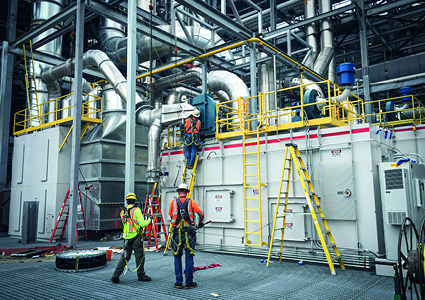
“India produces around 1.5 million engineers a year, which gives us access to a huge talent pool at a very competitive cost. That has allowed us to operate on a genuine 24/7 engineering cycle, where we can produce drawings in Milwaukee, send them over, and while our US team sleeps, our Indian team continues the work. Supporting Anguil US this way has helped fund the Indian business in its early stages, and it has since grown from a company generating less than a million dollars to one expected to reach around $7 million this year. We are currently working on a pollution control system for India’s first semiconductor plant, which represents a huge growth opportunity and inflection point for the business. To remain technology-agnostic, we have engineering and sales capability locally in India, alongside service technicians who travel out from the US when needed. That regional base now allows us to support all of Southeast Asia, including a growing presence in Australia,” he elaborates.
As Anguil continues to grow internationally, environmental sustainability remains a core priority closer to home as well. Kevin Summ, Director of Marketing, tells us more about the company’s sustainability initiatives. “Internally, we recycle everything that can be recycled, with bins set up throughout our facilities and limits on single use plastics. Additionally, we were proud to participate in this year’s Earth Day, where Milwaukee broke the Guinness World Record for the largest organized river cleanup in the world. We were not just participants, but sponsors of the event. We like to practice what we preach, and we are constantly looking for ways to reduce our environmental footprint, both at our corporate headquarters and across our supply chain. In fact, our procurement department recently integrated several sustainability metrics into our supplier scorecard which helps us identify ways in which we can work with partners to reduce the environmental impact of the products we manufacture.”
By staying technology agnostic and maintaining equipment long after it is sold, Anguil has opened the door for further expansion across seas and borders alike.
