
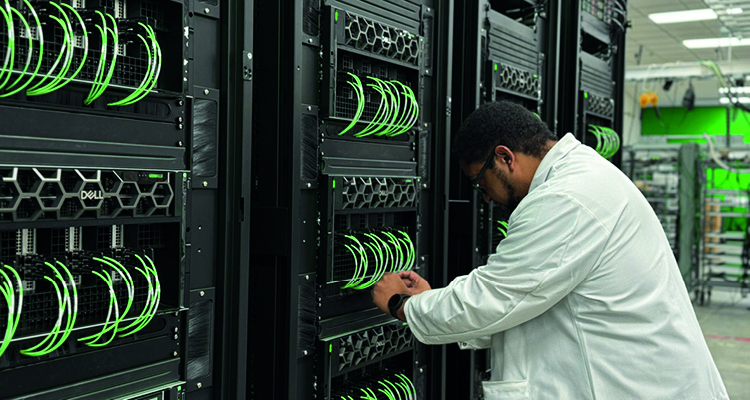
Discover how UNICOM Engineering designs and integrates cooling-aware infrastructure from node to rack

Founded in the 1990s as a specialist designer of computers and storage infrastructure, UNICOM Engineering has evolved into a trusted system integration partner supporting enterprise, AI, and edge data center deployments. Evolving alongside the technology it builds around, the company’s offering spans the design, integration, and delivery of compute infrastructure, from individual nodes through to racks of equipment across a variety of markets and industries. Today, UNICOM Engineering is increasingly focused on advanced cooling architectures to support AI workloads across enterprise and edge data center environments. Rusty Cone, General Manager, discusses how the rise of AI is shaping the company’s approach to infra-structure design and development.
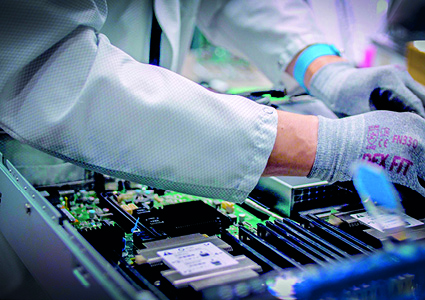
“We have a long legacy of designing and manufacturing unique hardware configurations that have sup-ported everything from call centers and dialer systems to large-scale AI deployments,” Cone begins. “That work has always been about designing around real-world workloads. Today, with engineering expertise spanning our operations and manufacturing facilities in Canton, Massachusetts, Plano, Texas, and Galway, Ireland, that same design-first approach continues to shape how we build infrastructure for more demanding, compute-dense environments.”
UNICOM Engineering’s work spans the design, integration, delivery, support, and service of compute platforms across a range of deployment models. At its core, the company builds and integrates customized systems for solution providers looking to deploy their software into enterprise environments on physical infrastructure around the world. As AI workloads have become more compute-intensive and power-dense, UNICOM Engineering has expanded its focus to include advanced cooling architectures, including direct-to-chip and immersion. These capabilities are designed to support higher-density deployments across both enterprise and edge data centers. Together, these areas reflect how UNICOM Engineering’s offerings continue to evolve in response to changing workload and deployment requirements. Rusty tells us more about how UNICOM Engineering has adapted its product and technology development to align with the rapid adoption of AI solutions across several sectors.
“At the foundational level, everything we do starts with the GPU or CPU,” he says. “We have had a nearly 30-year relationship with Intel and, over the past decade, have extended that to work with NVIDIA and AMD as they have become key providers for AI computing. Our engineering leadership and technologists have always been focused on designing platforms around the most advanced and most in-demand processors. That was true when we were building specialized compute and storage infrastructure, and it re-mains true today.
“As silicon densities have increased, so too has the amount of heat those chips dissipate, driving increased interest in liquid cooling technologies,” Rusty explains. “We have supported air-cooled designs, as well as more advanced liquid-assisted and full immersion cooling architectures. Our platform designs are aligned with the latest advancements from leading chip manufacturers such as NVIDIA, Intel, and AMD. Consequently, we’ve continued to evolve our design work to manage higher thermal loads and signal integrity requirements as performance demands increase. Processors will naturally throttle when they can’t dissipate heat efficiently, much like a car that cannot shift out of third gear into fourth. By using immersion cooling at higher densities, we’re able to help those processors operate at sustained peak performance, which translates into a real competitive advantage for companies and enterprises running demanding AI workloads.”
As a key partner in supporting that immersion capability, Green Revolution Cooling (GRC) provides the tank technology used within one of the largest immersion-cooled environments supported by UNICOM Engineering.
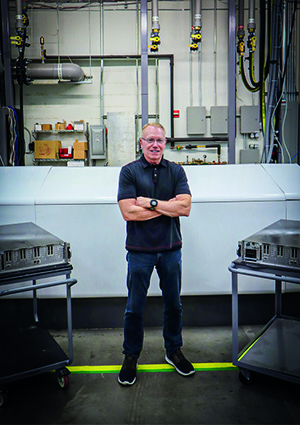
“The Dell-based immersion servers we design are optimized to work within GRC’s tank systems, which houses the pump and dielectric cooling fluid, supplied by partners such as Shell,” Cone elaborates. “Our design work focuses on optimizing the server’s mechanical components to the tank environment, under-standing fluid flow dynamics and managing how that flow moves through the server to allow it to operate efficiently and be managed thermally.”
UNICOM Engineering supports a full spectrum of cooling approaches, from traditional air and direct-to-chip designs to immersion architectures. This breadth allows the company to align infrastructure design with the specific performance, efficiency, and deployment requirements of each workload. The company is now in its seventh year of delivering warranted immersion cooled servers, an area that, while gaining momentum, remains an emerging segment of the broader data center market.
“Advancements in processor technology are driving higher power densities, particularly in AI-focused workloads,” Cone details. “While many workloads today continue to run effectively in air-cooled environments, higher-density systems increasingly benefit from liquid cooling to sustain performance. Organizations focused on long-term efficiency and energy management, will see liquid cooling becoming an important part of the solution.”
Embracing liquid cooling introduces a distinct set of challenges, particularly in ensuring that the fluids, hardware, and tanks operate safely and reliably together.
“To make the whole system work, everything needs to be validated and warranted together. We’ve in-vested in building a fluid compatibility lab, where we test our servers with a range of fluid providers to confirm material compatibility, thermal performance and the unique server-level testing requirements to ensure server operate exactly as designed in immersion environments. This work enables us to offer a warranty on our servers in immersion environments, which remains uncommon in the market. It was a new direction for us and a necessary step to properly adopt and deploy this technology,” Rusty ends, concluding our conversation.
Thirty years in, UNICOM Engineering remains committed to designing infrastructure around the most advanced chips available and building the supporting capabilities required to operate them reliably at scale. Alongside continued investment in manufacturing infrastructure to support increasingly complex platform builds, the establishment of its fluid compatibility lab illustrates how the company continues to innovate and adapt its engineering practices as data center technologies and performance demands evolve.
