

Discover the story behind Paxman Scalp Cooling’s technology, which prevents chemotherapy-induced hair loss

For over 25 years, Paxman Scalp Cooling (Paxman) has been on an ambitious journey to change the face of cancer by pioneering scalp cooling technology to minimize hair loss during chemotherapy. Today, the company is a global leader in scalp cooling and cryotherapy, with its clinically proven scalp cooling system supporting tens of thousands of cancer patients every year, in more than 60 countries worldwide. Paxman has a deeply personal origin, which Richard Paxman, CEO, tells us more about.
“Founded approximately 30 years ago, the business was originally built with the clear purpose to make a meaningful difference for cancer patients. My mother, Sue Paxman, was diagnosed with breast cancer in the 1990s, when she was just in her thirties. She had beautiful curly hair, and like so many patients facing chemotherapy, she did not want to lose her hair. At the time, our local hospital in Huddersfield was actually offering something called cold caps, which my mum decided to try to prevent hair loss. Unfortunately, it did not work for her, and for the first time, even amid such a difficult prognosis, it was that visible sign of the disease which truly affected her. Witnessing the distress it caused her, and the impact it had on us as young children, my father began to investigate why the cold cap did not work. Determined to find a way to help patients in the future, he and his brother set about developing technology that could do better. Their background was originally in beer cooling, and it was that expertise in refrigeration engineering, rooted in our family’s existing businesses, that they channeled into something far more meaningful. The real reason this company exists is, ultimately, my mother,” he begins.
Supportive care in the late 1990s was largely non-existent and launching a product into that environment came with significant challenges. Medical professionals’ core focus was firmly on curing cancer, and hair loss was not widely regarded as a clinical priority, despite being deeply distressing for patients. Side effect management was still in its infancy, as the industry had only just started managing nausea and sickness. In Richard’s view, his father’s product came to market too early, and that timing created real barriers to entry from the outset.
“Coming from a background in beer cooling and refrigeration engineering, without medical device experience or clinical data to support the product, made for an uphill challenge. However, early venture capital investment supported the company and enabled it to fund clinical trials, work with the NHS, and conduct product development through pilots and iteration. Moving forward, the key for me is that we proved ourselves in the UK first. Establishing ourselves in a market like the NHS gave us a genuine opportunity to take our success globally. Having overcome the barriers in the NHS, even through unconventional routes such as charitable funding, set the stage for everything that followed internationally,” he adds.
Scalp Cooling System
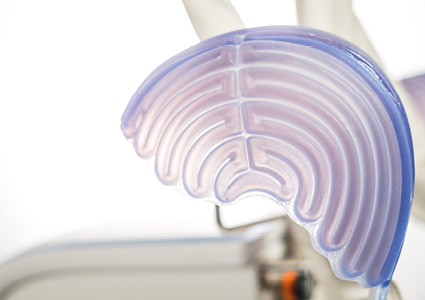
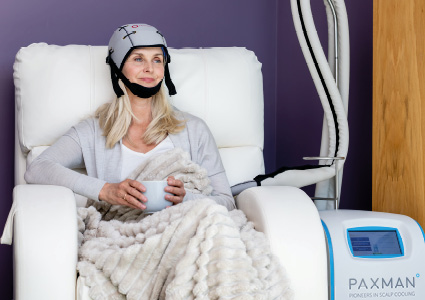
Paxman’s mission is to make a positive impact on cancer patients across the world through its scalp cooling system and its accompanying accessories. Its Scalp Cooling System is designed to prevent chemotherapy-induced alopecia, a side effect that affects millions of patients globally every year. This system is built on a relatively simple principle of refrigeration: a bespoke liquid coolant is pumped around a soft silicone cooling cap, which is either reusable or single-use depending on the market. The patient wears the cooling cap, connected to the system, for approximately 30 minutes before their chemotherapy infusion, throughout the treatment itself, and for around 90 minutes afterwards. The cooling process works on several levels. First, it induces vasoconstriction, reducing the flow of chemotherapy drugs to the scalp and protecting the hair follicles from their negative effects. Secondly, it produces a drop in metabolic rate, which slows cell division and further reduces the targeted effect of the treatment on hair cells. Paxman explored the science behind this in collaboration with universities, including through cell culture models, studying hair cells in vitro, which have demonstrated that less drug diffuses through the cell membrane, both actively and passively. In other words, through the use of the scalp cooling system, less of the drug is entering the cell and causing damage through the various mechanisms by which chemotherapy operates.
Committed to offering the best solution for cancer patients, Paxman recently joined forces with Dignitana, its main competitor, through an acquisition. It offered clear synergies and economies of scale, and while Dignitana had faced challenges, it brought with it an impressive customer base and team. Thus, merging the two businesses made complete sense. Paxman began exploring this opportunity at the end of 2024, before completing its due diligence in mid-2025 and making a formal offer in the second half of the year, which was accepted.
“We spent most of the end of 2025 integrating both businesses, which has been a challenge in the best possible sense. Few of us within Paxman had ever experienced a merger or acquisition before, so it was a steep learning curve with many lessons along the way. We moved fast and made decisions quickly, which I think is essential, especially when it comes to the people side of things. I am genuinely satisfied with where we are today. We have a shared vision, and although we are quite different groups of people culturally, that diversity actually helps cement our path forward. Both companies specialize in the same product and have always stood for the same purpose, so our alignment is real. As we move into 2026, we expect to start seeing the tangible benefits of those synergies and an improvement in overall profitability,” Richard shares.
Looking ahead, operational excellence is at the top of Paxman’s agenda, underpinned by five strategic priorities for 2026 and beyond. Richard outlines them: “The first is commercialization of our new products, and the second relates to reimbursement in the US, which is, ultimately, the primary driver of our growth. Our third priority is overall revenue growth across international markets, which we manage separately from the US business. The fourth and fifth fall under clinical excellence and operational excellence, respectively. Clinical excellence is centered on research and development to continue pushing the science forward, stay ahead of the field and own our position as the leader in scalp cooling. Operational excellence is perhaps the area I feel most strongly about getting right over the next couple of years. As we continue to grow and scale, and we expect to grow significantly over the next five years, it is essential that our internal processes keep pace.
“Over the past two years, we have invested considerable effort in business process mapping to genuinely understand our process flows and how we can improve them over the longer term for greater efficiencies. Beyond efficiency, it is also about making our people’s work valuable. For example, I do not want our team spending time on double-processing or manual data entry, as those are exactly the kinds of tasks that AI and automation should be handling,” Richard concludes.
Three decades on, Paxman remains driven by the same purpose that started it, albeit with a strengthened global footprint and more clinical evidence, promising an even more purposeful future ahead.
