Documentation, discipline, and a dedicated team underpin Fort Vale Nuclear Ltd’s approach to nuclear manufacturing

When Peter Staveley joined the Fort Vale Group as a 16-year-old apprentice, he had no way of knowing where the journey would lead. Forty years on, he is now Managing Director of Fort Vale Nuclear Ltd (FVNL), the Lancashire-based company, which specializes in supplying precision-engineered components to the UK’s nuclear sector. With decommissioning ongoing, new reactors taking shape, and defense spending rising, the business is positioning itself for growth across the industry.
FVNL began life in 2008 as a division of Fort Vale Engineering, taking the group’s core engineering competencies into a new sector and by 2012, it had grown enough to become a company in its own right. Peter clarifies that the reason for the split came down to the nature of the work.
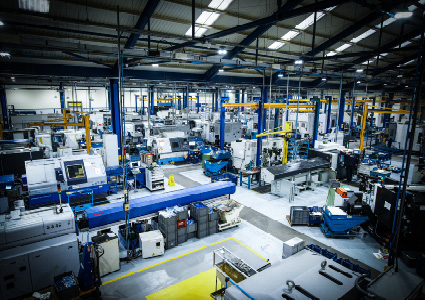
“On the nuclear side, we’re more involved in project work: one-offs and low volumes. Some projects we may repeat, some we may never see again,” he says. “Fort Vale Engineering, by contrast, is a manufacturer of specialized valves and equipment for the fluid transportation market in reasonably sized batches.”
Since separating, FVNL has grown steadily, first supplying into the decommissioning sector before later moving into the defense sector.
Peter’s route from apprentice to boardroom has shaped his approach to leadership. “I’m familiar with the day-to-day operations on the shop floor, and that strengthens my role significantly,” he continues, also noting his recognition of how complex turning raw material into a finished part is, and how much teamwork and effort that takes. “I’m not just a leader or director; I have an excellent understanding of how things are made.”
That hands-on perspective extends to how he views his team. “You can have the best machines in the world, but you need a good, strong team that have great attention to detail, experience, and awareness of what we’re manufacturing and exactly how to make it,” Peter says.
At the heart of the company is its ‘fit for nuclear’ philosophy, which Peter is keen to explain in engineering terms, underlining that nuclear safety culture must be embedded within the business. “You’re dealing with components that could have a serious effect if they fail,” he states. “We’re manufacturing to print; an engineer’s job is to manufacture parts to the relevant drawings and specifications – what sets nuclear apart is the understanding behind it, namely why control matters and why procedures exist. It’s about always doing the right thing, at the right time, in the right way, and never taking shortcuts, supported by a strong questioning culture. The procedures are in place for a reason, and you must follow them to ensure you get a high-quality component suited for demanding operations.”
These standards go far beyond the manufacturing. “In the nuclear industry, it’s not just about making the component; it’s about the front-end planning and control, leading to a final documentation package encompassing full traceability,” Peter adds. “It takes all the support staff as well as the engineers to pull that information together, which is why it’s so important we have the right team, with the experience and skills to pull it all together.”
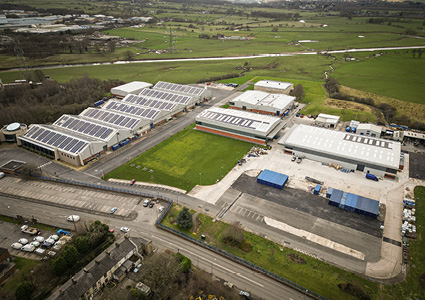
All FVNL’s manufacturing, R&D, and testing takes place at its Lancashire site, and compounding its operations has clear benefits – including better control, more oversight, and smooth linkages. “This way, we’re not working in silos and people have a better understanding of the end-to-end process because they can see parts being developed, manufactured, assembled, and tested,” Peter elaborates. “It encourages teamwork across the company, because everybody is working towards the same goal.”
Additionally, Peter is optimistic about the market. “I think there’s growth everywhere,” he highlights. “It’s about positioning yourself in growing sectors with the offerings you have as a business.” He also sees nuclear as central to a low-carbon energy mix. “With wind and solar, you’re reliant on the sun shining and the wind blowing, whereas nuclear is a good baseline. It’s consistent, it doesn’t use fossil fuels, and it’s safe and clean. I believe it has an important role to play going forward, alongside wind and, in the future, hydrogen. They all have a part to play.”
For FVNL, the biggest supply chain challenge is raw material availability. The company buys largely from the UK market and generally holds no stock, meaning it is exposed when projects have long lead times. “Sometimes, between quotation and order placement, what was previously available may no longer be available on the open market,” Peter reveals.
On skills, the founder’s values still guide the business – quality, growing its own people, apprenticeships, and local manufacturing. “We haven’t had to change our strategy,” he continues, regarding its attitude to recruitment. “We’re employing brilliant people and underpinning that with the requirements of the sector.”
Over the next five years, the focus is consolidation. FVNL is moving into a single building, with significant investment behind the move, alongside a new ERP system designed around project work rather than batch manufacturing. “The strategy is to have everything under one roof and a system aligned to our work,” concludes Peter.
That unity will enable the business to grow, with even further controls in place and with data that can be extracted and shared with customers. For a company that began as a division and became a specialist on its own terms, this plan is a logical next step.