
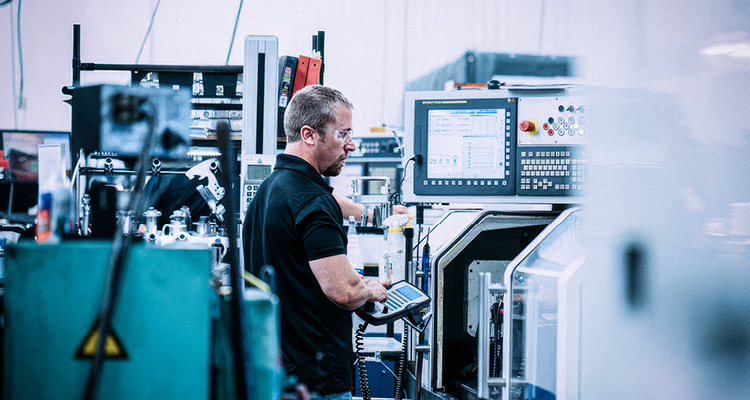
Electrification and AI reshape demand as Arnold Magnetic Technologies aligns supply chain, innovation, and growth

As electrification accelerates across aerospace, defense, transportation, industrial, and energy systems, demand for permanent magnets and electromagnetic technology is rising. The surge brings new pressure on global supply chains, from mines to magnet manufacturers. At the same time, the expansion of AI infrastructure is driving new requirements for power generation and distribution, linking data growth to energy demand. These shifts are changing how manufacturers approach materials, sourcing, and design, placing magnetic components at the center of systems that once ran on hydraulic or mechanical systems.
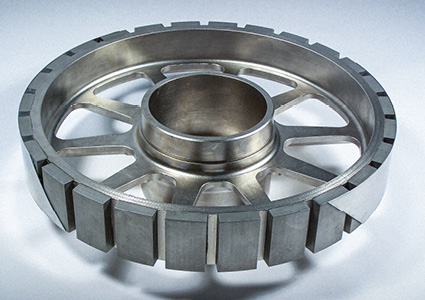
For Arnold Magnetic Technologies (Arnold), a company with a 130-year history, meeting the challenge means aligning across operations, supply chains, and customer relationships. Chief Executive Officer Matt Blake leads this transformation, ensuring Arnold responds to changes in technology and global events, not just traditional industry cycles. “Arnold is a global manufacturer of high-performance permanent magnets and magnetic assemblies, as well as precision thin metals and advanced electric motors. These products are used in specialized, mission-critical applications for our customers and end users,” Matt shares.
Over time, these applications have grown more complex. Magnets used to sit behind mechanical systems, but now they’re at the heart of electric actuation, sensing, and control. Matt calls this a structural shift in the industry, not just an incremental change. “The number one driver that’s underway is what I refer to as ‘the electrification of just about everything’. Most people don’t realize this, but magnets are all around us. I had no previous industry experience prior to joining Arnold last year and, like most folks, I thought of magnets as something stuck on your refrigerator. But when you dive into it, you find that magnets are found in products we use or touch every day,” Matt explains.
Electrification rising
“Virtually every commercial aircraft flying today has magnets on board for various systems and controls. Many of those are Arnold samarium-cobalt (SmCo) magnets. Even a tiny sensor in your car’s seatbelt uses a magnet,” Matt points out. As systems shift from hydraulic or mechanical to electrical systems, aircraft, vehicles, and drones increasingly rely on magnetic actuators.
Matt sees AI as the second major force reshaping demand. “If you step back through the AI value chain, you see that AI systems require a tremendous amount of data, which is driving the buildout of data centers that consume enormous amounts of power. Our products are used in generators and couplings, as well as shielding applications involved in building the electrical supply to a data center,” he adds.
For Arnold, these trends mean steady demand across sectors. Aerospace and defense remain key markets, while energy systems and data infrastructure open new opportunities. Aaron Williams, Arnold’s Chief Commercial Officer and a veteran of the industry, explains “We excel in working alongside our customers to deliver custom engineering solutions for mission critical applications. Success requires deep collaboration from the earliest stages of product development. In many cases, we’re helping customers innovate and advance technology in real time.”
Supply chain focus
Arnold specializes in permanent magnets made from rare earth materials like samarium and neodymium, tying the company to a tight global supply chain largely dominated by China. Ongoing rare earth and related magnet export controls are driving serious constraints for material availability, and magnet producers have extended lead times significantly as a result.
As demand grows, so does pressure on these resources. Matt considers this a long-term challenge. “The situation around rare earth mineral supply security is not going to go away anytime soon,” he observes. “China will remain an important part of the global rare earth supply chain for the foreseeable future on the basis of global volume requirements alone. As such, we embraced a multifaceted approach to mitigate risk along that supply chain, which includes diversifying our sourcing strategies. Instead of a single supplier, we want to have two or three that can provide critical materials.”
Long-term relationships, Aaron adds, matter more than chasing the best price. “Supply chain resilience has become a strategic priority for nearly every customer we serve. Our investments in supplier diversification, manufacturing capacity and global sourcing strategies are designed to help customers navigate an increasingly complex supply environment with confidence.”
Arnold is also expanding its capacity with investments in a new magnet production facility in Thailand to further mitigate risk. “Today, all SmCo magnet production resides in our factory in Switzerland, which is doing a great job, but is operating near capacity. Bringing the second facility online reduces the risk of relying on a single location and lets us serve customers in Asia-Pacific and Europe more effectively,” notes Matt.
One Arnold culture
Matt’s strategy goes beyond operations; it’s about shaping culture, too. Arnold operates 11 facilities on three continents, each with its own ways of working. Bringing them into alignment is central to his strategy. “First and foremost, we’re working to develop standardized processes that can be used by each site. That allows us to ensure consistent results across the business,” he shares.
Arnold encourages shared learning, spreading proven practices to every site. “If we find a site doing something well, we don’t want to reinvent the wheel elsewhere. We pick up that idea and help others adopt it,” he adds.
Matt anchors this culture in five core values that shape how teams work together. “The first is to ‘lead with safety,’ ensuring we take care of our employees and they look out for one another each day; the second is simply to ‘do what’s right’, a call to action for our people to act with integrity and to do the right thing, whether it’s for a coworker or a customer,” he says. “Collaboration is also essential, as we want to ‘win together.’” Additionally, the company has adopted the slogan ‘One Arnold’ to embody the spirit of a single global team pulling in the same direction together.
Accountability plays a central role as well. “‘Own the outcome’ means taking accountability for your actions and delivering on objectives,” Matt continues. Finally, innovation is key to Arnold’s success in the industry. “‘Advance what’s possible’ is about tapping into the creativity of our workforce. We want people to think outside the box when solving problems to achieve a robust solution quickly.”
Arnold’s culture supports a five-year plan that brings together people, markets, supply chain, innovation, and technology. Matt sees AI as part of that plan, a tool that extends what people can do rather than replacing them. “It’s a powerful way to allow people to achieve more than ever before. We’re not reducing the workforce. Instead, it allows our team to work on more value-added activities and move away from repetitive manual tasks,” he says. Looking ahead, he adds, “As an example, our sales team may utilize AI as a means to efficiently and effectively gather all facts and data necessary to prepare for a successful sales call and to win new business.”
Partnerships are at the heart of Arnold’s strategy. “We have customers who are growing significantly. We need to be positioned to support their growth and help them achieve their goals,” Matt concludes. For a company whose products are invisible to most users, staying ahead of change may be the most visible thing Arnold does.
