Europe tightens automotive trade rules as Chinese imports grow

Subscribe to our free newsletter today to keep up to date with the latest manufacturing news.
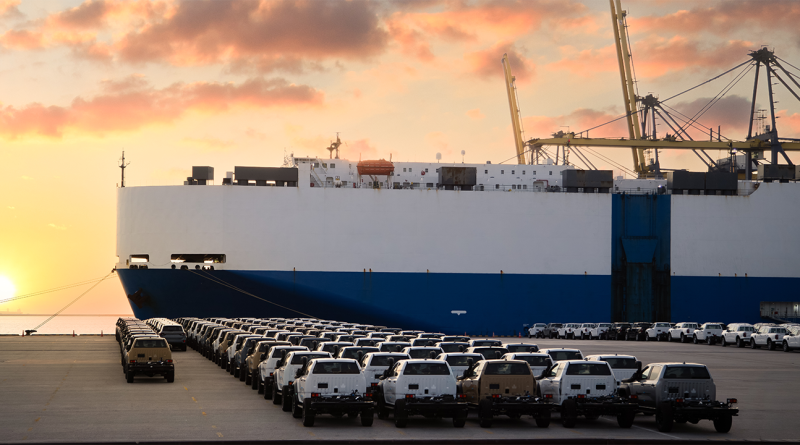
Europe’s proposed restrictions on Chinese hybrid vehicle imports could reshape automotive manufacturing across the continent, as policymakers seek to protect domestic manufacturers from growing competition while encouraging greater investment in European production.
The agreement, negotiated between EU trade commissioner Maroš Šefčovič and Chinese commerce minister Wang Wentao, would initially limit Chinese hybrid vehicle imports to 350,000 units annually. The quota would increase by 6% each subsequent year over a four-year period, with implementation potentially beginning December 1, 2026.
The restrictions reflect mounting concerns over the competitive position of European automakers, which are contending with high production costs, expensive electrification programs and an expanding range of competitively priced Chinese vehicles. Manufacturers including BYD have strengthened their international presence through advanced hybrid technology, extensive supplier networks and substantial domestic production capacity.
The proposed measures could provide European manufacturers with some protection from imported competition, although their longer-term consequences may be less straightforward. By restricting the number of vehicles entering Europe from China, the EU could encourage Chinese automakers to establish more production facilities within the bloc, changing the competitive environment rather than reducing competition itself.
Europe’s hybrid restrictions reflect growing pressure on domestic manufacturers
The proposed import quota represents another stage in Europe’s increasingly interventionist approach to automotive trade with China. In October 2024, the European Commission introduced additional countervailing duties on Chinese battery-electric vehicles following an investigation into government subsidies and their potential effects on European manufacturers.
Those duties ranged from 7.8% to 35.3%, depending on the manufacturer, but excluded conventional hybrids and plug-in hybrid vehicles. Chinese automakers subsequently expanded their hybrid offerings, targeting a European market where consumers increasingly favor vehicles that combine electric propulsion with the flexibility of internal combustion engines.
Figures from the European Automobile Manufacturers’ Association illustrate the commercial importance of this segment. Hybrid-electric vehicles accounted for 37.3% of new EU passenger car registrations during the first half of 2026, while plug-in hybrids represented another 9.8%, compared with 8.5% during the corresponding period in 2025.
Although these figures cover vehicles from manufacturers worldwide, they demonstrate the substantial demand that Chinese automakers are seeking to capture.
China’s automotive export performance has reinforced European concerns. Chinese passenger vehicle exports reached approximately 919,000 units in September 2026, representing a 64% increase from the same month a year earlier. Exports exceeded 7.1 million vehicles during the first nine months of 2026, reflecting the growing importance of international markets to Chinese manufacturers.
The proposed EU arrangement would initially restrict Chinese hybrid imports to 350,000 units annually, with the allowance increasing by 6% from the second year. The broader safeguard mechanism would also cover imports from other countries, reflecting World Trade Organization requirements concerning nondiscriminatory trade measures.
Unlike tariffs, which increase the cost of imported vehicles, quantitative restrictions directly limit the number entering a market. Manufacturers would consequently need to consider how to allocate available import allowances, prioritize profitable models and maintain their European distribution networks.
For European automakers, the quota could reduce immediate competitive pressure, but its effectiveness would depend on how manufacturers respond and whether the restrictions create sufficient time to improve their own productivity and product competitiveness.
Chinese automakers could accelerate investment in European production
The most consequential effect of the proposed restrictions may emerge within Europe’s manufacturing industry, particularly if Chinese automakers respond by accelerating investment in local production facilities.
BYD has already pursued an international manufacturing strategy designed to reduce dependence on exports from China. Its investment in Hungary illustrates how Chinese manufacturers are establishing production capacity closer to European customers, potentially reducing exposure to trade restrictions and international transportation costs.
Other Chinese manufacturers have examined European assembly operations and industrial partnerships as alternative routes into the market. Local production could become increasingly attractive if import quotas constrain sales growth, although investment decisions would continue to depend on market demand, operating costs and regulatory conditions.
Establishing manufacturing operations in Europe involves substantial financial commitments. Companies must invest in production facilities, machinery, recruitment, workforce training and supplier development while meeting European environmental, labor and safety requirements.
These additional costs could offset some of the production advantages Chinese manufacturers currently enjoy, particularly those associated with large domestic manufacturing volumes and established supply networks. Yet local production may offer advantages through shorter delivery times, improved inventory management and proximity to European customers.
The implications would extend throughout automotive supply chains. Greater Chinese investment in European assembly plants could generate demand for regional component manufacturers, battery suppliers, industrial equipment providers and specialist logistics companies.
Manufacturers would need to determine which components could be sourced economically within Europe and which would continue to arrive from established Asian suppliers. This could gradually change automotive freight patterns, with some finished-vehicle imports replaced by shipments of components and materials for European assembly operations.
The development of local production networks could create opportunities for European suppliers, particularly those able to meet demanding production schedules, quality requirements and cost targets. Chinese manufacturers would face the challenge of transferring established production methods into a different industrial environment while retaining the efficiency that supports their competitiveness.
For Europe’s established automakers, the prospect of greater Chinese manufacturing investment presents a commercial dilemma. New factories could support regional employment and industrial activity, but they would also allow Chinese competitors to compete more directly within Europe’s domestic manufacturing market.
The restrictions may therefore change where Chinese vehicles are manufactured without significantly reducing their competitive threat.
Trade protection alone cannot resolve Europe’s automotive challenges
European manufacturers face structural challenges extending beyond competition from imported Chinese vehicles. Companies including Volkswagen and Stellantis must finance substantial investments in electrification, vehicle development and production technology while managing established manufacturing networks and changing consumer demand.
Import restrictions could provide additional time to address these pressures, but they cannot independently resolve differences in production efficiency, battery technology, development costs or the speed at which manufacturers introduce new models.
There are potential consequences for consumers. Limiting competitively priced imports could reduce vehicle choice and weaken downward pressure on prices in some market segments, although the eventual effect would depend on competition from other manufacturers and the availability of locally produced alternatives.
The wider trade relationship between Brussels and Beijing introduces another consideration. A negotiated quota could provide greater predictability than successive rounds of unilateral tariffs, offering Chinese manufacturers defined market access while allowing European policymakers to moderate import growth.
The arrangement nevertheless leaves the central question of industrial competitiveness unresolved. Chinese manufacturers have developed extensive capabilities in electrification, integrated production and component sourcing, and restrictions on imports will not eliminate those advantages.
For European automakers, the commercial opportunity created by trade protection will depend on whether they can improve manufacturing productivity, accelerate technological development and offer vehicles that compete effectively on price and performance.
Europe’s automotive future may ultimately be determined less by the number of Chinese vehicles permitted through its borders than by the ability of domestic and international manufacturers to compete within an increasingly interconnected European production market.
Source:
Bloomberg