
Explore how Celtic Renewables is turning waste and by-products into high-value bio-based chemicals

As a university spin-out operating in the biotechnology space, Celtic Renewables is renowned for commercially scaling a fermentation process that converts the secondary by-products and waste streams of the food, beverage and agriculture industries into valuable chemicals. What makes the company’s process particularly significant is its outputs of acetone, butanol and ethanol. Most acetone and butanol in the world come from fossil fuels, but Celtic Renewables produces both through a biological pathway, using waste and residues as feedstock, in a production process that is genuinely sustainable.
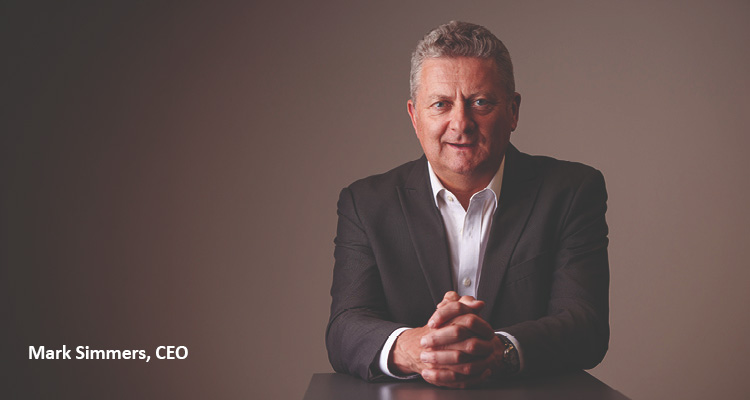
“From a downstream perspective, these chemicals are used to manufacture thousands of products that are present in our everyday lives, from pharmaceuticals and cosmetics to cleaning products, paints, coatings and plastics,” begins Mark Simmers, CEO. “It is crucial that we start to address the way we make the materials that we use in daily life. Huge strides have been made in generating sustainable energy, but the products we use every day need to be made differently too. Celtic Renewables is at the forefront of that shift. We started out as a university research project and have scaled that work up to build the biorefinery we operate today, which is no small undertaking.”
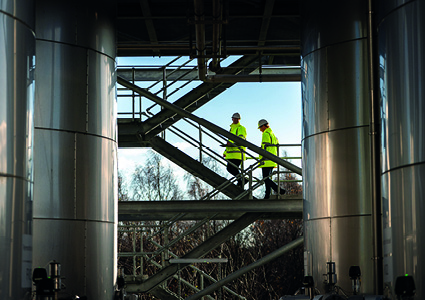
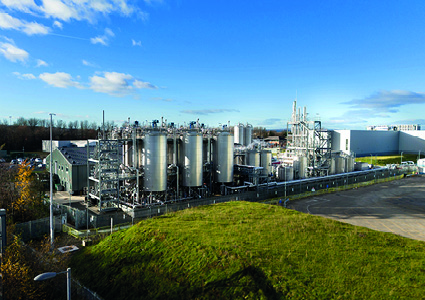
Celtic Renewables’ commercial demonstrator facility is fully operational and produces high-value green chemicals. The biorefinery is the springboard from which the company intends to build larger, industrial scale biorefineries and eventually carry out a globally applicable licensing model. The next critical milestone for the business is therefore to build, commission and bring into operation a full-scale biorefinery that demonstrates the process works at true industrial scale and opens the door to global replication. The funding Celtic Renewables recently announced from Scottish Government Grant funding and private investors represents the development capital needed to get that next project to an investable and bankable position. From there, the company will be able to bring in the project finance required to bring the full-scale facility into operation.
“For our next industrial scale biorefinery, which will be in Grangemouth, we are aiming to raise approximately £150 million before the end of this year. Through the funding we recently announced, we expect to reach the final investment decision stage in the second half of this year. This represents the next critical phase of technology deployment for our business, and the next inflection point as we look to scale the technology globally,” Mark comments.
Environmental impact
In addition to larger biorefineries, Celtic Renewables is committed to making a positive environmental impact through its new water treatment and biogas facility. Mark sheds light on the benefits this new facility will bring to the company and the environment at large. “Our technology is a compelling proposition in its own right, but we want to make sure we deploy it in the most commercially and environmentally impactful way possible. Integrating complementary technologies into our core process is how we achieve that. We take another industry’s effluent and convert it into bio-based chemicals, but our own process also produces an effluent output. Therefore, the best way to avoid having a waste problem is to extract further value from the effluent, and that is where integrating a biogas and water treatment facility becomes important. It allows us to process our own effluent, generate additional energy and close the loop on what would otherwise be a secondary waste stream.
“Alongside that, integrating an energy center ensures that the power required to run our process is generated in the most efficient and environmentally responsible way possible. Together, these additions trans-form what is already a strong value proposition into a truly circular process that joins the dots from the very start to the end of our process, with as little waste and as much value extracted as possible along the way,” he adds.
Facilities and technologies are just a few pieces of the puzzle when it comes to Celtic Renewables’ ambitions for scaling up. As the company works to deploy its technology at a full scale, having the right team is crucial to achieving that goal. With that in mind, Celtic Renewables is actively investing in the next generation of talent and has even established its own apprenticeship program, as Mark explains. “We are fully behind the Just Transition Initiative in Scotland, particularly in response to the closure of the petrochemical refinery in Grangemouth, where we are based, which happened in May 2025. What we are truly focused on is building a successful business and scaling it up, and to do that we need good access to talented people.
“While the demise of the refinery and other petrochemical businesses is obviously not great for the economy of Scotland and the UK in general, it does mean there are some exceptional people with skills and experience that are directly applicable to what we are trying to achieve from a biorefining perspective. Our approach to finding the best talent is twofold. First, we are recruiting people and transitioning their skills across the business. Secondly, we also know it is important to build our own core talent from the ground up. Hence, establishing our own apprenticeship program last year was a particularly crucial next step for us. We already hire a lot of graduates and work to develop graduate opportunities, but building apprentice-ship programs is also a critical part of making sure we have a long-term, sustainable workforce that keeps on growing right here in Scotland,” he concludes.
Evidently, Celtic Renewables is a company at a turning point. Now that it has completed the difficult work of proving a process at scale, what lies ahead is the even larger task of turning that achievement into global commercial reality. The company’s Grangemouth biorefinery, apprenticeship program and circular process integrations are not isolated initiatives but components of a careful process to ensure its longevity and success. In an industry where ambition often outpaces delivery, Celtic Renewables has done it the other way around, establishing proof of concept before setting its sights firmly on scale.
