
Focusing on imaging systems, LightPath Technologies’ recent transition leads to global expansion with drone detection

Having provided high-performance optical and thermal imaging solutions for 40 years, LightPath Technologies (LightPath) is renowned for manufacturing key components for optical systems. With global headquarters in Florida, the company also has locations in Texas and New Hampshire, together with overseas offices in China and Latvia. Since its initial launch as Solar Tech Corp in 1985, LightPath has grown to become a worldwide leader in the industry and, for the past five years, the company has been transitioning to focus more on infrared imaging systems.
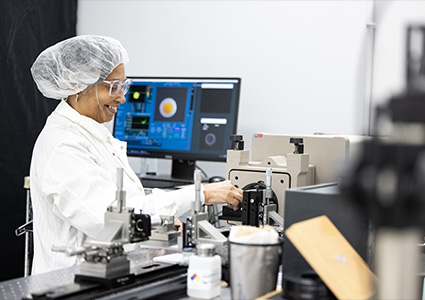
President and CEO, Sam Rubin, sat down with Manufacturing Today to reveal more about LightPath’s trajectory for 2026: “Today, we still provide components but we’re mostly leveraging these unique technologies to build complete systems and provide imaging systems, such as cameras for detecting drones from a distance, used in security, intrusion detection and many military applications. This transition highlighted the inherent value of our technologies – the real value lies in using our optical materials and components to build a complete system, which is far more profitable. Making these systems meant we started going upstream, first organically and then through acquisitions; we have completed three acquisitions to date, two of which are in the camera business, one in optical material. We acquired G5 Infrared a year ago, who make the imaging cameras for long-distance detection – those cameras can see a drone from 15 kilometers away. It’s a highly innovative company with an incredible product and it needed to be part of something bigger to start scaling, so we were able to leverage our optical materials in strengthening their product. This combination is now growing exponentially, and our backlog of future deliveries has grown four times larger than it was. We are continuing to grow and it’s working out beautifully. These acquisitions have helped to accelerate the redirection of the company significantly.”
Combining acquisitions with internal strategic investment have been the driving factors behind LightPath’s tremendous growth in 2025. Typically these optical systems are built using key minerals called Germanium as the main material, which is sourced from China – creating a challenge for the company; one they overcame with innovation. “China has been controlling the export of those materials as part of the US trade disagreement,” Sam elaborates. “Exactly three years ago, we invested in developing an alternative to Germanium. With this exclusive material, we no longer rely on Germanium to build and produce cameras. After acquiring G5 Infrared, they were able to start using our materials, so in short, we were able to secure our own supply chain, which is the primary factor for substantial growth.”
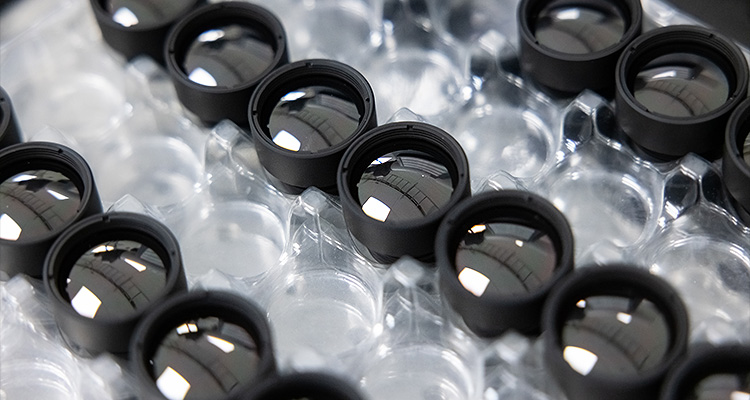
Comprising of chalcogenide glass, LightPath developed a portfolio of glass materials labelled BlackDiamond to replace the use of Germanium and improve overall performance of its systems. With some materials being made internally, the remainder were created and licensed from US government laboratories, and are designed to form smaller, more effective systems. “Interestingly, this is an area that’s had little innovation in around 30 or 40 years, so the new materials we introduced have had a massive impact,” continues Sam. “Following the supply chain issues that we eventually overcame, we now invest much more in research and development (R&D) and there was heavy investment in developing the BlackDiamond chalcogenide glass over the past three years. Presently, our investment is implementing them into the systems and building products around them, so we’ve increased our R&D spend considerably. We expect it to continue accelerated growth for the next two or three years, at least.”
Scaling for the future of optical systems
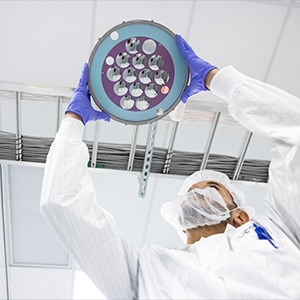
In recent weeks, LightPath announced the further acquisition of a small company, with technology that will allow it to further increase the use of BlackDiamond. Enabling it to make the material in much larger sizes, this will be integral for the development of satellite cameras, which are becoming a significant element for the company. Another area of focus for the company in 2026 is scaling up production, Sam explains: “We have an enormous backlog of future scheduled deliveries, and we need to scale production massively to deliver on that. Our goal is to complete the development of several systems using our unique BlackDiamond materials, alongside the integration of our cameras into systems intended to detect and counter drones. This is becoming a major issue worldwide – not just for Ukraine and areas of Europe, but also for the US, and other countries. Therefore, the deployment of these systems is becoming a key priority for many places.
“Our initial target for three to five years was to hit $150 million but in fact we’re not too far from that figure now, so we’ve ramped it up to $300 million – just to make things interesting! When I joined the company, its turnover was $30 million. All in all, 2025 was an incredible year for us and, with a very strong beginning to this year already, I believe 2026 will be even better.”
