
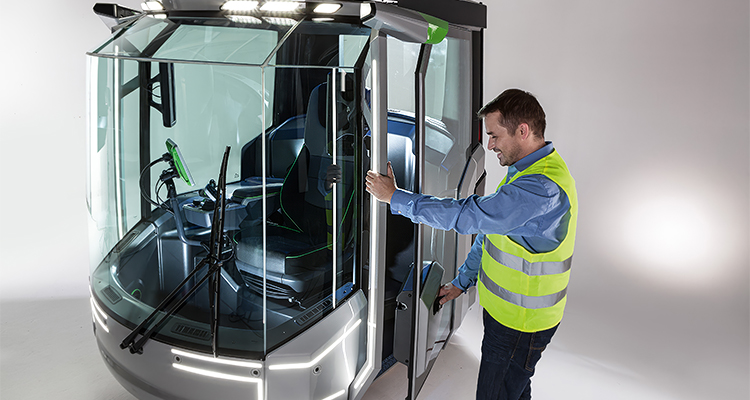
Fritzmeier Group evolves through engineering focus, partnerships, and investment in production systems

Founded in 1926 in Großhelfendorf, Germany, the Fritzmeier Group started as a saddlery workshop. The business shifted toward tractor components in the 1930s, as mechanization reshaped agriculture. In the decades that followed, Fritzmeier continued to expand its capabilities, developing a structure centered on cabs, composite components, and technology services. Today, it operates in multiple markets, focusing on construction, agriculture, commercial vehicles, and automotive programs.
That trajectory brings Georg Fritzmeier, President of the Fritzmeier Group, into focus. As the company celebrates its 100th anniversary, Georg balances the traditions of a family-owned business – rooted in its early work producing harnesses for horses and oxen – with the need to invest in production, development, and partnerships. Georg says, “Overall, our focus is on technically sophisticated solutions, a high degree of vertical integration, and close collaboration with international OEMs and industry partners.” His role requires long-term vision and the ability to make decisions that shape production systems, customer relationships, and the company’s day-to-day operations.
That history actively shapes how Georg thinks about change today, and he treats those early pivots as a template for how the group responds to shifts in technology and market demand.
Industrial portfolio
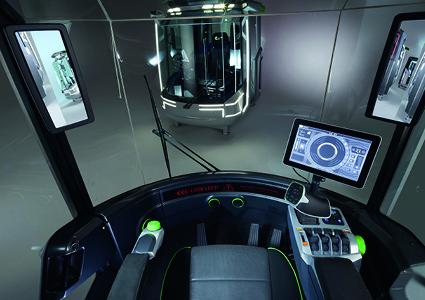
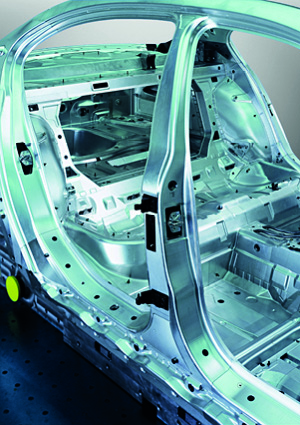
The group organizes its business into three main divisions: Cabs, Composite, and Technology. He explains: “The three divisions each serve distinct markets while sharing development and production resources. Our Cabs division builds steel and aluminum structures and components for off-highway and commercial vehicles. Composite manufactures fiber-reinforced plastics for automotive and transport and our Technology division focuses on tooling, prototype manufacturing, and development support.”
Across these divisions, the group relies on vertical integration and close relationships with customers. The setup shapes how the group approaches research and development. Georg shares, “Our projects extend beyond the company to include universities, suppliers, and customer engineering teams, and our approach is based on close collaboration, a high level of implementation expertise, and a commitment to driving innovation forward together. We focus on turning design concepts into production-ready applications.”
Fritzmeier follows an open approach to development. “In our view, innovation arises where ideas form freely and grow through collaboration, and it depends on coordination across organizations and disciplines,” Georg observes.
Production investments
Fritzmeier has invested in automation and digital systems across its production lines. “The aim is to improve efficiency, manage costs, and build reliability, while focusing on process visibility and integration, not just automation. Digital systems support data collection, monitoring, and analysis, helping teams identify disruptions earlier,” Georg notes.
Each division applies these systems in different ways. In composite production, automated lines handle embossing and bonding processes, supported by inspection systems that monitor quality. Georg notes, “In metal processing, we use technologies such as laser welding, automated grinding, and CNC machining to support precision, repeatability, and to maintain stable production flows. By linking data across operations, we track performance, identify ways to streamline workflows, and connect operational data directly with decision-making.”
Partnerships support these developments through collaboration with research bodies, suppliers, and customers. Georg highlights, “Our engagement with research organizations, as well as plant manufacturers and material suppliers enable us to spot emerging trends and act on them before the market demands it.”
Leadership execution
Georg connects the perspective of a long-term owner with day-to-day operational decisions. He clarifies, “As a family-owned business, we maintain continuity while operating in markets shaped by changes in materials, production methods, and customer requirements.”
Decision-making centers on aligning development, production, and customer needs. Teams don’t just design components; they make sure those components work within real manufacturing systems and end-use environments. Georg points out, “Our development process is designed to make products more efficient, innovative, and sustainable, and to create solutions that not only prove themselves in theory but can also be successfully and practically integrated into manufacturing processes and applications.”
Fritzmeier’s approach focuses on implementation. Georg describes, “We work closely with customer engineering teams during development, using feedback to refine designs before production begins, and that parallel approach strengthens coordination across every stage of the process.”
Leadership involves maintaining links between headquarters and operations in different regions. “While we operate internationally, our headquarters in Großhelfendorf continues to anchor our culture and decision-making, shaping how we approach hiring, investment, and priorities. We continue to integrate our production systems, develop partnerships, and adjust our portfolio as vehicle requirements evolve, building on a long-standing approach shaped by development and collaboration,” Georg asserts.
As Fritzmeier marks its 100th year, it is extending the approach that has defined its first century. Georg concludes, “For us, innovation arises above all where different perspectives, skills, and experiences come together.”
