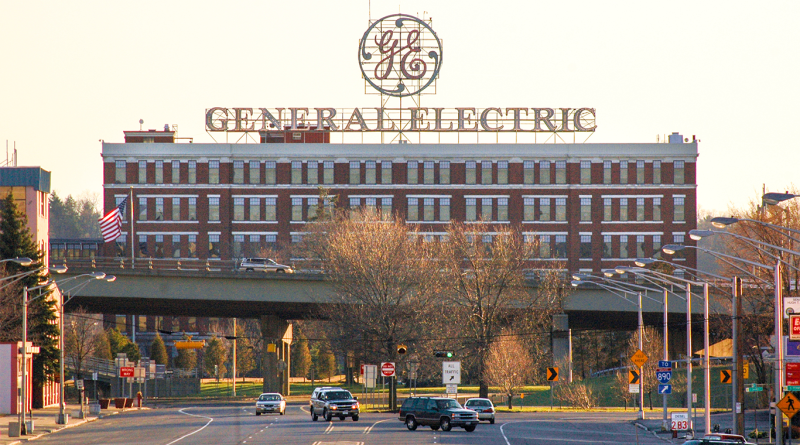
GE Appliances expands reshoring with a $1 billion Louisville investment

Subscribe to our free newsletter today to keep up to date with the latest manufacturing news.
GE Appliances is preparing to spend $1 billion reshaping its manufacturing footprint in Louisville, Kentucky, including more than $400 million to bring high-output dryer production from Mexico to its Appliance Park headquarters. The scale is significant, but the more consequential part of the plan is what the company is attempting to prove: that a mature, high-volume appliance category can be manufactured competitively in the US when production, engineering, suppliers and automation are brought into a tighter operating system.
The investment will span three buildings at Appliance Park. Building 5 will be converted from refrigeration to dryer manufacturing, Building 1 will receive about $112 million in new equipment and redesigned washer and dryer platforms, and Building 2 is undergoing a previously announced $490 million transformation for front-load washers and combination washer-dryers. Taken together, the projects are expected to make the Louisville campus the largest home appliance manufacturing site in the US by production output, employment and physical footprint.
That makes Louisville a useful test case for a larger question facing industrial companies. Reshoring has often been framed around geopolitics, tariffs or the desire to shorten supply chains, but those factors do not by themselves make a factory economically competitive. The harder task is to redesign manufacturing so that proximity, automation, workforce experience and operating scale can offset some of the cost advantages that once pushed production abroad.
GE Appliances is concentrating more of its laundry system in one place
The Building 5 conversion provides the clearest expression of that strategy. Refrigeration production at the facility is expected to end in early 2027, followed by a nine- to 12-month transformation before dryer manufacturing begins later that year. GE Appliances says employees will remain on payroll during the transition, with workers able to move into new and expanded manufacturing roles as production increases across the campus.
The workforce component matters because the company is not approaching the project as a greenfield development. Appliance Park is already a 750-acre manufacturing and engineering complex with an established labor base, production infrastructure and technical expertise. GE Appliances says the combined investment will help secure 4700 production jobs at the site once the new manufacturing system is fully implemented.
Concentrating washers, dryers and dishwashers in Louisville may offer benefits that extend beyond plant utilization. Engineers working close to production can identify manufacturing problems sooner, process changes can be introduced with fewer organizational handoffs, and product teams can work with manufacturing personnel without the geographic separation common in global production networks. GE Appliances describes this model as a “zero-distance” strategy, built around manufacturing products closer to the customers and markets they serve.
The approach is already visible in the company’s washer strategy. GE Appliances announced the $490 million Building 2 project in June 2025, with plans to move production of several front-load washer and combination washer-dryer products to Kentucky. That project is expected to create 800 full-time jobs when complete, extending Appliance Park’s role from a long-established manufacturing campus into a more concentrated laundry production center.
Such concentration can alter the economics of reshoring. Labor cost remains part of any manufacturing calculation, but it sits alongside freight, inventory, lead times, quality, capital utilization and the cost of responding to demand changes. A factory network that reduces distance among design, engineering, suppliers and assembly may be able to recover value in areas that are less visible when companies compare locations mainly through hourly labor rates.
The supplier network may matter as much as the factory investment
GE Appliances has been building a domestic supplier base around the new production footprint. In November 2025, the company said it had awarded more than $150 million in contracts to US suppliers across 10 states for steel, resins, parts and components associated with its new Louisville laundry operation. Those contracts sit within a network that the company says includes more than 6500 US suppliers.
That supplier activity helps explain why factory investment can have effects well beyond the number of workers employed on an assembly line. Moving final assembly closer to the domestic market is one part of reshoring, but a manufacturing system becomes more locally integrated when tooling, components, materials and engineering activity begin moving with it. For an appliance manufacturer producing at large volumes, the reliability and cost of that network can influence whether domestic production remains competitive after the initial capital investment has been made.
The Louisville project is part of a broader manufacturing program. GE Appliances announced in August 2025 that it planned to invest more than $3 billion in its US operations over five years, including projects in Kentucky, Alabama, Georgia, Tennessee and South Carolina. The company says its total commitment to US manufacturing since 2016 now stands at $6.5 billion, combining more than $3.5 billion already invested with the five-year program announced last year.
The timing gives the Louisville project another layer of significance. US manufacturing construction remains historically substantial, but the pace has moderated during 2026. Census Bureau data published through the Federal Reserve Bank of St. Louis showed manufacturing construction spending running at a seasonally adjusted annual rate of roughly $173 billion in June 2026 before the latest July data became available. The figures point to continued investment, but they also suggest that industrial expansion cannot be treated as a uniformly accelerating national trend.
GE Appliances is making its Louisville bet in that more selective environment. Its strategy is not based on building an isolated factory and assuming domestic production will become competitive by virtue of location. The company is combining capital equipment, automation, existing workers, engineering capacity and a supplier network within a manufacturing campus that has operated for decades.
The harder evidence will arrive after the machinery starts running. Dryer production is scheduled to begin in late 2027, when output, labor productivity, quality, inventory requirements and supplier performance will provide a clearer measure of whether the economics match the investment thesis. A successful ramp would not show that every product should be made domestically, but it could demonstrate how manufacturers can change the cost equation by redesigning the production system rather than simply relocating it.
For industrial executives evaluating reshoring, that distinction may be the most useful part of the Louisville story. The next generation of US manufacturing is unlikely to resemble the factories that moved offshore decades ago. GE Appliances is betting that a denser combination of automation, engineering, skilled labor and localized supply can create a different operating model, one capable of making domestic production a competitive manufacturing decision rather than a symbolic one.
Source:
GE Appliances