Giving technology a second life

Zebra Technologies is proving that circular economy programmes can deliver business value alongside sustainability gains.
Electronic waste has become one of the fastest-growing waste streams in the world. As organisations invest in new technologies to improve productivity, visibility and operational performance, they also face an increasingly important question: what happens to the devices they no longer need?
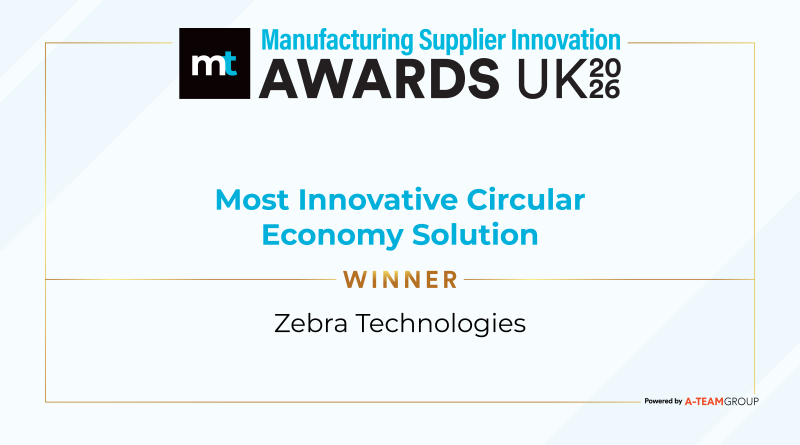
For Zebra Technologies, the answer is not disposal. Through its award-winning Circular Economy Programme, recognised with the Most Innovative Circular Economy Solution award at the Manufacturing Supplier Innovation Awards UK 2026, the company is helping customers recover value from existing technology assets while reducing waste and extending product lifecycles.
The programme combines three connected elements. The first is a buyback service that allows customers to return devices that are no longer required. The second focuses on refurbishment, enabling products to be resold or rented for a second life. The third is recycling, which is used when no viable secondary use can be identified.
Together, the approach creates a framework that helps organisations manage technology assets more sustainably while maintaining operational performance.
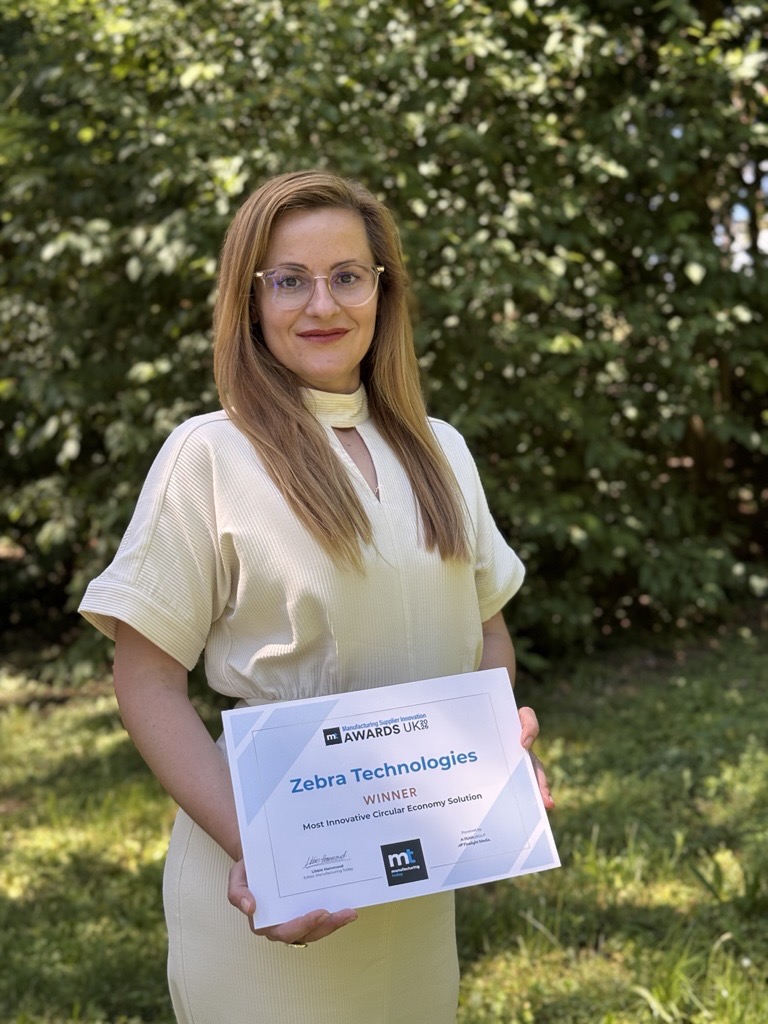
“Sustainability is a priority for Zebra and for our customers,” Jana Bujnakova, Strategic Business Development Manager, Zebra Circular Economy Programme EMEA, explains. “At the same time, electronic waste continues to be a significant challenge. Circular economy programmes help address that issue while also creating a practical business model that delivers value for customers.”
More than a sustainability initiative
While environmental benefits are a major driver, the origins of the programme extend beyond sustainability alone. Bujnakova points to the disruption experienced during the Covid-19 pandemic, when component shortages and supply chain constraints highlighted the importance of making better use of existing assets. Combined with growing pressure to reduce waste and improve resource efficiency, the experience reinforced the need for a more circular approach to technology management.
What differentiates Zebra’s programme is the quality standards underpinning the refurbishment process. Unlike many secondary device markets, Zebra retains access to original manufacturing components, software and technical expertise, allowing refurbished equipment to be restored to a standard supported by manufacturer-backed guarantees.
“We have a significant advantage because we have access to original manufacturing parts, software and technical capabilities,” Bujnakova says. “That allows us to maintain very high-quality standards and provide customers with confidence in the performance and reliability of refurbished devices.”
The programme also helps organisations reduce the total cost of ownership of their technology investments. Customers gain access to high-quality refurbished equipment, increased flexibility in how they manage assets and additional support in achieving their sustainability objectives.
Importantly, Zebra views sustainability and commercial performance as complementary rather than competing priorities. “The overall impact is demonstrating that sustainability and business value can genuinely go hand in hand,” Bujnakova adds. “We create situations where customers, businesses and the environment all benefit.”
From commitment to measurable outcomes
The strongest evidence of the programme’s value comes from customer deployments.
One example from the UK involved a customer implementing a test-and-ship model as part of a device swap programme. Rather than disposing of legacy equipment, the organisation chose devices that had been tested, refurbished and prepared for redeployment.
More than 1,600 devices were successfully returned to service through the initiative, helping the customer maintain operational continuity while reducing waste and extending the life of existing assets.
For Bujnakova, examples such as these demonstrate a wider shift taking place across industry. “The most rewarding success stories are when customers realise they do not have to choose between performance, cost efficiency and sustainability,” she explains. “Circular economy programmes allow them to achieve all three.”
Delivering that outcome requires collaboration across multiple teams. The programme draws on expertise from Zebra’s global circular economy leadership, regional buyback and project management teams, refurbishment specialists, supply chain professionals, sales teams and partner ecosystem.
The company’s wider commitment to innovation also plays an important role. Zebra invests approximately 11 per cent of global revenue into research and development and has built a portfolio of more than 8,000 patents and patent applications. While much of that innovation focuses on areas such as AI, machine vision and automation, the circular economy team applies the same mindset to extending asset value and reducing waste.
“We see innovation as a continuous process of finding better ways to create value for customers,” says Bujnakova. “The circular economy team is naturally curious, open to experimentation and focused on identifying new opportunities.”
Looking ahead, Zebra expects demand for circular economy solutions to continue growing. The company’s priorities include increasing refurbishment capacity, improving operational efficiency and expanding access to buyback and refurbishment services across more markets.
Bujnakova believes the wider industry is approaching an important turning point. “Over the next few years, I expect conversations to move away from sustainability commitments and towards measurable outcomes,” she says. “Companies that can combine sustainability with profitability will be best positioned for the future.”
Winning the Most Innovative Circular Economy Solution award provides recognition for the progress made so far, but Zebra sees it as motivation rather than a finish line.
“For us, the award is less about celebrating the past and more about accelerating future impact,” Bujnakova concludes. “It gives us an opportunity to share our story, inspire others and continue advancing the circular economy agenda.”