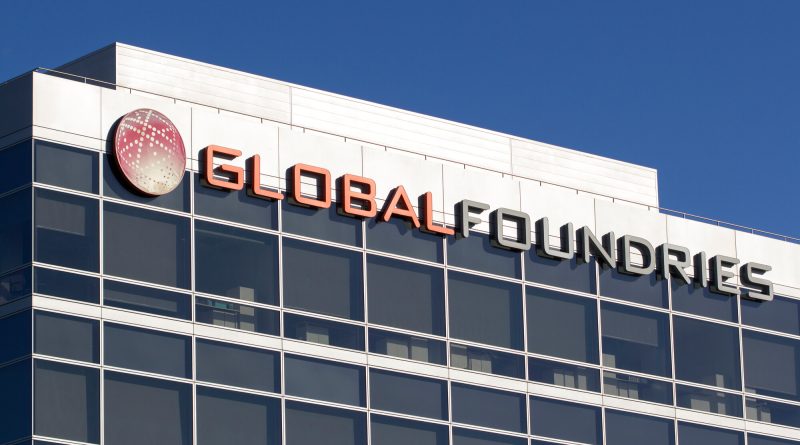
GlobalFoundries New York fab tests a new model for US chipmaking

Subscribe to our free newsletter today to keep up to date with the latest manufacturing news.
GlobalFoundries has started construction on a new 300mm semiconductor fab at its Malta, New York, site. It is the first project to break ground under a US-Japan initiative that provides up to $21 billion in funding.
The company, known as GF, marked the start of work on Nov. 13 alongside US and Japanese government officials and New York Gov. Kathy Hochul. “Today, we’re putting shovels in the ground and turning an ambitious partnership into reality,” said GF CEO Tim Breen.
The first fab carries an initial investment of about $10 billion, supported by $570 million in New York State incentives. It is expected to come online in 2029 and to add about 900,000 300mm wafers of annual US manufacturing capacity when fully operational. A second fab would follow with about $10 billion more as the project advances, adding similar capacity.
GF expects the 2 fabs to create about 27,000 construction and ecosystem jobs and more than 1000 high-skilled manufacturing jobs in New York’s Capital Region.
The funding figure is large, but the structure behind it is the more unusual part of the story.
Japanese capital and a US operator make a new semiconductor model
Most US chip plants announced in recent years have followed a familiar pattern. A chipmaker commits its own capital, then applies for federal and state support. Malta works differently.
Japan provides the investment. GF contributes its technology, manufacturing expertise, and operational capabilities as the technology provider and operator. The initiative grew out of the trade and investment agreement between the US and Japan, and GF describes it as the first of its kind.
In its third-quarter results, GF said it will be paid through management and technology fees over the life of the project. That is a different business from building and owning a fab outright. GF carries far less of the capital burden, but the value of the arrangement depends on how well the plants are run and how fully they are used.
That raises a question the groundbreaking does not answer. A fab pays off when it runs close to capacity, and capacity depends on customers. The terms that decide who books wafers, at what price, and who absorbs the cost if demand softens will shape the project’s long-term success more than the headline funding.
There are early signs of interest. When the initiative was announced in October, Japanese chipmaker Renesas said it sees the New York capacity as an extension of its own production footprint. Equipment maker Tokyo Electron said it would contribute to the expansion, and executives from Apple, GM, and Cirrus Logic were also quoted in the announcement.
Foundational chips matter to US manufacturers as much as AI processors
Much of the debate about US chip production has centered on the advanced processors behind AI. The Malta fabs aim at a different part of the market.
GF says the initiative targets foundational semiconductors for automotive, industrial, and connected infrastructure markets. These are the chips that manage power in vehicles, control factory equipment, and sit inside network hardware. They rarely make headlines, but a shortage of them can stop a production line, as automakers learned during the pandemic-era chip shortage.
For manufacturers, that makes the project relevant well beyond the semiconductor sector. More domestic capacity for these parts could shorten supply chains for carmakers, equipment builders, and automation suppliers that rely on overseas fabs for many of their components.
It also makes the Malta project a test of whether trade agreements can deliver practical supply chain gains, rather than investment pledges that stay on paper.
The semiconductor workforce is the next test for GlobalFoundries
Construction is the visible milestone. Staffing the plants may prove harder.
The more than 1000 high-skilled jobs GF expects to create will need technicians, engineers, and operators trained for cleanroom work. GF says it is working with schools, colleges, universities, and workforce development organizations to build that talent pipeline, though it has not named specific programs.
Malta starts with an advantage. It already hosts a working fab, an experienced workforce, and infrastructure GF says will speed construction.
The timeline is still tight. With the first fab due online in 2029, GF and its partners have roughly 3 years to recruit and train staff while other chip projects across the US compete for the same skills.
Several questions remain open. The second fab has no public timeline, and GF’s own forward-looking statements warn that expansions may not proceed as planned if expected funding is delayed or withheld. GF has also not disclosed how capacity will be shared between customers.
Whether a mix of foreign government capital and a US operator becomes a template for other projects under the trade deal may depend on how Malta answers those questions by 2029.
Source:
GlobalFoundries