

GT Emissions Systems enters a period of transformation while innovating next-generation engine air components for commercial vehicles

On a mission to harness leading-edge technologies and collaborative innovation to design, validate, and manufacture the highest-quality emissions solutions, GT Emissions Systems (GT) is supporting the commercial vehicle industry through every evolution. Headquartered in County Durham, England, the company’s vision is clear: “to be the trusted global partner for advanced engine emissions systems, driving cleaner, safer and more sustainable solutions for the automotive, construction and marine industries”.
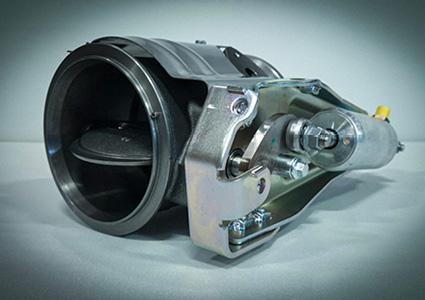
As experts in advanced modelling, simulation and prototypes, GT delivers fast, reliable and customer-focused systems across three core product types: Exhaust Gas Recirculation Valves (EGRs), Exhaust Throttle Valves (ETVs), and Intake Throttle Valves (ITVs). The company champions a deeply collaborative, customer-centric approach that, combined with industry-leading technologies, cultivates real innovation. Through this methodology, the business ensures that its products are designed, validated, and manufactured to meet the most demanding standards of safety and quality.
Since its founding in 1974, GT has been on quite the journey. From changes in ownership to organizational restructuring, market shifts, and macroeconomic challenges, the company has evolved through its ups and downs and, ultimately, has emerged more capable and resilient than ever. Now, GT is entering a fresh era, driven by an updated strategic plan and backed by more than 50 years of industry experience and expertise. Manufacturing Today sits down with Steve Wright, Managing Director of GT, to dive deeper into the company’s journey thus far and uncover what lies ahead in its next chapter.
Steve Wright, Managing Director of GT
“The company was founded by a local businessman named Geoff Turnbull. He was a machining engineer and quite a prominent figure in his community, and he initially founded the company as an engineering business,” Steve begins. “Geoff then acquired a company called Kefco Precision Engineers – a general engineering company focusing on machining of components for various businesses. In 2002, the company then acquired the Exhaust Brake business of multinational automotive supplier, Wabco. GT had actually been supplying Wabco with certain components for some time but then snapped up the opportunity to buy that part of their operations. That’s what took us into being the company that we are today, providing ‘engine air’ products to OEMs for the commercial vehicle industry.
“In 2016, GT was then acquired by another multinational, Knorr-Bremse, a company I had been working for in Hong Kong, and then Thailand, since 2015. Following many years of working overseas, my wife and I planned to return to the UK, where I started looking for opportunities with Knorr-Bremse, and by amazing coincidence, the MD position at GT, in my hometown, became available, and I joined GT in 2022.”
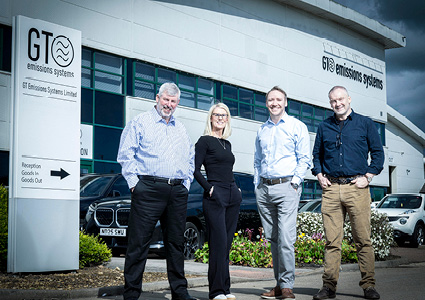
From this time, a comprehensive strategic and restructuring plan was put into place with the aim of better integration with Knorr-Bremse and securing the company’s financial future. “However, Knorr-Bremse informed us in 2023 that GT would be put up for sale, which was part of their new strategic direction, and we were acquired by RCapital in January 2025,” Steve says. “After a very short time and based upon the successful fulfillment of working through the strategic and restructuring plan, RCapital informed us that the company would be sold once again. However, this time, the GT Senior Management Team (SMT), comprising of me, Kelly Kean (HR Director), Ian Black, (Finance Director), Dean Machnicki, (Sales Director) and I, advised by Corporate Finance firm, Ryecroft Glenton, put together an MBO package and we completed the 100 percent acquisition of GT in December 2025.”
As Steve reveals, GT’s current and future activities are being spearheaded by an updated strategic plan, with execution and delivery as key priorities. “The plan boasts four key pillars: Grow Business; Profit Improvement; Operations, Administration Improvement; and People Development,” he states. “These pillars clearly signify key areas for growth and further innovation across the board, from intelligence, networking, marketing, and pricing alignment through to administrative, quality, and production enhancement, people engagement, and training.”
Product development, for instance, forms an integral part of this plan. As the commercial vehicle sector – in tandem with the wider automotive industry – moves progressively towards cleaner transport solutions, such as electrification and alternative fuels, GT’s strategy analyzes how its existing portfolio can be adapted and innovated to accommodate the shift to alternative fuels.
“From an environmental perspective, there is a global push to move to electrification, but the reality is that for commercial vehicles, particularly long-haulage, we’re not there yet,” Steve elaborates. “Full electrification will be achieved at some point, but in the meantime, traditional diesel internal combustion engines will continue to have strong demand, and our concepts allow us to adapt our products to cater for alternative fuels.”
When it comes to product development, for GT, innovation is everything. The company boasts its own in-house R&D capabilities, with a dedicated R&D team who are focused on advancing engine air technologies to meet the evolving demands of performance, efficiency, and environmental responsibility. From initial concept and rapid prototyping through to final validation, the business’ process is built on collaboration, precision, and continuous improvement, ensuring that every product is expertly developed to the highest standards.
“For R&D, it’s all about having close working relationships with our customers,” Steve affirms. “We do a lot of CAD work to trial and prove the concepts that we innovate, and we also have good relationships with various labs who are specialists in specific materials. As such, we understand the best materials to use and are then able to build prototypes and test in our own in-house R&D test facilities. Following the MBO, we now have better ability to visit our customers and suppliers to fully understand their needs.”
As a part of its future plan, GT is committed to modernizing its manufacturing processes. With a stronger understanding of customer requirements and greater control over development, the business has been able to invest confidently in advanced production technologies designed to improve efficiency, consistency, and overall quality.
“From a production standpoint, we’re doing many things to improve our processes. One of the most significant developments for us was that we invested £4 million in a fully integrated automated assembly line. It includes a lot of robotic functions, allowing us to produce up to 17 different types of products with changeovers, and is highly automated with better process controls,” Steve explains. “The line is doing extremely well – certainly in improving our efficiency and quality capability.
“Another significant part of our assembly line is our new vertical storage system, provided by Kardex,” he adds. “These storage systems are normally used for storage of parts or components, but we had the novel idea of using it to store various fixtures for the 17 different products that we build on the assembly line. This means that when we carry out a changeover, the Kardex system can deliver those fixtures to the robotics installing them. This system, working in alignment with our automated assembly line, is one of the biggest things that we’ve done with regard to automation.”
Well-equipped with a robust strategic plan in place, GT is excited for future geographical expansion. In recent months, the company was thrilled to announce the official opening of its new production facility in Bengaluru, India – a major development in its upwards growth trajectory. Now, as the business embarks further upon its journey, a new North American site remains firmly on its horizon, with the company planning to make its first step on US soil by 2027.
“Our business in the commercial vehicle world is cyclical. You get those peaks and troughs across the different global economies, and we expected this year to be similar to last in terms of revenue. However, this year has been better than we anticipated so far, so we’re seeing a strong outlook for the rest of 2026,” Steve says, optimistic for the future ahead.
“Our prospects are good. The industry will eventually move to electrification, but we see longevity in the traditional combustion engine. Our key objectives for the next five years are centered around winning new business and cementing our position in India. Likewise, we’d like to be established in the US in the near future.”
Building on a legacy spanning more than five decades, GT is entering a transformative new chapter defined by innovation, operational excellence, and resilience. By combining advanced R&D capabilities with strategic investment in automation and global expansion, the company is strengthening its ability to support the evolving needs of the commercial vehicle industry. While the transition towards electrification continues, GT remains focused on delivering high-quality emissions solutions that balance performance, sustainability, and reliability. Backed by a clear long-term strategy and a deeply collaborative culture, the business is well-positioned to drive future growth and remain a trusted partner to OEMs worldwide – now and for many more decades to come.
