Henkel remains a market leader by balancing 150 years of heritage with innovation and sustainability

Reaching its 150th year is a milestone few companies get to mark, but it’s one Henkel, the German multinational industrial and consumer goods company, is celebrating this year. With a rich heritage grounded in innovation, the company is a pioneer in various fields, constantly pushing the boundaries of what’s scientifically possible. It all started with Founder Fritz Henkel, who at 28 years old, revolutionized the laborious hand-washing laundry process by inventing the world’s first self-acting detergent. Fritz formed the company with two partners in 1876, and his entrepreneurial spirit continues to guide Henkel today.
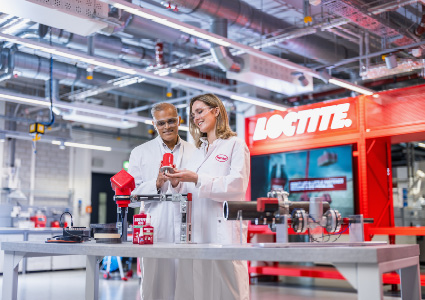
The group is today organized into two business divisions: Henkel Consumer Brands, home to its detergents, laundry, and haircare; and Henkel Adhesive Technologies, an €11 billion business employing roughly 25,000 people across 140 manufacturing sites. Adhesive Technologies sits between the chemical industry and more than 800 industries it supplies with adhesives, sealants, and coatings, from automotive and aerospace to electronics, food, and packaging. Both divisions are home to several household names, including Persil and Schwarzkopf on the consumer brands side, and Loctite and Technomelt within Adhesive Technologies.
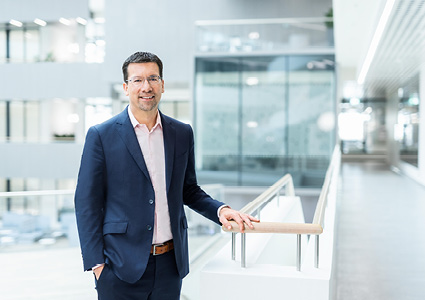
“Henkel is a chemical company at its core, and our expertise is formulating and working with all kinds of raw materials,” opens Mark Dorn, Executive Vice President of Henkel Adhesive Technologies. “One of our key value propositions in our industrial business is that we understand the needs of our customers; we speak their language and everything we do is driven by years of technical know-how. We’re active in the regions where our customers are located, and we tend to follow them as their demand evolves. Pair this proximity with our strong position in growing markets like semiconductors, electronics, data centers, and aerospace, and we’ve delivered organic growth that outpaces our peers.”
Part of this successful strategy comes down to structure, as although Henkel reports three divisions, its profit-and-loss responsibility sits within nine global business units that control sales, marketing, product development, and technical support. “In the last few years, we’ve worked hard to delegate responsibility and accountability across the business,” Mark says. “Empowering our teams means we’re more agile in times of crisis. When supply chains lagged after the outbreak of war involving Iran earlier this year, for instance, our teams could react without waiting for decisions from our headquarters.”
Acquisitions have also played a significant role in Henkel’s growth. Since Mark took over the Adhesive Technologies business in February 2023, it has acquired Critica Infrastructure; Seal for Life Industries; ATP Adhesive Systems; and Wetherby Laroc. Beyond these acquisitions, Henkel has also agreed to purchase Stahl, a Dutch specialty coatings business.
“We have two lenses by which we evaluate acquisitions,” Mark elaborates. “One is the core area, and the second is about adjacencies, technologies, or new application areas. Critica and Seal for Life have strengthened our presence in specialty coatings, for instance, which sits alongside our longstanding work in flexible packaging adhesives and rigid coatings.”
ATP, on the other hand, was a deliberate acquisition designed to enhance Henkel’s adhesives portfolio. While Henkel remains technology agnostic, with no preference for one chemistry over another, its liquid adhesive solutions cannot always serve every application. “We’re still a leader in liquid adhesives, but there are certain areas where films and tapes are an ideal solution,” Mark shares. “We’ve always wanted to expand into this space and the acquisition of ATP has made this possible.”
The acquisition of Stahl follows a similar pattern. Stahl’s capabilities naturally complement Henkel’s offering, adding leather, footwear, and automotive interiors applications. It’s also about how a product feels; Henkel already coats the inside of paper cups and straws to provide a protective barrier, but Stahl works on the outside of the product, such as protective coatings for sneakers, steering wheels, or even luxury handbags.
“There are crossovers between Henkel and Stahl,” Mark explains. “We already work on joining the upper and lower parts of shoes, for instance, as well as automotive parts. Together, we can provide a stronger service to offer more complete solutions to our customers, as well as enter new markets. Aside from products, we also align in terms of our sustainability and culture goals, with Stahl working predominantly with water-based technologies. We’re excited to have signed the deal, with closing expected later this year [at the time of writing] and full integration to follow.”
Henkel’s approach to acquisitions is far from new, as the adhesive technologies division has grown through inorganic methods. Henkel purchased Loctite in 1997, which remains the company’s largest brand today, and acquired National Starch in 2008 in a deal that not only roughly doubled the business but also gave it a platform in the electronics market.
Ensuring the success of these acquisitions has required careful integration and cultural thought. “Henkel is a warm, empathetic, and curious organization, and that is embedded in our company DNA,” Mark states. “Our priority when integrating a business is to listen and understand its culture. We’re deliberately cautious, and we staff integration teams jointly to validate the business model before any changes occur while staying clear on non-negotiables around systems and back-office integration.”
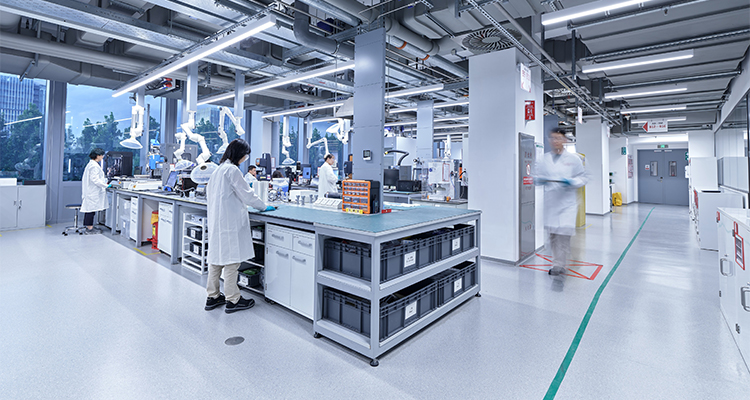
Alongside acquisitions, innovation is at the heart of Henkel’s operations, with investment into both research and development (R&D) and physical infrastructure continually flowing. Central to this network is the Inspiration Center in Düsseldorf, which opened in 2022 after a €130 million build that stands as Henkel’s largest single investment to date. Spread over 47,000 square meters, the site houses 30 laboratories, four technology centers, and more than 750 employees. Its modular labs can be quickly reconfigured as projects change, and the customer experience center allows visitors to view Henkel’s full portfolio of adhesives, sealants, and coatings.
Following success in Düsseldorf, Henkel opened a sister site in Shanghai in 2025. “The concept mirrors our advanced center in Düsseldorf, bringing our portfolio to life and enabling collaboration both internally and externally,” Mark confirms. “We’ve opened a third center in Brazil earlier this year and we have upgrades planned for our site in Seoul. We’ve also just launched a larger lab in Santa Clara to remain close to our electronics and semiconductor customers in Silicon Valley as we work toward the next generation of solutions.”
While innovation has remained central for 150 years, Henkel hasn’t been afraid to evolve where needed. The company has committed to becoming carbon neutral by 2045 under the Science Based Targets initiative, with a 30 percent cut in Scope 3 emissions by 2030. Internal operations are a small part of the equation with Scope 1 and 2 emissions totaling under five percent, but Henkel is still making changes. These include using 100 percent renewable electricity and expanding its use of biogas, with ten sites now operating as Net Zero.
When it comes to raw materials, the test is the numbers rather than the label to ensure the environmental benefit is genuine. “Bio-based per se is not automatically an advantage; there’s nothing to be gained if a bio-based material achieves the same performance as a fossil-based one but requires so much energy that the product carbon footprint is worse,” Mark elaborates. “Cost and scale are other constraints, as many bio-based materials are more expensive at today’s volumes. We assess options against performance, cost, and future availability while being wary of choices that would create competition between food and feedstocks.”
Some of the hardest sustainability gains sit in the supply chain, but Henkel is partnering with several suppliers. Its partnership with Synthomer brings lower-carbon CLIMA resins into Henkel’s TECHNOMELT hot melt portfolio, for instance, cutting the product’s carbon footprint by at least 20 percent. “We document product carbon footprint through an internal system, the Henkel Environmental Assessment Reporting Tool (HEART),” Mark reveals. “This tracks what products have gone to our customers and provides them with updated figures as they improve. It’s not good enough to simply do something; you must have the systems in place to document it so that customers can use this information in their own reporting.”
From sustainability and research into raw materials to launching Inspiration Centers, it’s clear that Henkel prioritizes long-term investments, thinking about strategic decisions in terms of decades rather than delivering quarterly results. Ask Mark about its 150-year heritage, and his approach aligns: “With an anchor family shareholder, Henkel has always made decisions for generations, not years, but the company is balanced by the discipline of a stock-market listing.”
To mark the milestone of 150 years in business, Henkel is hosting open days at various sites around the globe, as well as a two-day celebration at the Düsseldorf headquarters on the exact birthday, September 26. Beyond celebrations, Mark’s vision for the future is centered on organic growth, a healthy balance sheet, and company-wide accountability. “We’re focused on gratitude for our colleagues and customers who have got us this far, and we’re looking forward to the challenge of being successful for the next 150 years.”