
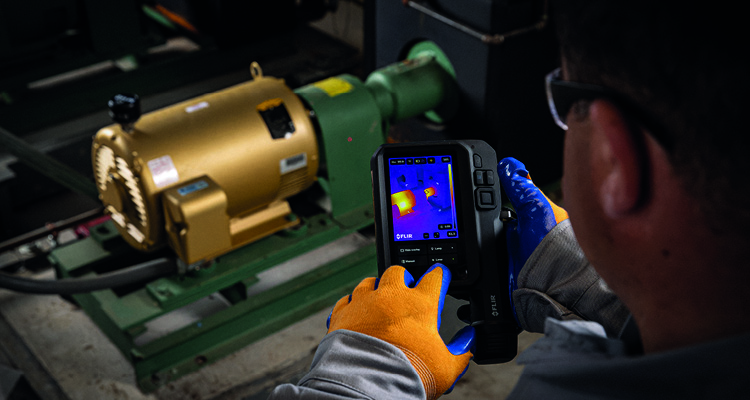
How Flir is advancing AI-powered thermal imaging to transform predictive maintenance across global industries

Innovating at the intersection of sensing technology, intelligence, and decision-making, Flir is leveraging its core sensing expertise to help organizations overcome their industrial, commercial, and infrastructural challenges. A Teledyne Technologies brand, Flir builds upon decades of experience and expertise in advanced instrumentation and mission-critical technologies.
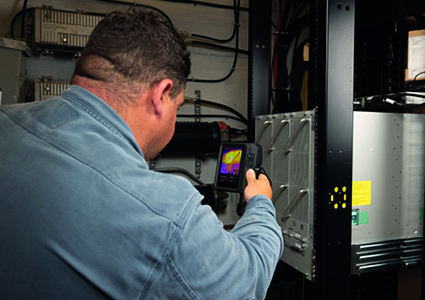
With its heritage rooted in infrared technology for the defense and government markets, Flir’s solutions expanded to address the needs of electrical utilities, gas extractors, security integrators, traffic managers, researchers, and more. At the same time, it evolved with the changing market, thinking less in terms of in-dividual products and more in terms of impact. Today, the company’s extensive portfolio includes thermal and acoustic imaging, fixed sensors, and wireless monitoring devices, along with software platforms that bring all the technologies together and turn data into actionable insights. Now, as Flir drives the next evolution of thermal imaging, it is scaling its intelligence to new heights, leading the shift from human-led thermal management to AI-supported decision-making. Manufacturing Today sits down with John Gould, Director of Global Business Development at Flir, to dive deeper into how the company’s AI-driven thermal imaging is transforming predictive maintenance across global industries.
“We’re witnessing a fundamental shift in how expertise is delivered,” John begins. “Traditionally, sensing technologies require highly trained specialists to interpret data. AI allows us to embed a significant portion of that expertise directly into devices and platforms. Instead of asking users to interpret images, systems can now highlight anomalies, assign severity, and recommend action. Strategically, that democratizes reliability and safety, allowing organizations to scale best practices without scaling headcount.”
This shift toward embedded intelligence directly informs Flir’s approach to innovation. By recognizing that AI can extend expertise beyond specialists and into everyday workflows, the company is opening the doors to new, real-world opportunities. Flir’s research and development processes, for instance, targets instances where human judgment becomes strained under scale, complexity, or time pressure, designing solutions that meaningfully close that gap.
“Our R&D philosophy starts with a simple question: Where does human judgment struggle at scale? That leads us to focus on areas like pattern recognition, prioritization, and early warning,” John explains. “While we continue to invest deeply in sensing innovation, just as much effort goes into software, usability, and integration. Breakthroughs don’t always come from new hardware, but from making existing capabilities easier to deploy, trust, and act upon.”
Flir’s focus on scaling human judgment through smarter, more accessible systems extends beyond operational efficiency and into broader societal impact. When organizations can better recognize patterns, prioritize risks, and act earlier, those same capabilities begin to influence outcomes at a much larger scale. What starts as improved decision-making within a single system becomes a foundation for greater resilience across entire communities.
“At a societal level, early insight changes outcomes. Whether it’s identifying electrical faults before a fire, detecting equipment degradation before a shutdown, or improving situational awareness for first responders, the common thread is foresight,” John elaborates. “As communities become more complex and interconnected, resilience depends on visibility. Our role is to provide that visibility in a way that supports safer, healthier, and more sustainable communities.”
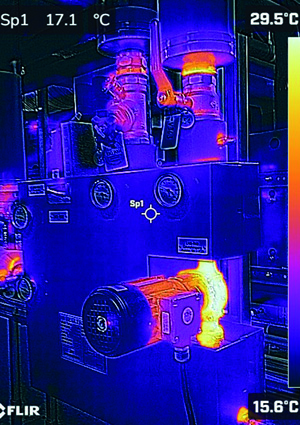
Delivering that high level of visibility, however, requires more than just accurate sensing, but rather ensuring that insights move seamlessly to where decisions are made. As such, Flir places great emphasis on building integrated ecosystems that can translate early insight into coordinated response.
“One important shift is our emphasis on connected solutions. Sensing data has limited value if it lives in isolation. We’re investing heavily in connectivity – wireless communication, APIs, and backend integration – so insights flow naturally into CMMS, EAM, and enterprise decision systems. That’s what turns condition monitoring from a technical exercise into a business capability,” John says.
As Flir continues to push the boundaries of what sensing technology can achieve, it continues to prove intelligence is no longer confined to experts but embedded across entire operational ecosystems. By combining advanced sensing with AI-driven analytics and seamless connectivity, the company is redefining how organizations anticipate, interpret, and respond to risk. What was once reactive is now predictive; what once required specialist intervention is becoming intuitive and scalable.
In this way, Flir is both enhancing how industries maintain assets and reshaping how they think about reliability, safety, and performance. As global systems grow more complex, Flir is firmly positioned at the forefront of that transition, enabling smarter industries and more resilient communities alike – both now and for many more years to come.
“I see Flir recognized not just for best-in-class sensing, but for enabling a new operating model – one where maintenance is predictive, safety is proactive, and data connects operational decisions to business outcomes. That shift, from tools to systems, from insight to actions, is where we’re investing for the long term,” John affirms.
“If there’s one overarching theme for us, it’s that reliability, safety, and efficiency are no longer separate conversations,” he concludes, optimistic for the future ahead. “Customers are looking for platforms that help them balance all three. Our role is to make complex information usable, timely, and trustworthy, al-lowing organizations to make better decisions before problems escalate.”
