
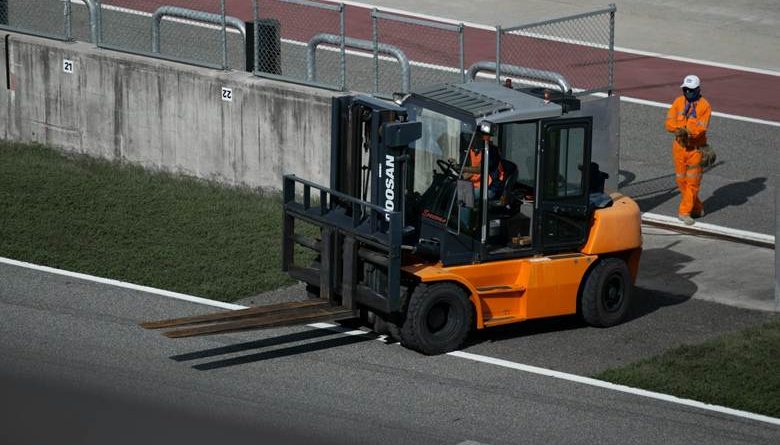
How Midwest Manufacturers Are Solving the Forklift Operator Shortage Through Equipment Innovation

A shortage of forklift operators is putting real pressure on Midwest manufacturing facilities, where steady material movement keeps production on schedule. Forward-thinking facility managers treat the gap as a chance to modernize their operations. Dealer partnerships and equipment innovation now shape how the region’s manufacturers are solving the forklift operator shortage.
Partnering With Dealers for Training
A skills gap compounds an already tight labor market. A joint study by the Manufacturing Institute and Deloitte projects that 1.9 million manufacturing positions could go unfilled by 2033 if the gap remains open. Training inexperienced yet motivated candidates to operate lift trucks provides manufacturers with a practical way to build a qualified material-handling workforce.
Some manufacturers turn to local forklift dealers for operator training instead of building programs in-house, an option that may shorten onboarding and support safety compliance. According to OSHA standard 1910.178(l), employers are responsible for implementing a training program and ensuring that operators complete it before using the equipment.
That program must blend formal instruction with practical exercises and a workplace evaluation. Operators need reevaluation at least every three years and after any refresher training related to unsafe behaviors. Because some dealers can also deliver certification and follow-up courses, these partnerships may double as a workforce development strategy that builds skills and eases hiring pressure.
Investing in Intuitive Equipment
To shorten the learning curve for new or less-experienced operators, manufacturers favor lift trucks with simplified controls and ergonomic design. Recent models also advance responsiveness and digitalization in ways that promote intuitive operation. Minilevers, joystick steering and smooth hydraulics are designed to take less effort than the stiffer mechanical levers on older trucks, which may ease hand and wrist strain.
Clear displays and touch screen dashboards keep key information in front of the operator, while redesigned masts, overhead guards and streamlined chassis layouts can improve visibility and make the job easier. Together, these features may help newer operators get comfortable sooner and lessen reliance on highly specialized talent.
Adopting Robotics and Automation
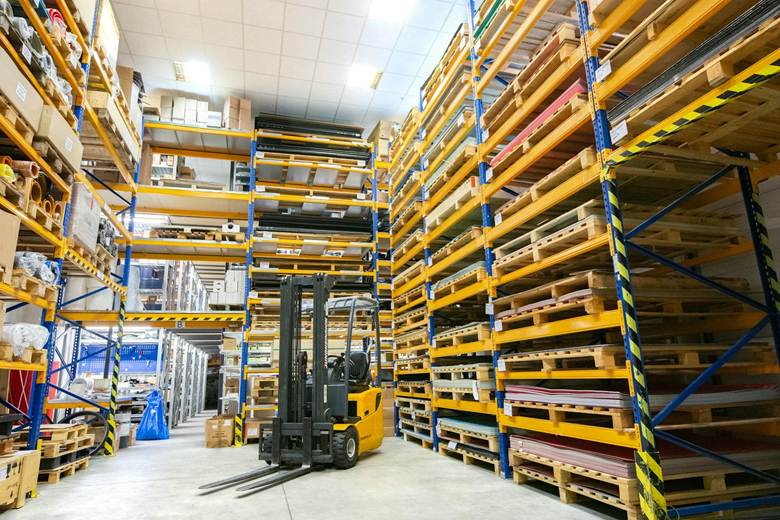
Robot adoption is a persistent trend in manufacturing. Data from the International Federation of Robotics, cited by the National Institute for Occupational Safety and Health, show that 10% more industrial robots entered factories in the United States in 2022. Robotic forklifts carry that trend into the warehouse as automated lift trucks built for material handling.
To help offset the shortage, manufacturers are introducing semi-autonomous and automated equipment. Adding robotic software to standard lift trucks can let them pick up, transport and drop off pallets with little human input, which may lighten the load of repetitive transport. Human operators can then move into higher-value supervisory or technical roles.
Relying on Operator Assist Technology
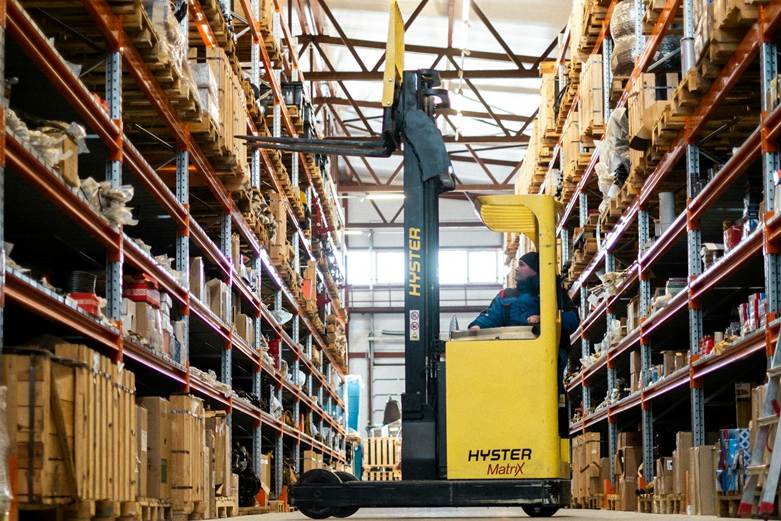
Operator-assist technology builds on passive safety features such as standard mirrors and horns, using sensors, real-time alerts and automation to give a truck spatial awareness and help prevent collisions. Depending on the model, these systems can detect obstacles and warn drivers with visual lights, audible chimes or seat and steering vibrations.
Some systems go further by reducing travel speed, limiting acceleration, adjusting mast or fork tilt, or stopping the truck to avoid hazards. Those capabilities can make it easier to promote best safety practices across a fleet. Protecting employees may help facilities keep their teams productive when replacements are hard to find.
3 Midwest Material Handling Dealers Leading the Shift
These vendors in Joplin, Missouri, Evansville, Indiana, and La Crosse, Wisconsin, demonstrate how they mitigate the impact of the forklift operator shortage on the region’s manufacturing businesses.
1. Medley Equipment Company
Medley Equipment Company is where facility managers can buy innovative forklifts near Joplin. This dealer has been around since 1941 and carries major brands. A large rental inventory and a rent-to-own option give buyers added flexibility.
Key Features
- Operator training program: Certified instructors lead classroom sessions, and videos cover basic equipment operation and OSHA regulations. Trainees then pass a written test and demonstrate forklift operation.
- Robotic forklifts: Hyster-Yale lift trucks run on Balyo’s proprietary robotic software for distribution centers, switching between automatic and manual modes with infrastructure-free navigation. Warehouse integration assistance is also available.
- Operator-assist technology: Standard and advanced dynamic stability systems help prevent forward and sideways tip-overs, while object and proximity detection and telemetry send real-time impact alerts to management and document operator behavior.
2. Black Equipment
Black Equipment has served Evansville since 1956. Its forklift lineup includes Hyster, Yale, JCB, Combilift, Sellick and Genie models, along with fleet management and 24/7 emergency service. A 60-day service guarantee includes a free loaner if repairs fail, and a 30-day performance guarantee or equipment buyback backs up each purchase.
Key Features
- Operator training program: A four-hour course blends classroom and hands-on instruction on OSHA 1910.178(l) requirements, and trainees complete a written exam and practical test. On-site delivery, three-year certification and a two-day trainer program for in-house instructors are also available.
- Robotic forklifts: Two automated reach truck models are available — the Yale NR/NDR-DC/EC and the Hyster N-ZR3/ZDR3 series.
- Operator-assist technology: A lateral stability system reduces lean in turns, and high-lift traction control caps speed when the carriage is raised. High-lift tilt controls limit how fast and how far the mast tilts under elevated loads, while corner control slows the truck based on the turn radius.
3. Bernie’s Equipment Company
Bernie’s Equipment Company sells Heli forklifts in La Crosse as a full-service material handling partner. Founded in 1975, the company offers life cycle support, parts availability, warranty backing and preventive maintenance programs.
Key Features
- Operator training program: Operator training and certification include ongoing reevaluation of credentialed drivers to ensure facilities remain compliant with OSHA regulations.
- Robotic forklifts: Heli offers a complete line of automated guided vehicle forklifts, with laser navigation for positioning accuracy and built-in obstacle detection, emergency stops and anti-collision protection.
- Operator-assist technology: The proprietary Heli advanced driver assistance and safety intelligence system supports its industrial lift trucks.
Building a Resilient Workforce for the Road Ahead
Midwest manufacturers are turning the operator shortage into a modernization opportunity by pairing dealer partnerships with intuitive, ergonomic and automated equipment. Facility managers who review their own fleets and training needs can plan upgrades with greater confidence and build a stronger, more capable team for the years ahead.

*Please note that this list includes sponsored content. Some of the companies, products, or services featured have entered into commercial agreements for placement. Sponsored placements do not necessarily reflect an endorsement and should be considered alongside other options in the marketplace.