How mobility vehicle pioneer Driverge became a cross-border upfitter without losing its founding mission

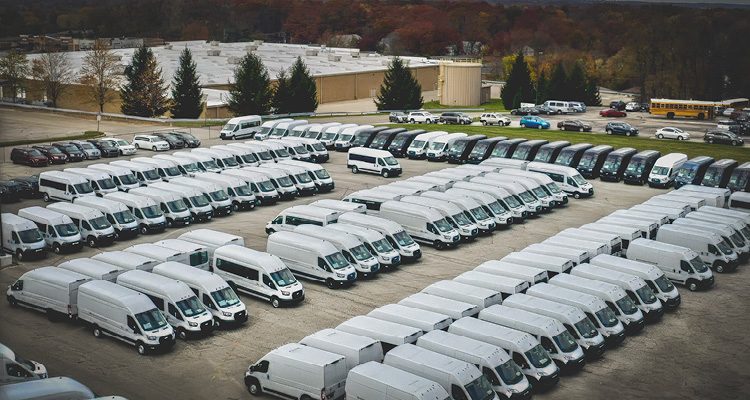
Nearly three decades ago, a company called Transit Works set out with a single focused mission: to build wheelchair accessible vehicles, giving people with disabilities greater freedom and independence. Today, operating under the name Driverge Vehicle Innovations (Driverge) since 2019, that same company upfits vehicles for fleets across the US and Canada, ranging from mobility vans to work trucks and vocational vehicles. This transformation reflects not only a change of name, but an essential shift in how the company views its role in the industry.
“When we began, the business was focused on building wheelchair accessible vehicles,” starts Mark Minatel, President of Driverge. “And as the company has grown, serving and supporting customers remains our mission.” Even though its scope has expanded dramatically, that mission has remained constant. Over the past several years, Driverge has moved methodically from being a single-product mobility vehicle manufacturer into a full-service upfitter, capable of supporting fleet and dealer customers across multiple vehicle types – a shift driven by a blend of ambition and necessity through demand.
Four years ago, Driverge acquired US Upfitters – a business specializing in vocational upfitting – followed by the acquisition of two divisions from Savaria that opened the Canadian market. Together, these moves transformed Driverge from a mobility specialist into a cross-border upfitter, serving both wheelchair accessible vehicle customers and the broader work truck industry. “The mobility market is only so big,” explains Terry Elder, Vice President of Operations, North America. “US Upfitters was a strong brand in the vocational upfitting space, and they had an excellent reputation. We believe this acquisition benefits our customers and the industry as a whole.”
For Mark, the driving force behind the expansion was ultimately customer demand rather than merely a growth strategy. “We’re seeing evolving customer bases with larger dealership groups and more fleet management companies – more diversified clients who are demanding products that fulfil their customers’ needs across multiple lines, as opposed to a single product,” he notes. “The US Upfitters acquisition met that request from our customer base.”
Such a customer-first instinct reinforces how Driverge approaches innovation more broadly. Rather than chasing trends, the company positions itself to respond quickly when its customers need something new – a philosophy demonstrated most recently by the speed in which it brought the CurbSmart accessibility product to market. “We were able to build a prototype for CurbSmart in a significantly shorter time-frame compared to how long that normally takes,” says Terry. “We’re always asking how we can design, develop, test, and get products to market faster than we ever have before.”
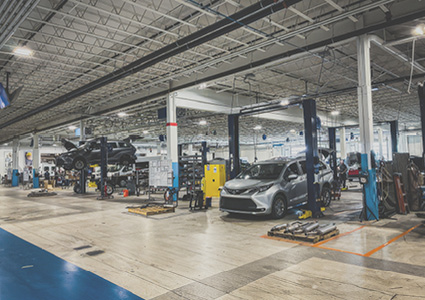
A key structural advantage behind that speed is Driverge’s decision to keep design, engineering, and manufacturing tightly integrated rather than outsourced. Operating across ten sites in the US and Canada, the company is supported by a centralized engineering function, which Terry explains is highly advantageous for product creation. “The engineering team understands the operations side of it firsthand,” he continues. “They know what it takes to build a vehicle, not just design it. That synergy between design and operations is the biggest benefit, because when issues arise on the floor, our engineers can respond much faster than someone who doesn’t know the operation.”
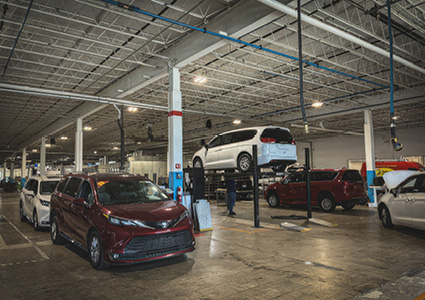
Mark relays that the strength of the team lies in its range of expertise, from PE-certified engineers and those educated to degree-level, through to supporting engineers on the plant floor; a structure he believes sets Driverge apart from competitors. Standardization plays an equally important role in ensuring consistency across the company’s footprint, comprising a dedicated quality team and continuous improvement group work across all sites to identify best practices and train every location to the same standard. “We want to ensure that our customers see the same vehicle – no matter which location it comes from,” adds Terry.
Ask either executive what they’re proudest of at Driverge though, and the conversation turns quickly from vehicles to people. The company has been recognized as a Best Place to Work on multiple occasions – something both leaders attribute to a culture built around respect, safety, and appreciation; an ethos internally referred to as the company’s ‘LOVE IT’ mission. “Culture always starts with respect for people. No matter how much we scale, that doesn’t change – respect starts from the top and it filters down,” reflects Terry, while Mark echoes the sentiment: “Your people are genuinely your most valuable resource, no matter what. We work with equality, fairness, and basic empathy toward our team members while providing a safety driven environment, and we try to build a personal plan for everybody.”
Its focus on people extends to how the business is addressing skilled labor shortages in the industry – a challenge that varies significantly by region and role, Terry reveals. “When it comes to our labor force – the team working on the upfitting of the vehicles – we do experience shortages in some parts of the country. It can be difficult to hire certain skill sets, and it’s a competitive market where you’re bidding against several manufacturers for the same talent.” Mark points to what Ford CEO Jim Farley has termed the ‘essential economy’ as a useful framing for the industry’s broader challenge: convincing more people that hands-on, labor-first careers offer strong pay, solid benefits and genuine career paths – a message supported directly by Driverge through job fairs, high school outreach and career center partnerships.
With plans to triple its current footprint through a combination of acquisitions, greenfield sites, and new product lines – including a recent move into service bodies – Driverge’s growth trajectory shows no signs of slowing. However, the measure of success won’t be financial, as Mark elaborates. “If we can’t maintain our culture, growth doesn’t matter to us,” he concludes. “I want it to be a place where people feel free to work, and somewhere people really want to come. If we’ve achieved that, we remain confident the financial side will work itself out.” A fitting philosophy for a company that, whatever form its products take, still sees its work as being fundamentally about people.