How Pexco is transforming 80 years of extrusion expertise into an engineered solutions powerhouse

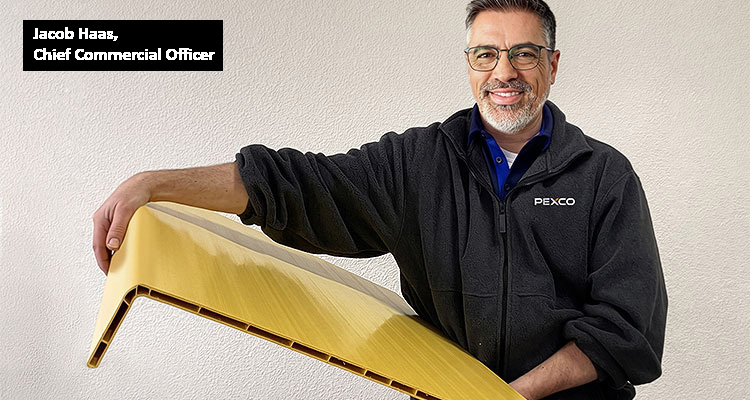
For eight decades, Pexco has been synonymous with plastics extrusion and is a prominent player in the industry. However, the company that customers work with today bears very little resemblance to the job shop of a generation ago, according to Chief Commercial Officer Jacob Haas. “The last decade has really built Pexco into an engineered component solutions provider, rather than simply a job shop extruder,” he tells us.
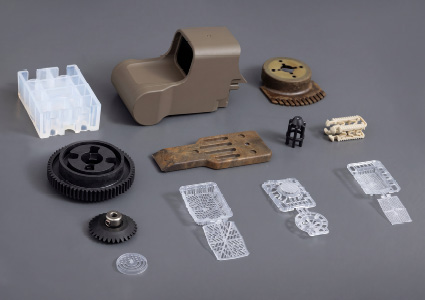
Jacob explains that the Pexco of today can be viewed as two halves operating under one roof. The first is custom engineered components – profile extrusion, co- and tri-extrusion, injection, compression and insert molding, precision CNC machining, and value-added assembly, all built to an OEM’s print. “Sometimes, these solve problems the customer hasn’t even fully defined,” he notes. The second half is a portfolio of branded, catalog product lines: Altaflo® fluoropolymer tubing and pipe, Enflon® PTFE rod, molded cylinders, and film, Insultab® heat-shrink and protective tubing, alongside two category-leading standalone businesses in Traffic Safety and PDS® Fence Privacy Products. Pexco Traffic Safety manufactures channelizers, pavement markings, and barricades for Departments of Transportation and contractors globally, while PDS is the leading maker of privacy slats and screening for chain-link fence.
Material range is the link between the two halves, with Pexco processing around 500 different resins and resin blends – from commodity PVC through to ultra-high-purity PFA, PEEK, and Torlon®. Such variety removes a genuine pain point for customers, Jacob highlights: “Clients would often have to go to several different suppliers, in order to benefit from all that capability.” Pexco’s decentralized structure, with material engineering expertise embedded at site level and backed by a single commercial organization, means customers receive specialist knowledge.
Headquartered in Atlanta, Pexco now operates 14 manufacturing facilities across more than a million square feet of production space, running 170-plus extrusion lines, 80-plus high-performance injection molding machines, and 40-plus CNC machining centers – a footprint built as much through acquisition as organic growth. Pexco has acquired Precise Aerospace, Wisconsin Plastic Products, Connecticut Plastics, and, most recently, Recto Molded Products and Legacy Extrusions, all of which have been successfully folded into the business.
Each acquisition was chosen to close a specific gap rather than simply add revenue. Wisconsin Plastic Products, based in Plymouth, brought wide-format profile extrusion and the ability to run profiles up to 30 inches in width, including glass-reinforced and metal-embedded materials – a capability Jacob describes as “a genuine technical advantage and a competitive moat” given the difficulty of replicating the tooling, vacuum calibration, and process control involved. It also closed a physical gap, enabling Pexco to move into the Midwest and complement its established coastal and Southeast presence. Connecticut Plastics, meanwhile, added precision machining, allowing the firm to support customers from low-volume prototyping through to high-volume injection-molded production as their needs expand.
However, not every acquisition gets absorbed into the Pexco brand. Precise Aerospace, manufacturing in Yorba Linda since 1965, deliberately retains its own identity. Its AS9100 and ITAR credentials, and customer-specific process qualifications with the likes of Boeing and Honeywell, represent decades of earned trust that could be damaged by rebranding. “We integrated everything except the brand,” he says – capital, engineering depth, and access to both Pexco’s wider material capability and broader product range. It’s a model Jacob summarizes simply: “A separate front door, with a shared engine room.”
Pexco’s technical edge extends well beyond wide-format extrusion. The company is one of the few injection molders able to efficiently produce FEP, PFA, HP PFA, and UHP PFA parts that meet high-purity requirements, tight tolerances, and complex geometries. And Pexco and Precise Aerospace recently qualified as two of the few Torlon® PAI by Syensqo molders in the United States.
Three markets dominate Pexco’s current growth plan: data centers, semiconductors, and medical and life sciences. Jacob elaborates on why they suit Pexco: “First, these markets are failure-intolerant. The cost of failure massively exceeds the cost of the part, whether it’s a contaminated coolant line, a leaking seal in a cooling loop, or an out-of-spec component in a diagnostic instrument. Therefore, buying decisions weigh heavily on the engineering credentials of the partner, which is where we’re strong.
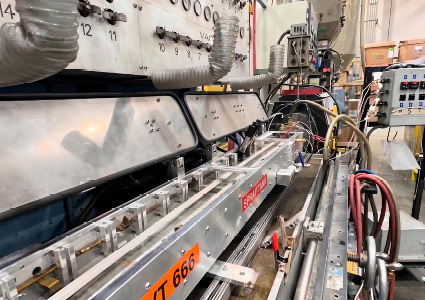
“Second is material capability. Everything at the top of the resin pyramid is difficult to extrude but capability-rich, and there’s a real processing barrier to entry – qualifying these materials takes years, which narrows the field of companies that can do it. These markets are growing structurally, not cyclically. AI infrastructure, North American semiconductor reshoring, and life-science device volumes are all long-cycle trends backed by already-committed capital, and they all require certifications, too. Between the materials, the credentials, the engineering required, and the cost of failure, that combination makes Pexco a strong resource for OEMs.”
Looking ahead, Jacob frames Pexco’s success less in terms of supply and more as partnership. “Our ambition is having an OEM’s design and engineering team call us before a design is frozen – consulted on material selection and part architecture, not handed a finished print to quote.” Progress is tracked through win rates on new program quotes, cross-sell penetration across product families, revenue from parts, and retention and delivery scorecards reviewed monthly. Jacob believes two forces will shape that path: a renewed push toward North American reshoring, as customers reassess supply chain exposure to tariffs and geopolitical risk, and talent. “We’ve invested heavily in technical hiring, structured sales, operations and applications training, and leadership development,” he concludes. “In this business, the constraint on growth isn’t demand, it’s talent. That’s where we’re focusing a great deal of attention.”
Pexco continues to actively pursue acquisitions that expand its engineered plastics capabilities, manufacturing technologies, end-market expertise, and geographic reach. The company is interested in opportunities across custom extrusion, injection molding, machining, specialty plastics, engineered components, and other complementary manufacturing businesses. Business owners, intermediaries, and advisors interested in discussing potential opportunities are encouraged to contact Sam Patel, CEO, or Emily Fogarty, Vice President of Mergers & Acquisitions, at Pexco.