
How Thogus grew from a tool and die shop into a versatile contract manufacturer

Headquartered in Avon Lake, Ohio, Thogus is a family-owned plastic injection molder and contract manufacturer specializing in medium-to-high volume production. Offering fully integrated solutions spanning engineering, automation and assembly, the company has spent seven decades honing its capabilities. CEO Matt Hlavin discusses how Thogus has grown and where they’re headed next.
“Originally known as Master Mold and Die, Thogus was founded in 1950 by my grandfather as a tool and die shop producing plastic injection molding tools, serving major automotive customers including Packard (Delphi), Ford, Chrysler, and GM. In 1958, he expanded into molding as he recognized that customers were struggling with capacity constraints, and Thogus as it is known today was born,” he begins.
From there, more innovation followed. Faced with the cost of purchasing fittings to plumb the tools, Matt’s grandfather developed a proprietary plastic tube and hose fitting line that the company still sells today. The result was effectively two businesses operating as one: tool making and molding as well as a fitting line serving a growing client base. Through the 1980s, Thogus’ customer base for injection molding services expanded into instrumentation, medical devices, food and beverage, consumer products, and more. As the company’s tool makers approached retirement and molding became the dominant revenue stream, Thogus decided to stop internal tool building and focus on contract manufacturing as an injection molder.
“Following the passing of my grandfather in the mid-1990s, we entered a transition period where my mother became President and I joined the business. My goal was to make sure that the legacy of the business would continue forward. With automotive accounting for 56 percent of our revenue and the sector treating suppliers like ourselves as a financial resource rather than a partner, one of our strategic moves was to divest much of our automotive business and diversify into higher-growth markets. These efforts al-lowed us to experience significant growth in small appliances, medical devices, health technology, sporting goods, and premium appliances manufactured in the US. In December 2008, at the height of the mortgage crisis and subsequent recession, I bought the family out and became President,” Matt elaborates.
On taking over as President, Matt sought to differentiate Thogus by integrating significant automation and technology into the production process, repositioning the business as an engineering company, thus creating greater value for customers. In January of 2009, Matt bought two Stratasys 3D printers for the purpose of reducing his customers new product development cycles by printing their new parts to ensure proper design for manufacturing. He realized that the newly acquired 3D printers could also serve as pro-duction machines but needed to be repeatable. From this idea, Matt started an additive manufacturing company, Rapid Prototype and Manufacturing (rp+m) in 2009. The focus was on additive manufacturing production for low volume applications, material development, part design and automation.
The founding of rp+m continued to be a new source of innovation. One particular opportunity arose from an rp+m client who was developing a medical device for foot surgery. The newly formed rp+m team met with this client and quickly realized the opportunities in the medical device industry. This first touch meeting rapidly turned into an acquisition opportunity with potential to fuel Matt’s ambition for work in the medical device industry. By bringing biomedical engineering and regulatory and quality expertise in-house, rp+m and Thogus gained the ability to ensure their processes and procedures meet FDA requirements while also gaining the ability to design medical device products meeting Class I & II standards. In 2012, JALEX Medical was born.
In 2019, Thogus further expanded its manufacturing capabilities by acquiring Proto Plastics Inc (PPI) a plastic injection molding company based in Tipp City, Ohio. PPI specializes in smaller volume, more complex
assemblies and serves different clients from Thogus, with the goal of growing with each company’s existing clients and adding new. The acquisition of Proto Plastics functions as both a complement and a redundancy by allowing customers to consolidate their supply chain within a single overarching group while benefiting from the combined expertise of its member companies.
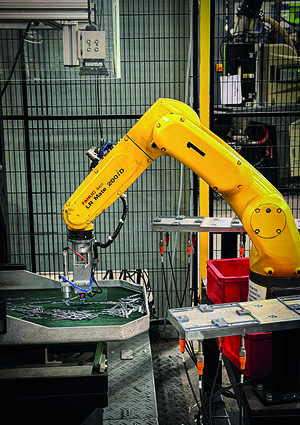
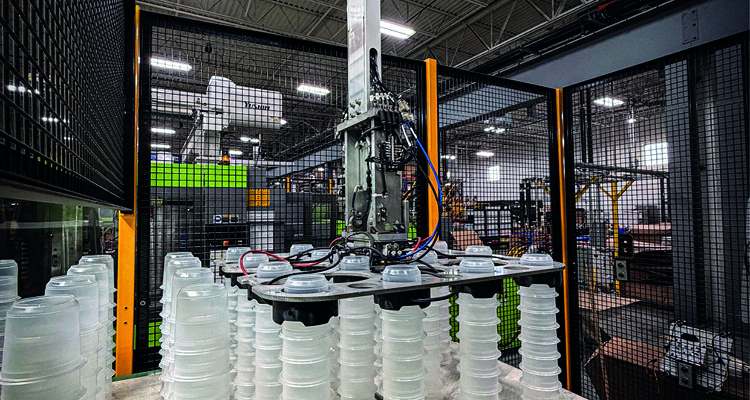
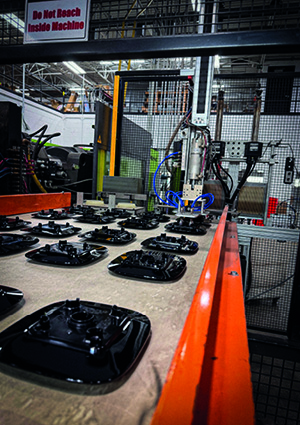
However, delivering that synergistic solution to customers requires more than the right company structure; it demands the right technology. Ever since joining Thogus, Matt has been dedicated to staying ahead of the curve when it comes to technology in order to bolster the production process. “We are always looking at technologies already proven within the industry and finding ways to integrate them into the tool, machine or automation workflow in order to reduce scrap and enhance quality. When it comes to robotics, we’ve integrated three-axis extraction and six-axis systems that can receive a part from the extraction robot, perform post molding machining, check it dimensionally, and deliver it to final inspection and packaging. For example, we currently have three dedicated cells doing exactly that with a safety helmet product. The part comes out of the tool, is introduced to the six-axis robot, which machine it to achieve the final finish. That level of repeatability simply is not achievable by hand, and by running these operations in-cycle rather than out-of-cycle, we achieve a much faster production process,” he explains.
“Leadership in technology has also completely revolutionized rp+m, our 3D printing company,” states Matt. “Back in 2018, rp+m lead a multifunctional team effort funded by the United States Department of De-fense (DoD) to demonstrate a methodology for controlling machine repeatability and material reliability – enabling the development and validation of two specifications for the 3D printing of production parts for the aerospace, space and defense industry. The DoD-funded project may be one of the few government-initiated programs of its kind to be fully executed in line with its original thesis. We fully developed the specification, which required extensive validation and printing tens of thousands of parts across multiple machines at our facility and at two other sites across the US. Then, we aggregated that data to produce a reportable outcome, and the specifications were proven.
“The publication of these specifications has enabled an entirely new opportunity for the defense industry and thereby for rp+m. The ability to engineer against a B Basis allowable means an entirely new set of production opportunities for the 3D printing of thermoplastic materials. Our team has become well versed at assisting engineers from Tier 1 defense contractors to utilize the specifications to their greatest potential – from updating dated drawings and revising to new manufacturing standards, to enabling full production using printed components,” Matt states. “Our small prototyping company born out of a couple machines I bought for demonstration purposes is now revolutionizing the defense industry for programs critical to national security. It’s a complete success story.”
By refusing to stop at the boundaries of what the industry considers possible, Thogus has evolved into a group of complementary businesses capable of serving everything from consumer appliances to military aircraft.
