
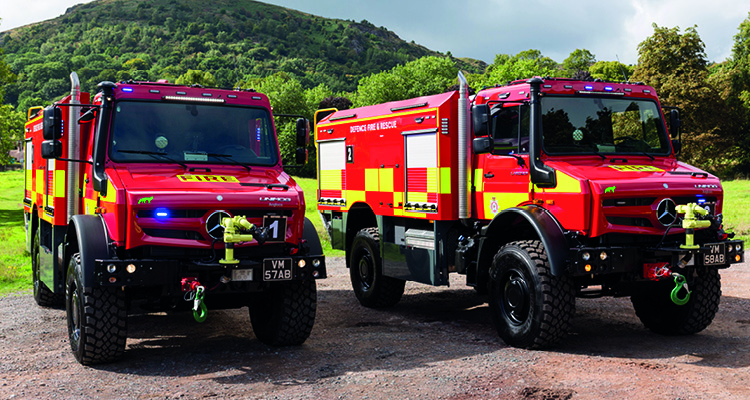
How Yorkshire manufacturer Angloco turned pandemic chaos and industry collapse into sustained, rapid growth

Eight years after UK-based company Angloco first formed in December 1965, the owners decided to bring somebody in as a troubleshooter – somebody who could essentially run the company and shift it away from general vehicle conversions, such as tankers and mobile libraries, toward firefighting vehicles. Fast forward seven decades and Angloco is now the UK’s oldest fire and rescue vehicle manufacturer; a truly impressive milestone, which Managing Director Alistair Brown explains was reached with the help of his father.
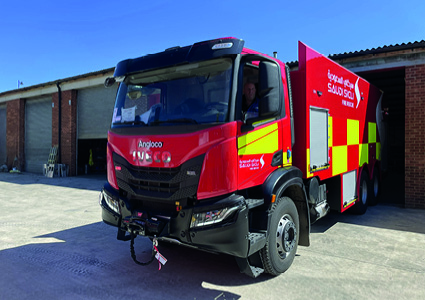
“When my dad was employed at Angloco in 1973, he wasn’t an engineer, but he began keeping a list of competitors, recording the other UK-based fire engine manufacturers that had exited the industry since Angloco built its first truck in 1974,” opens Alistair. “By the time he retired, the tally topped 26 and none of those companies are around today. Although we recently celebrated our 60th anniversary, this sector is difficult; it’s very capital intensive, cash flow is a real challenge, and it takes about a year to deliver a vehicle. Surprisingly, it’s also highly competitive, so margins are incredibly thin.”
However, under Alistair’s leadership since 2017, Angloco is growing faster than ever and his survival formula consists of blending bespoke and volume work, plus a long-invested service support arm. 2026 also marks another milestone: 50 years since the company’s first export, and its products have since reached more than 80 countries.
Prior to 2017, company turnover had remained between £12 million-£15 million, and focused on bespoke, one-or-two-at-a-time builds. “I joined Angloco full-time in 2004, before becoming Managing Director in 2017, at which time we only had around 60 employees,” continues Alistair. “We were being outcompeted though, and it was damaging our profitability and our sustainability to be able to compete on the world stage.” His response was to erect a second site in Batley, West Yorkshire, running three volume production lines, to which he attributes the rapid doubling of Angloco, followed by a major MOD contract – with no force majeure clauses. “It was made absolutely clear that wars and pandemics were no reasons for being late,” Alistair recalls, “and the first truck chassis arrived the same week the Covid-19 lockdown was announced. However, we stayed fully open and delivered the project, with headcount even rising to 140 in 2020 and sitting at around 200 today.”
In addition, a long-standing rival competitor near Worcester collapsed during the pandemic. Described by Alistair as a former repeat ‘phoenix company’, he recounts the moment the firm contacted Angloco, calling him to enquire about joining them for work. “We absorbed the team into a facility that now mirrors our Batley HQ,” says Alistair. “Spreading operations across multiple sites meant we were able to continue far more easily throughout the pandemic, which was extremely helpful.”
Today, the group is backed by long-term exclusive distributorships – most notably Finland’s Bronto Skylift since 1988. “This is definitely not an industry for short-term relationships,” says Alistair. “It’s integral that we all work together effectively and collaborate as a team for the long term.” Regarding equipment, he highlights biodegradable firefighting foam as a personal priority since joining Angloco in 2004. “The majority of firefighting foam at the time was non-biodegradable and it had terribly long-lasting impacts on the environment. After converting Gatwick Airport and then Heathrow, we became the largest supplier of foam concentrates in the UK, all of which was predominantly biodegradable. It was even adopted later by the MOD, which can be highly risk-averse and measured when it comes to change. That was a great result.”
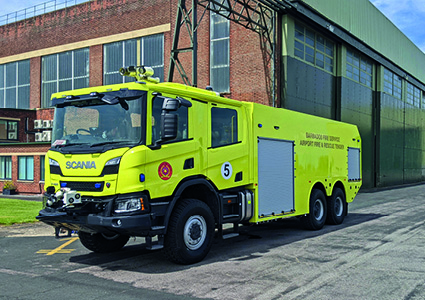
More recently, Angloco delivered a new airport firefighting vehicle to Vector Aerospace, supporting MOD helicopter operations. Its flagship project, however, is the MOD contract via contractor Capita – 83 vehicles delivered at a rate of four per month during the pandemic’s first year, under a 12-year fixed-price support deal. “It’s quite unusual to take that level of risk,” notes Alistair. “Angloco also fixed the price to maintain the legacy fleet at overseas sites including the Falkland Islands and Cyprus.”
Angloco’s momentum shows no signs of slowing; in the wake of its 60th anniversary celebrations, the company recently exhibited at “the biggest fire show in the world” in Germany, where its new Ineos Grenadier-based vehicle drew strong interest from the crowds. “Enquiries are converting to orders in months rather than years!” Alistair notes. Early 2027 brings sponsorship of the Caribbean Chief Fire Officers Conference in Guyana, where Angloco has supplied over 200 vehicles, and looking further ahead, Alistair reveals where he’d like to see the business in five years: “I highly expect overseas licensed manufacturing to grow, building on our Polish subsidiary Mist-Tech, which we acquired in 2017 to produce ultra-fine water droplet technology. As demand grows for local content and sovereign capability, my focus is quite simple – why not make vehicles closer to where they’re going to be used?”
