
IFPL Group develops aircraft cabin technologies and scales manufacturing through integrated engineering and production capability

Aircraft cabins are evolving to connect the passenger experience with aircraft operations through electronics and data. Airlines must manage weight, maintenance cycles and service expectations, all while keeping fleets operational. In this environment, IFPL Group’s founder and CEO, Geoff Underwood, leads a business defined by engineering decisions and manufacturing control.
Geoff is steering IFPL Group’s direction as cabin systems grow more connected. Founding the company in 1996 after redundancy, he addressed reliability issues in aircraft audio, leading to the patented Long Life Audio Jack and later innovations in power, lighting and connectivity.
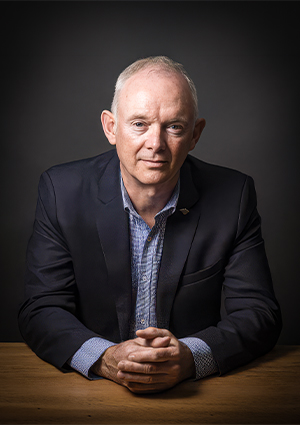
“IFPL Group is a UK-based aerospace engineering company specializing in aircraft cabin interior technologies,” Geoff introduces. He describes a company with design, engineering and manufacturing capabilities at locations on the Isle of Wight and in Norwich. These operations bring together engineering, rapid prototyping, PCB production and certified design expertise under one roof.
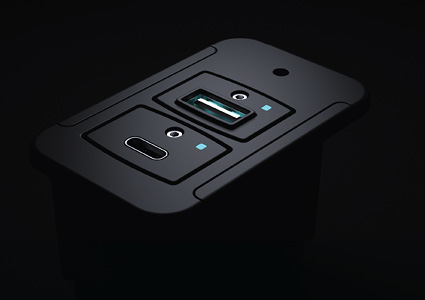
The portfolio centers on systems that passengers interact with, including audio solutions, USB A and C modules, Bluetooth connectivity, and the TRANSFORM in-seat power system. TRANSFORM uses a modular approach that allows upgrades without replacing the entire system, reducing operator costs and downtime as airlines adapt to changing power demands.
“Our focus is on delivering in-seat power, lighting, and audio systems that enhance the passenger experience, without introducing unnecessary downtime or complexity for the operator,” Geoff notes. He connects product design to operational factors like weight, maintenance and product lifespan to benefit both passengers and airlines.
Retrofit programs
Much of IFPL’s work takes place within retrofit programs. These require coordination with airline operations and aircraft constraints. The company works with airlines, MROs and partners from concept through installation and entry into service. Aircraft surveys form part of the process, identifying mounting points, power availability and integration requirements before installation begins. “Ultimately, it’s about giving operators confidence that the system will integrate seamlessly, install efficiently, and perform reliably across the fleet,” he adds.
Design decisions focus on maintainability and lifecycle cost. Components are structured for on-wing replacement, and systems are built to reduce disruption during service. Engineering choices align with airline operations rather than stand-alone product performance.
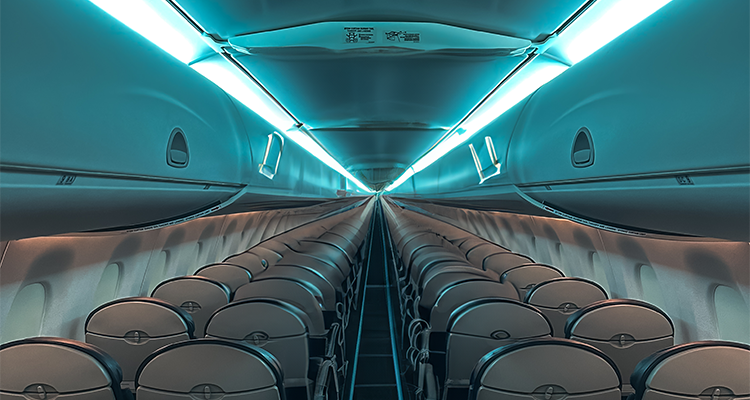
The 2021 acquisition of Cobalt Aerospace expanded IFPL’s capabilities into cabin lighting. Cobalt Spectrum LED lighting introduces programmable lighting scenarios with wireless control, giving airlines the flexibility to customize cabin ambience and improve passenger comfort on long-haul flights.
Demonstration kits allow airlines to install Cobalt Spectrum lighting on their aircraft, enabling them to choose and refine lighting scenes on-wing. Color decisions are made in the real cabin environment rather than from sample swatches or off-aircraft demonstrations, which allow them to select the correct color, and see the ease of the installation and use first-hand.
Alongside product development, IFPL has invested in its manufacturing base. Over the past few years, it has brought SMT operations in-house, installing pick-and-place machines, solder paste printers, reflow ovens and inspection systems. The added capacity gives IFPL control over PCB assembly and connects manufacturing with engineering activities. “The impact has been substantial, with clear improvement in production throughput and consistency with tighter control over quality at every stage of the process,” Geoff observes. He highlights shorter lead times and less dependence on outside suppliers.
The shift has changed how teams work together. Engineering and manufacturing now operate with shorter feedback loops, which allows faster iteration and issue resolution. Development timelines move more smoothly, supporting certification and production readiness.
IFPL is currently exploring how its wireless mesh architecture could be used in future cabin solutions. Its technology allows each unit within its shipset to communicate with one another in real time. This allows the system to intelligently self-manage and adjust performance, as demand and conditions change. This paves the way for systems that can improve operational efficiency and the passenger experience without hardware replacement. “The current investment focuses on how the wireless mesh architecture can be applied beyond in-seat power and LED lighting,” Geoff remarks. The company aims to develop systems that connect with aircraft management platforms to enhance analytics and operational visibility, providing airlines with added value.
IFPL’s goals going forward are clear. “Our priorities focus on scaling the business while continuing to invest in innovation,” Geoff comments. Research centers on higher-power delivery, distribution systems and connected design, while the organization builds capabilities to support growth. Geoff’s leadership style centers on people and responsiveness. He points to three factors driving the company’s progress: “The people, vision, and business agility.” IFPL’s structure enables quick decision-making while maintaining customer connections. That interaction shapes product development and ties engineering activity directly to operational needs.
IFPL continues to invest in skills through apprenticeships and early career pathways. Employees gain exposure to the full product lifecycle, which supports knowledge transfer across functions. The company’s internal focus and tight alignment between engineering and delivery shape how it measures progress and recognition. IFPL has earned five Queen’s Awards for Enterprise in innovation and export. Geoff sees this as the result of ongoing innovation rather than one-off projects. “That recognition reflects a consistent, long-term approach rather than any single initiative,” he reflects.
Looking ahead, the company is positioning itself at the forefront of connected cabin systems. Geoff outlines a vision in which IFPL serves as an integrated provider with evolving product lines for higher-power needs and system connectivity. Integration with cabin management systems and data-driven applications across fleets is a key element of this direction.
“In five years, IFPL will have grown into a highly integrated business leading in intelligent cabin technologies. The ambition is to be at the forefront of next-generation in-seat power and connected cabin systems,” he concludes.
