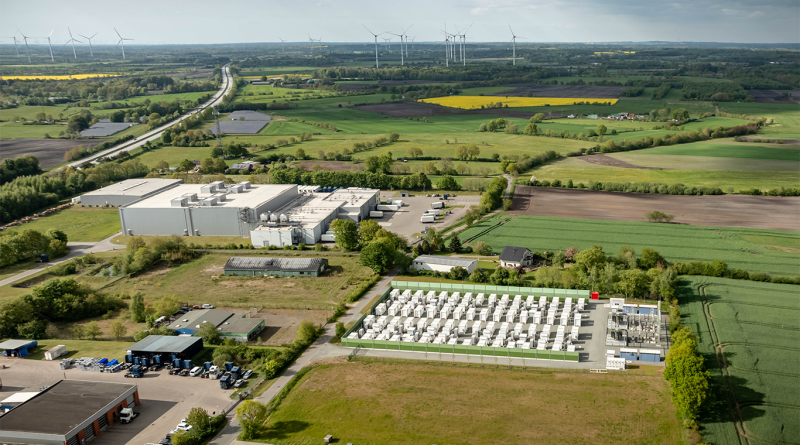
INNIO adds testing and assembly capacity in Wisconsin as US power demand climbs

Subscribe to our free newsletter today to keep up to date with the latest manufacturing news.
INNIO plans to invest more than $300 million in its Waukesha, Wisconsin, manufacturing operation, a move that will expand production capacity as US demand for decentralized power continues to rise across data centers, industrial facilities and other large electricity users.
The expansion is expected to create more than 500 jobs over the coming years while adding engine assembly capabilities at the Waukesha site, where INNIO also plans to build an advanced engine testing facility covering more than 80,000 square feet and renovate existing offices and shop-floor areas.
The scale of the investment is significant, but its timing gives the project broader relevance because data centers, industrial customers and other large power users are increasingly looking for generation that can be deployed close to the point of consumption, particularly in markets where grid connections and transmission development cannot keep pace with new electrical load.
For engine manufacturers, that shift changes the competitive equation because production capacity is no longer only about increasing output, but also about placing manufacturing and testing resources close enough to customers to shorten delivery schedules and support projects operating under tighter power-development timelines.
Waukesha capacity is moving closer to the source of demand
INNIO’s Waukesha engines serve data centers, power grids and industrial operations across the US, and expanding the Wisconsin operation gives the company more manufacturing depth in the same market where demand for flexible and decentralized generation is accelerating.
The company has not positioned the project solely as an increase in output, since the planned testing facility forms a substantial part of the investment and reflects the role that validation, performance testing and commissioning can play in determining how quickly equipment reaches a customer’s site.
A manufacturer may have sufficient engine production capacity available, but customer schedules can still be constrained when testing resources become a bottleneck, particularly when large power projects require multiple units to move through production and validation within a narrow delivery window.
That issue has become more relevant as data center developers pursue larger power requirements, with recent orders across the sector showing that individual projects can involve hundreds of megawatts and, in some cases, approach gigawatt-scale demand.
INNIO recently announced an approximately 1.1 GW order involving more than 200 Jenbacher J624 gas engines for behind-the-meter prime power at a major US data center development, providing a clear indication of the scale at which distributed generation is beginning to support digital infrastructure.
The Jenbacher order is separate from the Waukesha product line, but both businesses are exposed to the same broader commercial shift as customers place greater value on power systems that can be installed close to the load, scaled in modules and deployed without relying entirely on the timetable of a new grid connection.
That demand places pressure across the equipment supply chain because engine manufacturing, testing, packaging, controls, service and balance-of-plant systems all need to move at a pace that aligns with the customer’s construction schedule rather than with a slower, conventional infrastructure timetable.
The Waukesha expansion indicates that INNIO expects those delivery pressures to continue as customers seek power systems that can be produced, tested and commissioned faster in markets where electricity availability has become a constraint on development.
Data centers are reshaping power equipment investment
The scale of new data center campuses is changing assumptions about electricity procurement because hyperscale and AI-focused projects can require hundreds of megawatts of capacity, while some proposed developments are moving into gigawatt-scale territory that places additional pressure on utilities, transmission systems and equipment suppliers.
For developers, securing land and constructing computing infrastructure may represent only part of the challenge because obtaining sufficient electrical capacity on the required schedule can determine whether a project advances as planned or faces delays before operations begin.
Those constraints have increased interest in behind-the-meter generation, where electricity is produced at or near the site instead of being supplied exclusively through the wider transmission network, giving developers another route for securing capacity when conventional grid expansion cannot match construction schedules.
Gas engines can fit that model because installations can be built from multiple generating units and expanded in stages, allowing operators to add capacity in increments rather than relying on a single large generating asset that may require a longer development cycle.
INNIO’s recent manufacturing activity suggests that the company is preparing for this demand across several parts of its business, with investments extending beyond engine production to include component manufacturing, testing, assembly and packaged energy systems.
The company has opened a roughly 69,000-square-foot production facility in Hall in Tirol, Austria, to support production of components for its energy solutions and increase capacity for markets that include decentralized power systems serving data center applications.
A separate US joint venture with Gföllner Group adds another layer to the strategy through the production of containerized energy modules using Jenbacher engines, with annual production capacity expected to exceed 1 GW by 2028.
Taken together, these investments point to a manufacturing strategy that extends beyond individual engine lines and instead builds a wider production network around components, assembly, testing and packaged systems that can support larger distributed-generation projects.
That model can become commercially valuable when customers are purchasing power infrastructure as one part of a larger construction program because delivery timing, factory testing, installation requirements and commissioning schedules can influence procurement decisions alongside engine efficiency, reliability and operating performance.
Local production becomes part of the power race
The Waukesha project strengthens INNIO’s US manufacturing base at a time when domestic production, supply-chain resilience and proximity to customers are becoming more important considerations for power equipment suppliers serving markets with rapidly increasing demand.
INNIO already has a substantial operating footprint in Wisconsin, and the latest investment gives the company additional control over assembly and testing in a market where project developers are placing greater emphasis on the speed and predictability of equipment delivery.
Local manufacturing cannot remove every constraint because engine production still depends on upstream suppliers, skilled labor and component availability, while behind-the-meter power projects can face their own permitting, emissions, fuel-supply and interconnection requirements before generating capacity becomes operational.
It can, however, give manufacturers greater control over part of the project schedule by reducing the distance between production capacity and customer demand while creating more flexibility around testing, logistics and final delivery.
For customers developing large industrial or digital infrastructure projects, that control has economic value because a shorter manufacturing or testing cycle can reduce the time between ordering generation equipment and bringing usable electrical capacity onto the site.
That advantage may become more relevant as data center developers compete for power in markets where utilities are already managing large interconnection queues, rising load forecasts and growing pressure to expand generation and transmission infrastructure.
INNIO’s $300 million commitment should be viewed within that context because the company is not simply preparing to manufacture more engines in Wisconsin, but is also placing assembly and testing resources closer to a US market where the ability to deliver generation quickly is becoming a meaningful commercial differentiator.
The expansion points to a broader shift in the role of the engine factory because manufacturing capacity has traditionally followed equipment demand, while the current market is making the location, availability and speed of that capacity part of the competitive equation for suppliers trying to serve power-intensive infrastructure.
Source:
Innio