
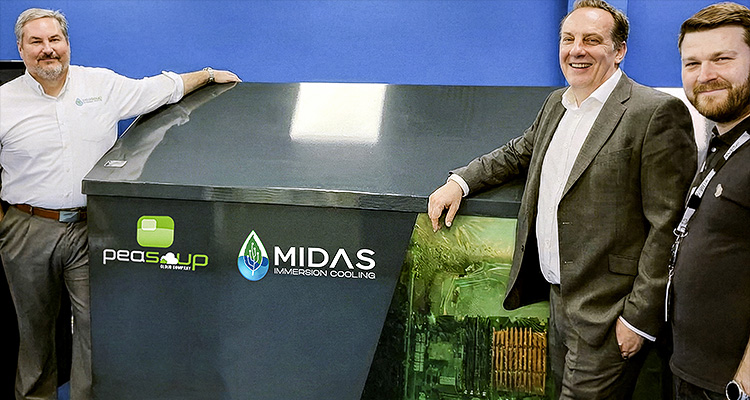
Introducing disruptive immersion solutions ahead of the curve, Midas has reshaped data center cooling worldwide

Midas Immersion Cooling (Midas) began as a data center in 2011, carving out a niche in hard-to-cool processing loads before quickly transitioning into immersion cooling – the process of removing heat from data servers and other components by submerging them in a non-conductive heat transfer liquid. In fact, Midas became the world’s first commercial immersion data center and, by 2012, had built its own solution. Rising power costs led the company to shut the data center in 2016, allowing Midas to focus on offering its immersion cooling solutions globally.
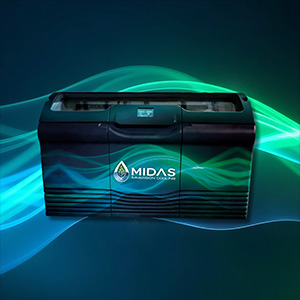
Today, Midas is a leader in the engineering, design and integration of single-phase immersion cooling equipment solutions. Its patented Midas XCI Immersion Cooling tanks increase miner and server computational density, decrease power consumption, and significantly reduce cooling and infrastructure costs compared to traditional air-cooled environments.
Scott Sickmiller, CEO, describes the technology as ‘disruptive’ and explains how Midas introduced the solution before its time: “2016 to 2019 were very lean years,” Scott tells Manufacturing Today. “The world started to embrace immersion around 2020, and we had deployed about half a gigawatt of immersion heat rejection technology by 2024, which is about 4000 tanks. During this time, we cooled several different configurations of computes, from high performance computes to ASICs, which is the Bitcoin mining machines. In 2024, we saw GPUs becoming more prevalent, and, with the value proposition being so strong for high performance compute, we backed away completely from cooling ASICs and focused solely on the enterprise market. Today, we’re sitting with a pipeline of over a GW and the future is looking bright.”
Midas provides a range of cooling products, including its 4U ‘all-in-one’ with onboard chiller, a 12U version of the same product, two versions of the 25U, a larger 50U and a multitude of containerized modular solutions. Comprising entirely of forced convection single-phase immersion, the fluid does not evaporate as seen in two-phase immersion, and a pump is used to push the fluid past the heat generating devices, enabling more heat to dissipate. Following the success of Midas’ innovative solutions, the company is scaling its annual revenue from $30 million to more than $60 million – exceptional growth driven by three key factors. “Our first key driver is more density,” Scott reveals. “GPUs are taking a great deal of energy which creates a lot more heat, and the air applications cannot take it all on. The second driver is industry acceptance. We were pounding the drum for 15 years before anybody started to warranty or offer service level agreements in immersion. We now have numerous server partners, such as Hypertec, building platforms around single-phase immersion and implementing solutions more efficiently. Finally, it is a vastly superior technology that solves not only the heat issues of today, but also environmental concerns.”
Sustainable growth and global expansion
Regarding sustainability, Midas has significantly diminished the carbon footprint often associated with the data center space. By deploying immersion cooling, it utilizes less brick-and-mortar space, and products live longer, requiring fewer new components and repairs – resulting in less consumption overall. “We also partner with companies, who work with second-hand servers, such as Reconnects,” continues Scott. “They bring the IT down from hyperscalers and refurbish it, wipe it clean and make it available for resale or reuse – it’s ideal for an immersion environment. Furthermore, we’ve been collaborating with Durham University on an academic energy reuse project, where they’re looking to evaluate the thermal recovery phase of immersion. The application of thermal recovery is great and we’ve discussed potentially putting a modular system in their car park, utilizing some hard to access power – not only does it help their high performance compute for their studies and applications, but with the future state heavily focused on thermal recovery, it’s going to show a way of marrying the data to real-world benefits, without the use of a heat pump.”
Aside from this partnership with Durham, Scott has conducted technology talks at other universities in the UK, including East London, where he highlights his excitement over meeting the next wave of data center managers: “They were a fantastic group of students, unclouded by prejudice and historical reference, sharing ideas and all there to learn and take the next step. They had open minds, and that’s what excites me. Energy’s not going to become more plentiful – the compute’s going to remain and our reliance with data is going to continue to grow. I see a positive front with the diversification and willingness to accept superior solutions as we move forward.
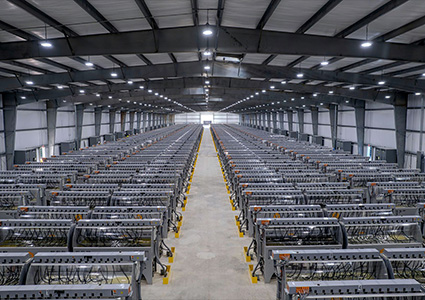
“For Midas, 2026 is a year for execution. We are working very closely with multiple clients on greenfield sites, building a data center from the ground up with a layout designed for immersion. Here in Texas, we can build one gigawatt of cooling distribution, so we want to expand beyond Texas and distribute as much of this technology as possible. We just opened an APEC office in Shanghai where we’re manufacturing specifically for China, and we’re ready to start producing in Malaysia. The volume isn’t there to support that just yet, but there’s a huge amount happening to support the growth around technology. Importantly, we’re a relatively small team and the advantage of that is that culture remains tight. Everybody comes to work knowing that the actions we take today are going to have an impact – that’s an extremely empowering environment to work in. We’re all on the front lines, battling hand to hand and it takes a certain type of personality to do that. We’ve been lucky to date that we’ve hired all those types of souls.”
