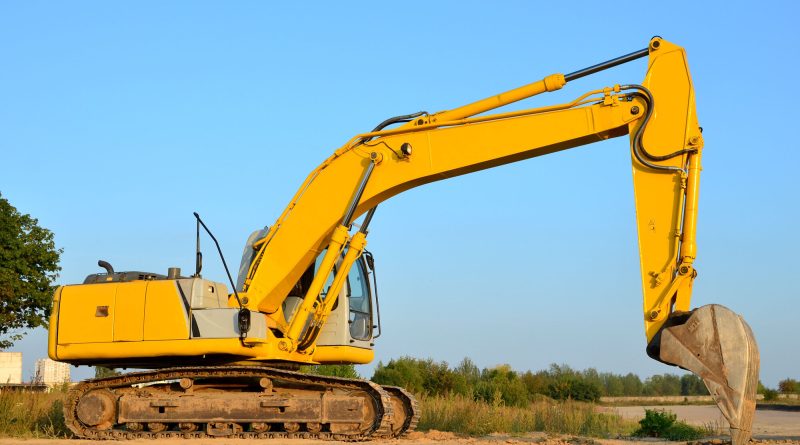
Janicki Industries breaks ground on $800 million Montana manufacturing campus

Subscribe to our free newsletter today to keep up to date with the latest manufacturing news.
Janicki Industries has broken ground on an $800 million manufacturing campus in Great Falls, Montana, marking one of the largest industrial investments in the state’s history. Planned across 180 acres at Great Falls AgriTech Park, the phased development will eventually encompass approximately 1.6 million square feet of manufacturing space and is expected to support more than 2,000 jobs when fully built.
The project represents more than another factory opening. It reflects how aerospace and defense manufacturers are expanding capacity to meet sustained demand while extending production beyond traditional industrial centers. As commercial aviation recovers, defense programs accelerate and space companies continue investing in new platforms, suppliers capable of producing advanced composite structures, precision-machined components and complex assemblies are positioning themselves for long-term growth.
For Janicki, whose capabilities span aerospace, marine, defense, transportation and energy markets, the Montana campus expands an already substantial manufacturing footprint beyond Washington and Utah. For Great Falls, it provides an opportunity to establish itself as a significant advanced manufacturing hub in the western US.
The Great Falls investment creates room for long-term manufacturing growth
The Montana campus has been designed as a multi-phase development expected to unfold over roughly 10 years. The first manufacturing facilities are scheduled to begin operating by the end of 2027, with additional buildings added as customer demand increases.
Janicki’s investment follows a familiar pattern among large aerospace suppliers. Rather than expanding existing facilities incrementally, manufacturers are increasingly developing purpose-built campuses that accommodate multiple production technologies within a single location. This approach provides flexibility for future programs while simplifying logistics between fabrication, machining, assembly and inspection operations.
Although the company has not disclosed every manufacturing process planned for Great Falls, Janicki’s existing operations indicate the capabilities likely to be expanded. The company is recognized for advanced composite tooling, precision machining, metal fabrication, large-format structures and engineering services supporting aerospace, defense and space customers.
Demand across these sectors remains strong. Aircraft manufacturers continue working through extensive commercial order backlogs, while defense contractors are increasing production across several major programs. Space launch providers and satellite manufacturers are also expanding manufacturing capacity as government and commercial missions become more frequent.
Developing an entirely new campus provides greater flexibility to introduce automation, digital manufacturing technologies and modern production workflows that would be more difficult to integrate into older facilities.
Location also influenced the decision. Great Falls offers available industrial land, transportation connections, utility infrastructure and access to a workforce supported by regional education and workforce development initiatives. State and local economic development organizations have promoted Montana as a destination for advanced manufacturers seeking expansion opportunities without many of the cost pressures associated with larger metropolitan areas.
Manufacturers are expanding beyond traditional aerospace hubs
Janicki’s investment reflects a broader shift in the geography of US manufacturing.
For decades, aerospace production concentrated around established clusters in Washington, Southern California and parts of the Southeast. Those regions remain essential, but manufacturers are increasingly selecting additional locations that provide workforce availability, competitive operating costs and room for future expansion.
Several factors continue driving this trend.
Commercial aerospace production is increasing following pandemic-related disruption. Aircraft manufacturers and suppliers continue working through substantial order backlogs that are expected to support elevated production rates for years.
Defense spending remains another major source of demand. Governments continue investing in aircraft modernization, naval programs, missile systems and emerging technologies, placing additional pressure on suppliers to increase manufacturing capacity.
Supply chain resilience has also become a strategic priority. Recent disruptions highlighted the risks associated with concentrating production within relatively small geographic regions. Many manufacturers are now distributing operations across multiple states to improve flexibility and reduce operational risk.
At the same time, reshoring initiatives continue encouraging companies to expand domestic production. Although global supply chains remain important, manufacturers increasingly recognize the value of locating critical production closer to customers and major assembly programs.
Against this backdrop, Montana offers several competitive advantages. The state provides room for large industrial developments while ongoing investment in infrastructure and workforce development strengthens its appeal for manufacturers planning decades into the future.
The project could reshape Great Falls’ industrial future
Economic development leaders expect the project to have a lasting impact on the regional economy.
Construction represents a significant investment, but the longer-term value comes from sustained employment. Janicki expects to create approximately 1,000 jobs within five years before eventually exceeding 2,000 positions as the campus reaches full build-out.
Those opportunities extend well beyond production roles. Modern aerospace manufacturing relies on engineers, machinists, composite specialists, inspectors, automation professionals, supply chain managers and quality specialists, creating career opportunities across multiple disciplines.
The investment is also expected to generate secondary economic activity. Suppliers, logistics providers, maintenance contractors and professional service firms frequently expand alongside major manufacturing facilities, supporting additional employment throughout the region.
Educational institutions may also benefit through expanded partnerships focused on technical education, apprenticeships and workforce training aligned with evolving manufacturing requirements.
For the wider manufacturing sector, the project reinforces a continuing shift toward strategically located production campuses designed with future growth in mind. Companies are investing not only to meet current demand but also to position themselves for the next generation of aerospace, defense and space programs.
Janicki’s Montana campus demonstrates how manufacturers are balancing operational efficiency, workforce availability and long-term capacity planning. As advanced manufacturing continues to evolve, projects of this scale are likely to play an increasingly important role in shaping where future industrial growth takes place across the US.