Jones rebrands to reflect expanded capabilities, national reach, and continued growth

When Jones Sign officially became Jones at the beginning of 2026, the change represented far more than a new logo or shortened name. It marked the evolution of a company that has spent decades expanding well beyond traditional signage into architectural facades, sports venue branding, facilities maintenance, and national program management.
For Chief Executive Officer Todd Patrickus, the rebrand naturally reflected what the company had already become. “The reality is that our customers have long relied on us for far more than signs,” Todd opens. “We provide architectural solutions, facilities maintenance, construction services, rebranding programs, and turnkey project delivery. Our name needed to reflect the full breadth of what we do.”
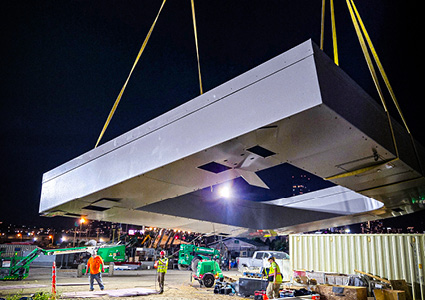
That point became especially clear during a meeting with a prospective customer pursuing a major architectural project. When asked why a company known for signage was involved, Todd explained the transformation was already underway. “I told them that we had changed our name to Jones because we do much more than signs; we’re a true turnkey partner,” he recalls.
From local sign company to national industry leader
Founded in 1910, Jones has grown from a local sign business into one of the nation’s leading providers of branded environments, architectural solutions, and facility services. Today, Jones serves clients across retail, automotive, restaurants, hospitality, sports, financial services, and commercial construction. The company manages projects from concept development and engineering through manufacturing, installation, and long-term maintenance support.
Todd has witnessed much of that transformation firsthand. “The company had already established a strong reputation when John Mortensen acquired it in 1982,” he shares. “When I joined in 1996, annual revenue was about $3 million, but Jones now generates more than $150 million in revenue and employs over 550 people nationwide.”
Unlike many industry executives, Todd began his career outside the sign industry. His background in manufacturing operations and process management prior to Jones provided a foundation that helped support the company’s expansion and operational growth.
A major turning point came at the start of the new millennium, when Jones began serving clients nationwide. “In 2000, we began operating nationwide, and Home Depot became our first national account,” Todd says. “The following year, we launched our Projects and Architectural divisions, which opened the door to larger and more complex opportunities. That growth continued to accelerate from there.”
Three divisions, one integrated solution
Today, Jones is organized around three complementary business divisions: National Signage, Architectural Facades, and Facilities & Maintenance. Together, these divisions provide clients with a single-source solution for design, engineering, fabrication, installation, and ongoing support.
This integrated approach allows Jones to manage projects from national branding programs and multi-million-dollar sports venue installations to sophisticated architectural facade systems and maintenance services. “Our goal is to simplify execution for the clients,” Todd explains. “Whether it’s a national rollout, a major construction project, or long-term maintenance support, we want to be the one partner capable of delivering the entire solution.”
Delivering landmark projects across America
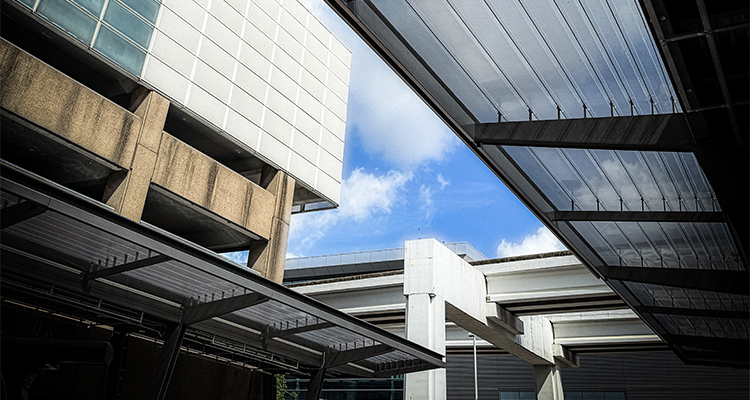
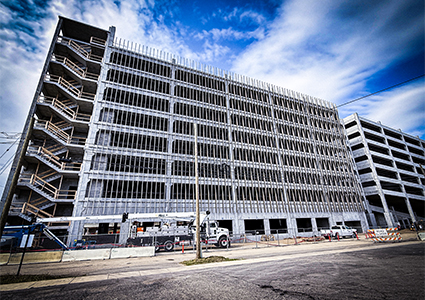
Jones’ portfolio reflects the diversity of its capabilities. Projects such as the Hard Rock Hotel in Las Vegas showcase the company’s expertise in LED technology and illuminated environments. Work at Houston Airport demonstrates the execution of large-scale construction and infrastructure projects, while the Kalamazoo Event Center highlights the company’s growing architectural facade capabilities.
Sports and entertainment venues represent another area where Jones continues to excel. Large venue branding projects require coordination across engineering, manufacturing, logistics, project management, and installation teams. According to Todd, managing that complexity is one of the company’s greatest strengths.
“Nissan Stadium is a great example of what we do best,” he highlights. “The scale of those letters and signage systems is tremendous. Projects like that demonstrate our ability to take a multi-million-dollar program and deliver it as a complete turnkey solution.”
Investing in capacity, technology, and performance
As project sizes continue to grow, Jones remains committed to investing in the infrastructure necessary to support its customers. Financial strength has become increasingly important as owners and general contractors seek partners who can support large, complex programs.
“Projects such as Houston Airport can exceed $10 million in value,” Todd reveals. “Our clients need confidence that we can deliver. Our financial stability, bonding capacity, and operational resources allow us to take on projects of that scale.”
Jones continues to reinvest heavily in advanced manufacturing technologies to improve efficiency, quality, and throughput. One recent investment includes automated vertical routing system, for instance, which is designed to accelerate the fabrication and assembly of aluminum composite material (ACM) used in modern architectural facade systems and building enclosures.
“This equipment dramatically increases our production speed and efficiency,” Todd confirms. “It’s another example of how we’re investing to support larger projects and deliver greater value for our customers.”
Safety as a competitive advantage
While growth, technology, and project execution remain critical priorities, Jones places equal emphasis on workplace safety. Operating in manufacturing facilities, construction environments, and installation sites across North America requires a disciplined commitment to protecting employees.
Jones currently maintains an Experience Modification Rate (EMR) of 0.59, reflecting the company’s strong safety culture and operational discipline. “One of our greatest strengths is our safety performance,” Todd states. “It’s something our employees take tremendous pride in and a reflection of the culture we’ve built throughout the organization.”
Building for the long term
When discussing the company’s success, Todd frequently points to the leadership philosophy of owner John Mortensen. Rather than pursuing growth at any cost, John built Jones through disciplined reinvestment and a long-term commitment to strengthening the business.
“John has always viewed every dollar as a tool for growth,” Todd shares. “He consistently reinvested in the company, our people, and the capabilities. That philosophy continues to guide us today.”
As Jones enters its next stage of growth, the company’s rebrand has clarified its position in the marketplace while ongoing investments in people, technology, and infrastructure continue to expand what Jones can deliver.
Powered by people
Despite the company’s growth, Todd believes its greatest differentiator remains its people. “We would not be where we are today without our 550 incredibly talented employees,” he says. “Their commitment, craftsmanship, and dedication are the foundation of everything we accomplish.”
Looking toward the future, employees will remain at the center of the company’s strategy. “We’re committed to creating opportunities for our people while continuing to grow our three business divisions,” Todd concludes. “We believe Jones has positioned itself for significant growth over the coming years, and we’re excited about what lies ahead.”
More than a century after its founding, Jones is building upon a proud legacy while embracing new opportunities. The name may be shorter, but the company’s vision has never been broader. As Jones continues to expand its capabilities, invest in innovation, and deliver exceptional customer experiences, its next chapter is just beginning.