
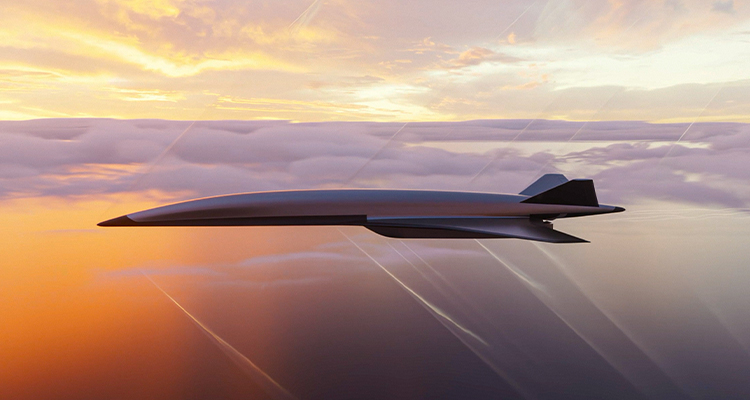
Learn how Helix is bringing high-grade power density to help aerospace break free from heavy propulsion

Based in the UK, Helix manufactures the world’s most power-dense electric motors and inverters for the automotive, motorsport, marine and aerospace industries. Operating from Milton Keynes, the company brings together a team of 150 people with more than 20 years of experience in designing, building and delivering electric drive systems. We learn more about what the company does and what sets it apart from Derek Jordanou-Bailey, Chief Engineer of Helix’s Aerospace division.
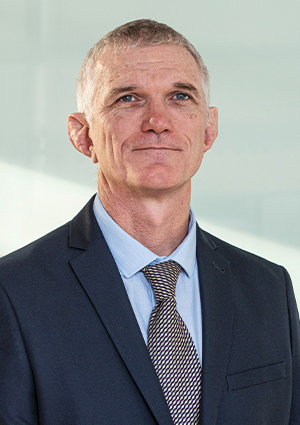
“Our team are experts in full-system electric powertrain development. We do not just lead in motor and inverter development; we also bring the system integration expertise to combine those components into optimized powertrains designed with full-vehicle performance in mind. Drawing on deep industry knowledge in thermal and electromagnetic management, simulation and precision manufacturing, our team has consistently produced the world’s most power-dense radial flux motors and inverters, offering the highest power per kilogram of any solution currently on the market.
“The roots of our modern operations lie in extensive consultancy work in e-powertrain development and production. We have also been a key partner in some of the world’s most ambitious e-powertrain projects for many years, drawing on our long-standing leadership in electric motorsport. By enabling unprecedented power at low masses, our solutions are ideally suited to frontier electrification applications. This is why we have expanded beyond our motorsport and automotive roots into sectors that are earlier in their electrification journey and have long been constrained by the power density of available propulsion solutions, such as aerospace and marine. In recent years, we have also paired these bespoke systems with a growing line-up of products available for purchase outside of our traditional consultancy work, which brings the cost of our powertrains down considerably and represents a genuine British manufacturing win,” he opens.
Aerospace advancements
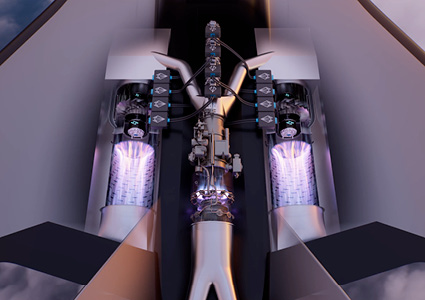
Aerospace has become a particularly important growth area for the business, and it is easy to understand why. Traditionally, aerospace electrification has been held back by the limitations of available propulsion systems. Every gram matters in an airframe or space launch vehicle, which means that electrification, whether for propulsion, pumps, generation or control systems, demands the most power-dense solutions available. Years of electric motor development experience have allowed Helix to drive down product weight and opened up aerospace electrification opportunities. Now, it represents a competitive advantage for the operators and manufacturers embracing it.
Helix’s aerospace work operates across two modes: service provider and product vendor. For some partners, the company acts as a long-term collaborator on multi-year design, feasibility and testing projects. It serves as a trusted peer capable of working within the extended procurement and development timelines that aerospace demands. For others, it supplies series production systems on a volume basis while also engaging in the deep system integration and engineering work required for successful deployment. The teams Helix works with are typically pushing at the very frontier of aeronautical science, meaning that each engagement has its own dynamic.
“Our technological leadership is almost always cited as a major reason for the diversity of our work and the depth of our collaborations,” Derek says. “But what I think truly sets us apart is the level of trust and commitment we bring to relationship-building with our partners. We are acutely aware that aerospace is not a transactional industry, but one that is built on long-term relationships.”
That understanding of what aerospace partnerships require has led Helix to take a deliberate approach to building credibility in the sector. Most recently, the company pursued and obtained AS9100 certification, a globally recognized quality management standard that signals trust, reliability and commitment to the strict demands of aerospace production.
“AS9100 certification is about demonstrating our commitment to quality, safety and reliability. The AS9100 framework is focused on quality control across the production cycle, it requires the team to implement robust processes for quality standardization, documentation, risk management and component traceability. Implementing those processes took us just over a year and has since been applied business-wide across the production of systems intended for applications across defense, marine, automotive and beyond. On the surface, the benefit of AS9100 is that it allows us to offer our solutions to partners with a First Article Inspection Report, so that subsequent units reference an agreed standard, which noticeably reduces friction in development cycles. But perhaps more importantly, AS9100 certification signals that we understand the realities of aerospace production and the context in which our systems are being deployed and assembled. Furthermore, it shows that we can be relied on to safely contribute to these complex projects, as we are aware of the logistical and commercial realities that our own contribution sits within,” Derek expands.
Alongside that commitment to quality, Helix has made meaningful progress on sustainability, both within its own operations and in its broader contribution to the industries it serves. Last year, the company was awarded ISO 14001 certification in recognition of its environmental management systems and the steps taken over the preceding 12 months to monitor and improve its supply chain, energy usage, waste management, materials and design processes. At an industry level, Helix works with a wide range of sectors to explore hybridization and electrification opportunities and has previously participated in the Decarbonising Midlands Aerospace Cluster (DMAC) project, which mapped out strategies to reduce UK aerospace industrial emissions by 90 percent by 2050.
The company’s engineering philosophy is shaped as much by culture as it is by capability. Helix fosters an environment built on empowerment, giving people real ownership of their work and the space to think creatively. “We have inherited a great engineering heritage, and along with that have cultivated a streak of out-of-the-box thinking that has enabled us to develop so many unique solutions over the years. Along with that intellectual curiosity, many senior team members, me included, began their careers as apprentices, learning engineering realities at the same time as the theory. That practical grounding shapes how we lead our teams. For me, a successful team is one guided by a culture that gives people a sense of agency and control over their projects, with only a light oversight from the management team. We all learn by doing, and I try to make sure everyone here has the opportunity to do exactly that,” Derek ends.
