Libra Industries demonstrates how sustainability and cost control can work together effectively

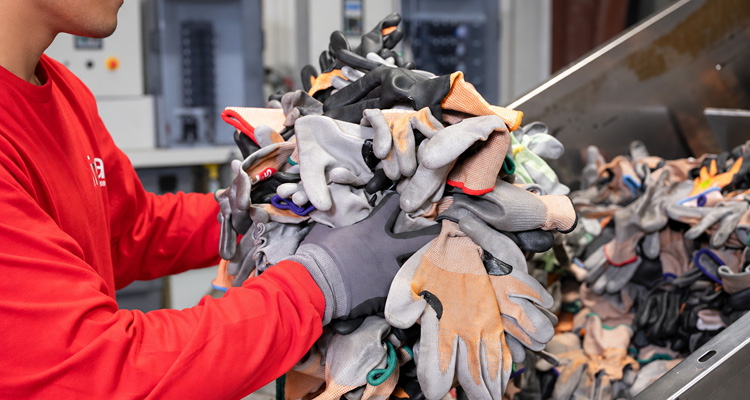
Beginning in Jackson, Michigan in 1969, Libra Industries (Libra) was built around what is still one of the most characteristic parts of its business; cleaning and recycling work gloves and other personal protective equipment (PPE) for manufacturers. This gave the company a hands-on education in how PPE actually holds up in demanding production environments. From 1979 onwards, Libra not only became a distributor of new PPE, but also a work apparel and MRO supplier, and today, it is a broad industrial partner serving customers across the US.
“The business has changed notably across more than 55 years, but the basic idea has stayed consistent – to help customers protect their people, reduce unnecessary waste, and lower their total operating cost,” opens President Tim Lightner.
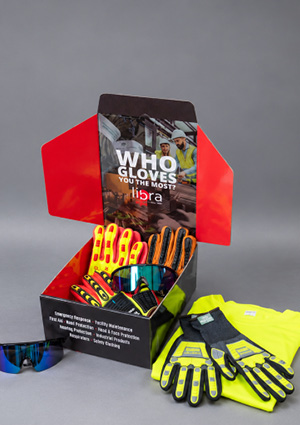
Libra’s product range now spans head-to-toe PPE, safety and facility products, an expanding line of MRO and industrial supplies, and a dedicated work apparel division covering uniforms, image apparel, embroidery, and printing. What sets the company apart, Tim explains, is the ability to combine those products with service programs. Its Glove and PPE Recycling Program enables customers to clean and reuse eligible PPE, rather than treating it as a single-use cost, while the ReadyVend Program gives employees controlled, 24/7 access to critical PPE and MRO items. This includes clean products from the recycling program and is backed by reporting that shows customers exactly where their savings and opportunities lie.
As manufacturers face pressure from two directions simultaneously – controlling cost and meeting sustainability targets – interest in Libra’s model has grown, with the Recycling Program designed to cover both. At Thai Summit America, it documented roughly $707,000 in PPE cost savings in 2025, alongside extended product life and reduced waste. “That’s the type of result that commands people’s attention, because it shows that safety, sustainability, and cost reduction do not have to compete with one another,” underlines Tim, explaining how the result rests on technology Libra pioneered in its segment.
“We were the first to invest in Continuous Batch Washing (CBW) in 1999, a process that moves PPE through controlled wash modules for consistent, high-volume cleaning,” he continues. “In 2025, we invested in our next generation CBW equipment, improving our cleaning performance while significantly cutting water use, which supports the environmental purpose behind the recycling program. It’s a great example of an investment that improves quality, capacity, and sustainability at the same time.”
Commitment to efficiency runs through Libra’s wider technology investment. The company is developing AI and data capabilities aimed wholly at decision support, such as customer purchasing patterns, predictive inventory management, and process automation. “The objective is not to remove people from the process,” Tim tells us. “Essentially, it’s to reduce repetitive administrative work and give our teams better information so they can spend more time working directly with customers.”
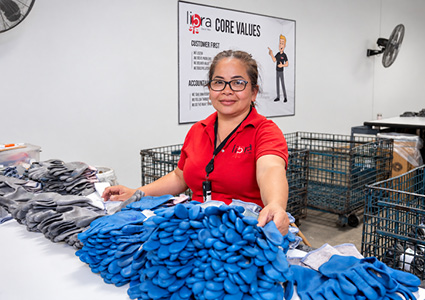
An ERP upgrade currently underway is designed to support that same goal, connecting an increasingly complex mix of products, recycling programs, vending, and e-commerce into a single, usable data picture. “AI is only as useful as the underlying data and process,” reflects Tim, emphasizing that technology succeeds only if the customer feels the difference through better availability, faster answers, and more informed recommendations.
Tim’s own career path began at the age of 19 in Libra’s warehouse and led to him becoming President after 30 years with the company; a journey he says shapes how he thinks about the business today. The ground-level view of how PPE performs in the field still informs his priorities and, two years into adopting the Entrepreneurial Operating System (EOS), he credits the framework with bringing focus and accountability to a growing organization – turning strategy into weekly practice rather than an annual exercise. That discipline extends to Libra’s ownership culture, where employees hold a stake in the business. “When people understand that waste, quality, customer service, and productivity all affect a business they have a stake in, they’re far more likely to speak up when they discover a better way of doing something – whether it’s catching a quality issue early or taking ownership of a customer problem,” Tim recognizes.
Libra’s ambitions for the next five years center on strengthening what already makes the company distinctive, and Tim wants it to be nationally renowned as a leader in glove and PPE recycling, as well as a wider partner for safety and MRO management. “There are still huge numbers of manufacturers throwing away PPE unnecessarily – products which could quite safely have further useful life,” he says. “I see a significant opportunity to take what we have learned over five decades and bring it to new industries and new markets.
“However, I want to avoid growth at the expense of what made us successful. My goal is to use technology, data, and a broader product offering to deepen relationships, not make them more transactional,” Tim concludes. It’s a fitting summary of a company that, more than half a century after it began cleaning gloves in Michigan, still measures success the same way. “We do not want to be just another company that sells a box of gloves or a piece of safety equipment,” he finishes. “We want to look at the whole program – that combination of products, recycling, technology, and personal service is where I think Libra is different, and that’s the direction we want to keep following.”