Lilly’s $3.5 billion Pennsylvania plant bets on an unapproved drug

Subscribe to our free newsletter today to keep up to date with the latest manufacturing news.
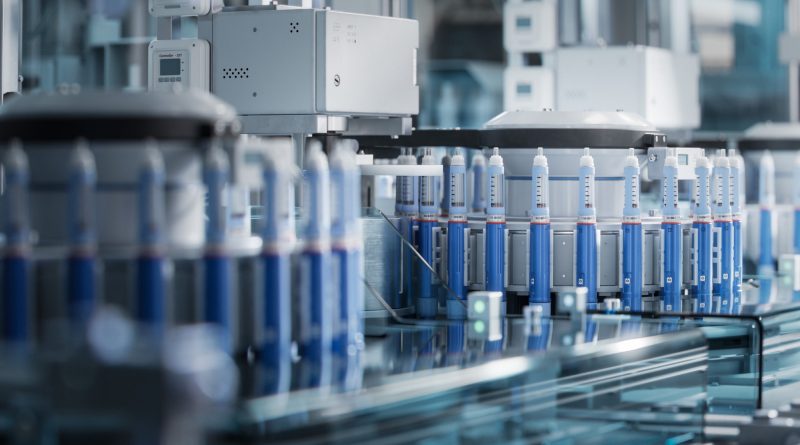
Eli Lilly broke ground on Nov. 12 on a $3.5 billion manufacturing facility in Pennsylvania’s Lehigh Valley, where it plans to make injectable obesity medicines, including the investigational drug retatrutide.
The site, in Fogelsville in Upper Macungie Township, is expected to be operational by 2031. Lilly says it will create 850 high-wage jobs for engineers, scientists, operations personnel, and lab technicians, plus about 2000 construction jobs.
It is one of 10 new US manufacturing sites Lilly has announced since 2020, and one of 4 among them dedicated to injectable medicines and devices. The company places the project within a $50 billion push to expand medicine production in the US.
The headline figures are large. The more revealing detail is what the plant is being built to make.
Lilly is building capacity for a drug that is not yet approved
When Lilly first set out its plans for the Lehigh Valley plant in January, it named retatrutide as one of the drugs the site would make. Retatrutide is a once-weekly injectable that acts on 3 hormone receptors: GIP, GLP-1, and glucagon. Lilly describes it as first-in-class. It is also still investigational. Lilly is running Phase 3 trials in obesity, type 2 diabetes, knee osteoarthritis pain, obstructive sleep apnea, chronic low back pain, cardiovascular outcomes, and a form of fatty liver disease. The company’s release states that the drug cannot be legally sold or marketed for human use and gives no guarantee of approval.
That makes the groundbreaking a capacity decision taken years before any regulatory decision.
“Obesity is one of the biggest health challenges of our time, and the science to treat it is moving quickly,” said Lilly Chair and CEO David A. Ricks.
The reasoning is easy to follow. The GLP-1 market has already shown how quickly demand for weight-loss injectables can outrun supply. Injectable medicines need sterile filling, device assembly, and inspection capacity that takes years to design, build, and qualify. A company that waits for approval before pouring concrete could spend its first years on the market rationing product.
Risk runs the other way too. If trials disappoint or approval slips, Lilly will have a specialist facility built around a product that is not ready. The plant is designed to make injectable medicines more broadly, which gives it some flexibility, but the retatrutide bet is explicit.
A 10-site program turns reshoring into a construction pipeline
The Lehigh Valley plant sits within a wider program. Lilly lists 5 new active pharmaceutical ingredient (API) sites: Richmond, Virginia; Huntsville, Alabama; Houston, Texas; and 2 in Lebanon, Indiana. Its 4 injectables and devices sites are in Research Triangle Park and Concord, North Carolina; Kenosha, Wisconsin; and now the Lehigh Valley. A genetic medicines site in Lebanon, Indiana, completes the set.
That spread matters for manufacturers and suppliers. API plants make the active drug substance. Injectable and device plants turn it into a finished product a patient can use, such as a prefilled pen. By building both kinds of site at home, Lilly is moving more of its supply chain, from ingredient to finished dose, onto US soil.
For the industrial economy, that means years of demand for construction contractors, cleanroom specialists, automation suppliers, and skilled operators. Pennsylvania Gov. Josh Shapiro credited the state’s “world-class workforce” for winning the investment. Lilly will also provide up to $1 million over 5 years to the Upper Macungie Township Community Fund.
Digital automation sits at the center of the plant’s design
Lilly says the Lehigh Valley site will use machine learning, AI, digitally integrated systems, and advanced data analytics, with digital automation throughout. The goal is “right-first-time” execution.
In pharmaceutical manufacturing, that phrase carries weight. At Lilly’s existing sites, each production run involves more than 5000 documented steps, and each unit is imaged and inspected more than 70 times for defects, according to the company. Any deviation can mean an investigation, a rejected batch, or a delay.
Edgardo Hernandez, executive vice president and president of Lilly Manufacturing Operations, linked the technology to reliability, saying the aim is to “do things right the first time” so patients can count on their medicines. The site is also targeting LEED Gold certification.
Automated quality control at this scale is where much of the advantage in injectable manufacturing now lies. Building a cleanroom is expensive. Running one consistently, at high volume and with minimal waste, is harder.
Two questions remain open. The first is whether retatrutide clears its trials and regulators in time to fill the plant when it opens in 2031. The second is whether Lilly’s 10-site build-out becomes a template for the rest of the industry, or whether rivals conclude that waiting for approval is the safer path. The answer will shape how much of the next generation of medicines is made in the US.
Source:
Eli Lilly and Company