
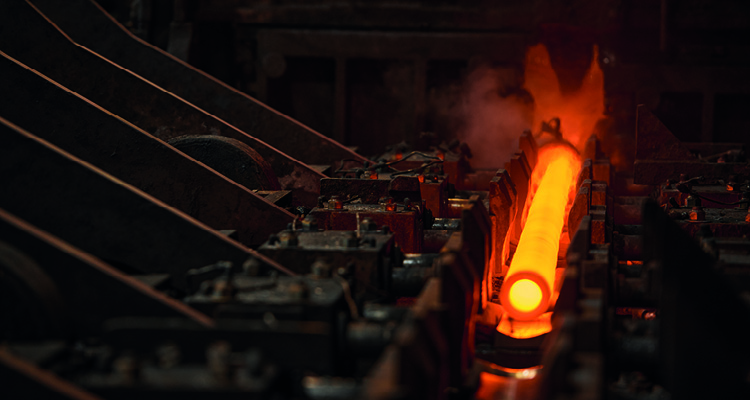
Metallus expands specialty metals production, defense partnerships, and manufacturing capacity across North America

When Metallus joined forces with the US Army and Department of Defense on a manufacturing investment program exceeding $130 million, it was more than a facility upgrade. This move signaled a broader shift in American manufacturing. Domestic supply chain resilience, reliable production, and defense readiness are now front and center for both industry and government.
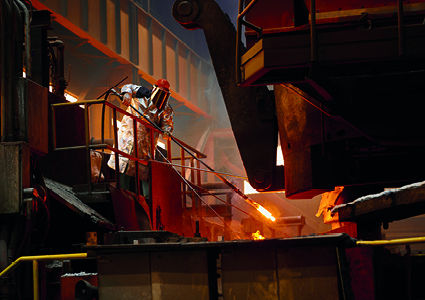
For Metallus, the significant investment made in its Ohio facilities not only boosts production capacity for specialty steels used in defense applications but also strengthens the company’s ability to better serve industrial, automotive, and energy customers. Mike Williams, Chief Executive Officer of Metallus, sees it as another step in the company’s evolution, with roots going back more than a century.
Headquartered in Canton, Ohio, Metallus’ steelmaking roots stretch back to 1917. Today, this publicly traded company produces special bar quality steel (SBQ), seamless mechanical tubing (SMT), engineered components, and supply chain solutions for customers in demanding environments. Its products support everything from automotive bearings and power transfer systems to aircraft landing gear, energy infrastructure, and munition programs.
Mike leads the company as end markets change, defense spending rises, and manufacturers feel pressure to invest for the future while staying financially disciplined. He drives strategy, operations, capital allocation, customer engagement, and long-term growth for a business generating approximately $1.2 billion in annual revenue.
Mike is no stranger to leading businesses through expansion, investment, and changing customer needs. With more than three decades in the metals sector, his experience spans operations, commercial leadership, business development, and corporate strategy, giving him a well-rounded perspective on how manufacturing organizations adapt and grow.
Before joining Metallus, Mike guided businesses through market shifts, operational improvements, and strategic repositioning. That combination of hands-on operational experience and broad strategic leadership gives him a clear understanding of both the factory floor and the larger forces shaping industrial markets.
Today, that perspective helps Metallus balance investment decisions, customer expectations, manufacturing performance, and shareholder priorities as the company navigates its next chapter.
Manufacturing momentum
Metallus operates a wide manufacturing footprint, offering more than 500 specialty steel grades tailored to customer requirements.
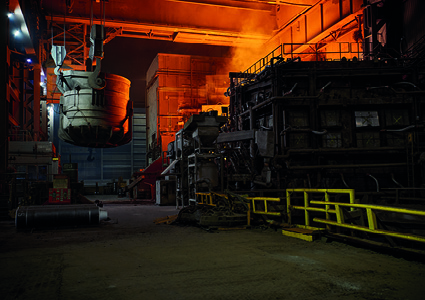
Its operations include three manufacturing facilities in Canton, Ohio. Faircrest serves as the company’s melt shop and large-bar operation; Harrison focuses on small-bar production; and Gambrinus manufactures seamless mechanical tubing and houses thermal treatment processes. Beyond Canton, Metallus operates component manufacturing facilities in Eaton, Ohio, and Columbus, North Carolina, while a distribution and sizing center in Mexico supports customers across North America.
Mike points to what sets the operation apart. “We’re a leading manufacturer of high-quality specialty steels. We produce 100 percent of our steel from recycled scrap metal using electric arc furnace technology. We offer the industry’s largest range of SBQ sizes, from one inch to 16 inches in diameter. And we’re the largest domestic seamless tube producer in the US,” he explains.
Where and how Metallus manufactures makes a big difference. The company employs about 1890 people across facilities in the US and Mexico, with Canton at the heart of its steelmaking. Metallus controls most of the production process, from melting and rolling to heat treatment and finishing. As more customers focus on supply chain transparency and domestic sourcing, this manufacturing footprint offers both visibility and flexibility.
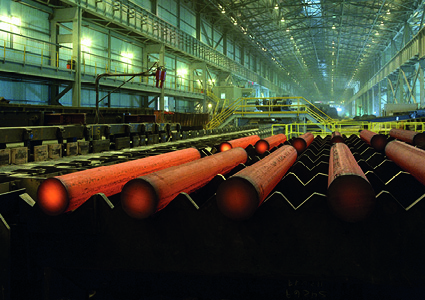
Seamless mechanical tubing is a core product. Many outside the industry may not recognize the distinction, but this tubing is used in applications with strict performance requirements. “You’ll find two main types of tube manufacturing. One is seamless, which means there’s no welding or weld lines. The piercing process creates it, and it’s typically used in applications needing specialty steel grades to withstand extreme heat, corrosion, and high strength,” he shares.
These capabilities give Metallus more than just a manufacturing advantage. They form the foundation for the company’s next stage of growth, putting it at the intersection of industrial demand, defense readiness, and advanced materials development.
That transformation became clear when TimkenSteel formally became Metallus. The business had operated independently since its separation from The Timken Company in 2014, but leadership believed the old brand no longer matched the company’s direction. The change was more than just a new name. It was an effort to redefine how customers, investors, and partners see Metallus.
“When we began transforming and improving our financial performance, we also wanted to clear up any confusion about our ownership. We’re a separate company. At the same time, we started exploring specialty metals applications to grow the business, especially in aerospace and defense. We wanted to stand out as a multi-metal solution provider and a high-end specialty steel provider, not just a power transmission supplier,” Mike says.
The rebrand aligned with a broader strategy to expand Metallus’ role in markets where material performance, supply security, and technical expertise are increasingly important.
Defense demand
Few developments have shaped the company’s recent trajectory more than the growth of its aerospace and defense business.
Metallus has supplied specialty steels for defense applications for many years; however, recent macro conditions have accelerated conversations with government partners. Those conditions led to discussions between Metallus, the Department of Defense, and the US Army about future production requirements.
“National security made it clear we needed to improve domestic production of these specialty steels for supply chain security. We told them we needed key asset upgrades and new equipment to remove bottlenecks and meet growing demand for specialty steels in defense and aerospace. So, we partnered and we’re now commissioning and ramping up those assets. This not only removes bottlenecks for our specialty products and provides what the Department of Defense needs, but it also benefits many of our products for industries beyond aerospace and defense,” he notes.
The resulting investment package combines roughly $100 million in government funding with an estimated $30 million to $35 million from Metallus itself. New equipment and process improvements intend to increase output while improving efficiency across operations.
Progress has been tangible. By the end of 2025, Metallus had received $85.6 million in funding under the Army agreement, supporting the installation and commissioning of new assets across its manufacturing operations. During the same year, it invested $109 million in capital projects designed to support capacity expansion and operational priorities.
Although confidentiality agreements limit what Metallus can share publicly, one program is public: the 155-millimeter howitzer-based munition program. “The US Army wants to increase production from around 14,000 shells per month to 100,000 shells per month for several years. We have a long-term agreement with the OEM to provide the raw materials for this ramp-up.” The impact is already clear. Aerospace and defense sales rose 19 percent in 2025 to $160.6 million, 14 percent of total revenue, up from 12 percent the previous year and eight percent in 2023. These results show both rising demand and Metallus’ growing presence in its strategic markets.
The work has strengthened Metallus’ position within defense manufacturing while reinforcing the importance of domestic steelmaking capability. At the same time, Mike views aerospace and defense as one element of a balanced business. Automotive, industrial, and energy customers remain central to the company’s performance, and growth plans are designed to diversify rather than concentrate exposure.
For Mike, diversification starts with the customer. As applications become more demanding, Metallus is developing products designed to address a wider range of performance requirements.
Metallus recently rolled out vacuum arc remelt (VAR) and vacuum induction melt (VIM) products for demanding applications. “We added VAR and VIM last year. These specialty steels stand up to tough temperatures, corrosion, and strength requirements. As we grow in these markets, more customers choose us, and we’ve landed several new programs and contracts. It’s about balancing our portfolio and moving into more specialty areas,” he adds. These developments show new opportunities emerging in the market.
Leading into the future
Mike’s academic background is uncommon within the industry. He earned a degree in information science with a focus on software engineering from the University of Pittsburgh; an education that continues to influence his approach to manufacturing.
While metallurgy remains at the heart of Metallus’ business, technology increasingly shapes how products are made, monitored, and delivered. That influence is evident in ongoing operational investments across the business.
Metallus continues to fund initiatives from its own budget. “We recently installed an automated grinding line with our own resources. We’ve made targeted investments for efficiency improvements in quality, manpower, yield, and material recovery from start to finish,” he reports.
Sustainability as a driver
The investments align with sustainability objectives that have become part of the company’s strategic agenda. Metallus has established 2030 targets that include a 40 percent reduction in Scope 1 and Scope 2 emissions, a 35 percent reduction in fresh water withdrawal, a 30 percent reduction in energy consumption, and a ten percent reduction in waste-to-landfill intensity.
Environmental stewardship sits alongside employee safety and wellbeing, governance, and ethics within a framework it calls “People. Passion. Principles.” For Metallus, sustainability connects directly to manufacturing performance, resource use, and long-term competitiveness.
Path forward
Growth, meanwhile, is not expected to come solely through internal investment. Metallus continues to evaluate acquisition opportunities and partnerships that complement its capabilities and market position. Its expanding relationship with government agencies demonstrates one side of that strategy, while future partnerships may provide access to additional technologies, products, and markets. As demand evolves across aerospace, defense, industrial, automotive, and energy sectors, Mike sees collaboration as another path toward strengthening the business.
Momentum has continued into 2026. In its latest results, Metallus reported its order book jumped by more than 50 percent year-over-year. This growth gives the company greater visibility as new equipment comes online and aerospace and defense programs ramp up. Reflecting on those results, Mike says, “Our aerospace and defense product line delivered strong growth as we expanded customer relationships, increased our presence, and achieved new orders in these strategically important markets. We also advanced our government-funded assets to support the growth in 2026 and beyond.”
Looking ahead, Mike believes technology will play an even bigger role in how Metallus boosts performance and meets customer demand. “We expect to be more balanced and diversified across markets, with significant growth in the aerospace and defense end market. That’s where we’re focusing investments. That’s where we’re building partnerships to serve aircraft, munitions, and weapon systems, while staying strong in automotive, industrial, and energy. By improving shop floor execution and innovating with steelmaking technology, robotics, and AI, we’ll improve safety, our environmental footprint, and operational efficiency to meet market demand over the next several years,” he predicts.
The statement captures much of what now defines Metallus. Manufacturing expertise remains the foundation. Investment continues across facilities. Defense programs are creating opportunities. Specialty products are expanding. Technology is becoming more integrated into operations.
For a company entering the next phase of its history, the focus remains on building from that foundation rather than departing from it.
“We’re excited about our future. We’re moving toward a balanced mix of specialty products and market applications like aerospace, defense, industrial, and energy. That’s where I see us. It’s about continuing to improve, strengthening our balance sheet, and sharing our success with our shareholders,” he concludes.
