
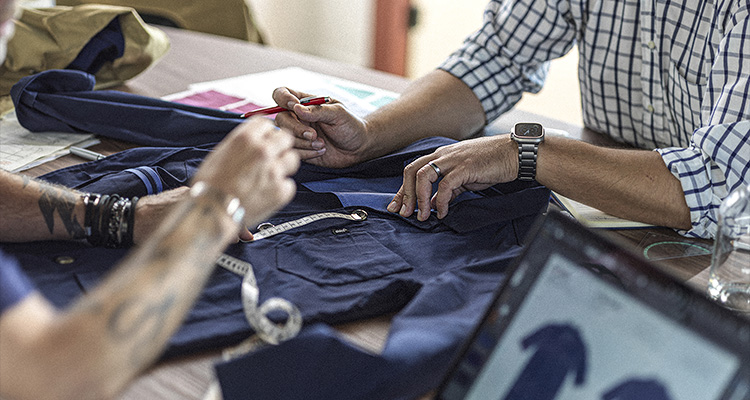
More than workwear providers, alsico pushes boundaries and engineers clothing that redefines excellence

alsico stands as one of the world’s largest workwear providers, with nearly 100 years of experience and a turnover of around €300 million. Founded in Belgium in 1934 by Leopold Aelvoet, the company’s reputation for innovation was cemented by Leopold’s son-in-law Gaston Siau, who introduced specialist garments and expanded production globally. Today, fourth-generation leaders Gauthier and Vincent Siau continue this legacy of forward-thinking growth.
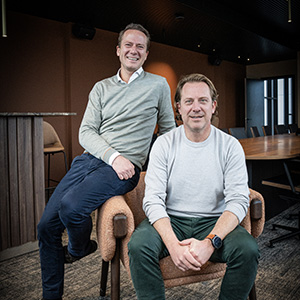
What sets alsico apart is its demand driven workwear model and a continual search for innovation and sustainably focused improvements to its garments. Delivering on a promise that ‘Our Performance Protects Yours’, the business regards its garments as ways to enable its clients’ growth, by ensuring their teams are safe and comfortable. From healthcare to electrification and contamination control, alsico can supply garments to all workwear environments. As Vincent Siau, Managing Director at alsico EU, explains, a dedication to understanding each clients’ needs is at the heart of its operation. “We must find the balance of performance and price. Not over-engineering, or simplifying, but understanding challenges and the hazards workers face.
“At the end of the day, our garments are protecting humans, and that is something precious. We use the phrase ‘everyone matters’ to remind us of exactly that,” he adds. Obsessed with quality, alsico creates its own performance fabrics that offer comfort, washability, stretch, and shape recovery, as well as having less environmental impact while protecting both clients’ brands and reputations.
Gauthier Siau, alsico Group CEO, explains that around 70 percent of alsico’s clients are industrial laundries. “They buy our garments and mainly lease them to the end user. We have always had very strong relationships with industrial laundries, because our garments are very robust and durable. This, combined with our streamlined supply chain and short lead times, makes us the number one preferred choice for laundries in Europe.”
While valuing its work with laundries, extending its direct-to-end user relationships is currently a priority. “End users are very interesting because they give us a lot of feedback on how to further develop products, and that is very valuable,” adds Gauthier.
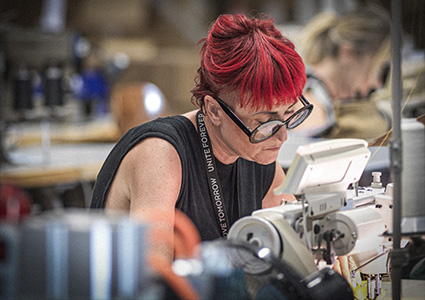
The company’s garments are produced by over 8000 staff within 21 factories. “These are based around the world in 11 countries, including Laos, Thailand, Madagascar, Tunisia, Morocco, Ukraine and Mexico,” states Gauthier. Setting itself apart in the market, alsico made the strategic choice to own these production facilities, limiting its work with subcontractors and vastly increasing its control over quality, working conditions and lead times.
A demand-driven approach to sustainable workwear
alsico further differentiates itself through a demand, rather than supply driven approach. “In general, clothing brands are supply-driven, and that means they make buying decisions almost three years in advance. They must forecast trends and predict changing customer behaviors, then create collections that attempt to meet every anticipated need. This requires large production runs and extensive warehousing – all before knowing what customers will want. The model then relies heavily on marketing to push these pre-made products to market,” explains Vincent.
“Fundamentally, demand-driven is the opposite,” he continues. “We don’t have the catalogs or stocks. Instead, we go to the customer, we listen, we bring our expertise to the table, and together we agree on what is needed. At that point we put the production in place, and when garments are complete, they go straight to the end user.”
This approach requires a completely different supply chain set up, a high degree of flexibility and fast reaction times. “When we get an order, six weeks later it must be with the customer. While there are always some constraints on what we can do at a realistic price point, we must be extremely nimble, both up and downstream. That is another reason why we have our own production units to support our demand driven model. It would be very difficult to manage otherwise,” adds Gauthier.
This demand-driven philosophy helps alsico deliver to targeted industries. “We focus on large, complex businesses – pharmaceutical and semiconductor manufacturing where we’re number one in Europe and the US, and healthcare where we’re the main supplier for the NHS,” says Gauthier. Blue-chip clients such as Deutsche Bahn, DHL, openreach and Volvo know that if they have a workwear challenge, alsico can help. “The customer feedback helps us create even more innovative garments,” he adds.
This approach also helps to eliminate overconsumption and vastly reduce stocks of finished goods. It is becoming more popular, particularly in Europe where legislation is pushing the market to produce less waste.
This ties into the concept of environmental responsibility – a huge priority for alsico. “Our focus on this started around 15 to 20 years ago and was based on a customer’s feedback. They told us when the garments were at the end of their life, it was our waste, and we need to collect and dispose of it. At first, I thought it was annoying! But over the years, the search for a solution has evolved into something positive,” Vincent states.
This journey has resulted in alsico’s Better Future System, a framework guiding its sustainability commitments. Central to this is arx, alsico’s circular economy program for care, repair, rework, and recycling. Designed specifically for professional textiles – which differ significantly from consumer garments – arx emphasizes extending garment life through proper maintenance, laundry, and repairs. When garments are no longer needed but still in good condition, they can be reworked into new products; at true end-of-life, they enter the recycling stream. It’s a comprehensive approach to creating circularity in the workwear sector.
alsico is taking this further with the 3CL initiative, working collaboratively with partners from laundries to sorters and recyclers. “We are constantly undertaking pilot projects to test how they handle recycling performance fibers and assess the cost. There is an economic reality that must be considered,” Vincent states.
For alsico, circularity starts with responsible material choices, and it has a goal to achieve 90 percent recycled fibers by 2040. Its first major step has recently been realized, with the launch of Kibo, made from 65 percent recycled polyester, and created from its own end-of-life garments.
Drawing on their experience with innovation, Vincent and Gauthier take a pragmatic approach to the Kibo launch. “We looked at the market, where the most common fabric is 65 percent polyester, 35 percent cotton, and we’re sticking with that ratio. But our polyester will be completely made from recycled textiles, so we’re walking away from virgin fossil fuels,” says Vincent. With no price difference to traditional fabrics, there’s nothing holding customers back from making the sustainable choice.
Solutions such as Kibo wouldn’t be possible if it wasn’t for the alsico academy, alsico’s internal research and development hub. Its team of experts, including designers, fabric specialists, and scientists, are tasked with advancing garment technology to improve wearer safety, comfort, and sustainability. “What is important about the academy, is that it is focused both on humans and garments,” notes Vincent. “The garment is where the innovation is and the R&D goes, but the human part is important because it touches everything from the human perspective – not just the wearing but also extending to much wider areas such as biodiversity and sustainability – tying back to our Better Future system.”
Beyond environmental sustainability, Vincent points to additional long-term ESG strategies included in the Better Future system. “We recognize that our social responsibility to people is very important, especially given we have factories around the world, and we have some employees in very poor countries. We are also dedicated to minimizing the impact of our operations along the supply chain.”
alsico is also reimagining how it presents itself to the market, following a substantial rebrand in 2024. All brands now operate under the unified alsico banner. “We analyzed the business’ various brands and found one common factor – nobody knew them! Really there was little differentiation, but there were needless effort and resources being allocated to areas that could be centralized,” Vincent explains.
The rebrand goes beyond a logo change. “We employ over 8000 people, spread over four continents, sharing different time zones, languages, cultures and religions. Having one brand where everybody can find their own common values and be aligned to the same purpose is valuable,” says Vincent. The consolidation ensures customers receive a unified, high-quality experience with streamlined processes and better communication.
Looking to the future, alsico is positioning itself to address market evolutions. “Of course it’s hard to predict, but in Europe, we foresee new legislation coming, which will force a move to a subscription model, with services associated to it,” says Vincent. Thanks to its years of expertise working with laundries who lease or rent garments, alsico is ready to help its expanding client base with any changing requirements.
The group is also determined to raise its market profile. “In the past we referred to alsico as the best kept secret in Europe, because while we were big, we seemed to be the only one who knew about our offering! That is something we are working hard to change,” ends Gauthier. As it strives to be the go-to partner for businesses seeking solutions that enhance employee performance and well-being, alsico is committed to becoming an even more responsible and sustainable workwear company, positioning itself as the world’s premier provider.
