Mulcahy Company invests in future HVAC workforce as AI uncertainty pushes a new generation toward skilled trades

For over 95 years, Mulcahy Company (Mulcahy) has delivered high-quality products and unmatched customer service across the Midwest. With a strong reputation in the commercial HVAC and plumbing industries, the company is committed to investing in its team and capabilities as it continues to diversify.
“Mulcahy has been around since 1929, originally starting in fluid handling with a particular focus on pumps. Over the last 30 years, we have diversified considerably, moving into the HVAC space as a manufacturer’s representative and distributor, specializing in hydronics and radiant floor heating and cooling. More recently, we have also expanded into forced air distribution, which is the more common methodology for heating and cooling commercial buildings across the US, and especially in the Upper Midwest. On the residential side, we sell through wholesale distributors, but our primary customer base is mechanical contractors. We do a lot of work with the trades, building owners, and facilities managers to keep their buildings warm in winter and cool in summer,” begins Rob Grady, President and CEO.
The strategy guiding that diversification has been very clear from the start. Mulcahy’s roots are in radiant floor heating and hydronics, but as a manufacturer’s representative, geographic boundaries limit how far the core business can grow. One of Rob’s primary responsibilities is to ensure the business keeps growing and stays relevant in the marketplace. The move into forced air was a natural fit as over the years, Mulcahy had built a team with tremendous experience drawn from contractors, institutions, and universities, most of whom had cut their teeth on forced air systems rather than radiant floor heating. That untapped expertise represented a great opportunity to add value, and as an employee stock ownership plan (ESOP) business, every dollar generated goes directly to the employees, making growth even more meaningful. There was also a competitive dimension to this strategy. The significant concentration among manufacturers’ representatives in the area meant that by leveraging its internal experience and positioning itself as a complete HVAC solution provider, Mulcahy could carve out a stronger and more distinctive place in the market.
Being an ESOP with a strong industry reputation has given Mulcahy advantages that many of its competitors do not enjoy. This is especially true when it comes to attracting talent. While the wider industry has struggled with workforce shortages, Mulcahy has been relatively untouched by those issues. The greater concern in recent years has been the knock-on effect on its customers. “Our reputation has meant that finding talent has not been a major challenge for us. What has been harder to watch is our customers, the mechanical contractors, struggling to find skilled workers. When the union hall is empty because everyone is out working in the field, anyone who needs more staff simply cannot find them. As an organization, we are passionate about connecting with and giving back to our communities in ways that go beyond generating revenue. For example, we have worked directly with union halls and helped install and provide equipment for the pipefitter’s union in Minneapolis, helping tradespeople understand how their work connects to the equipment on either side of the pipes they are installing. Moreover, we do a lot of outreach through speaking engagements and partnerships with trade schools because in the Upper Midwest, where it is cold for more months than it is warm, these skills really matter.
“One of the most encouraging things to come out of the rise of artificial intelligence (AI) is that trade schools now have waiting lists, something that would have been unthinkable not long ago. A key driver of this renewed interest in the trades is that the perception that a university degree is the only route to a successful career has been shaken due to fears that AI might take over certain jobs. When skilled tradespeople can earn strong wages throughout their careers and get many benefits while AI uncertainty hangs over white-collar professions, the calculus starts to look very different. I have been with this company for 12 years, and this is the first time that skills shortages have not kept me up at night. That said, the challenge has not completely gone away: the people now entering trade schools will not complete their education for another two years, and then their apprenticeship programs begin. There is still a labor gap we need to work through, and that means continuing to advocate for more people to get into the trades, investing in our people and our communities, and making Mulcahy the kind of place people want to be part of,” he expands.
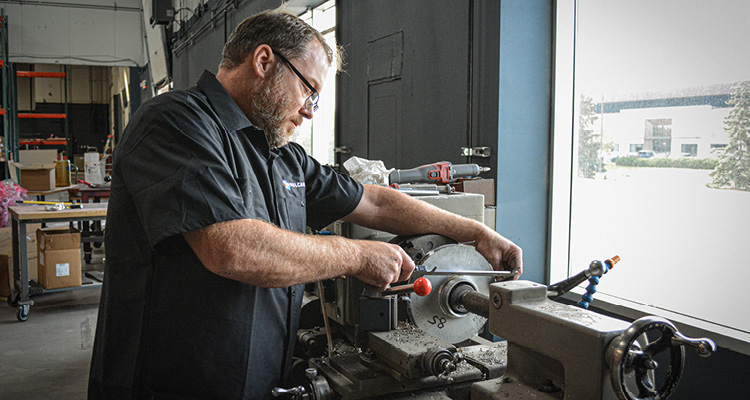
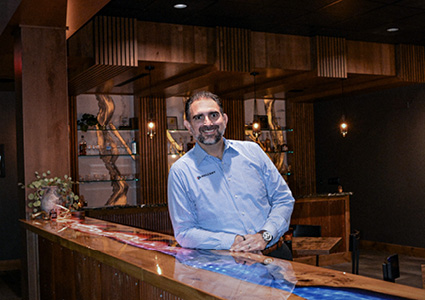
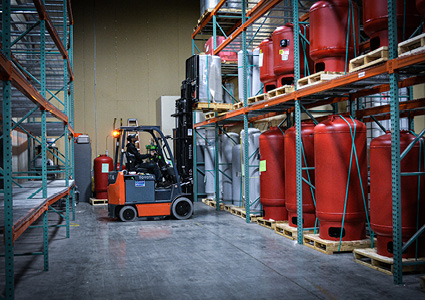
Having the right people in place matters enormously, but it must be matched with the right equipment and infrastructure, an area Mulcahy has been investing in significantly. “As a manufacturer’s representative, we are largely a middleman that relies on original equipment manufacturers (OEMs) to produce the product we sell, whether that comes direct from their factories or through our warehouse. Our investments across the board have been focused on how we can best serve and engage our customers at every touchpoint. On the customer-facing side, we have invested heavily in a new customer experience center where we can train, demonstrate our products, and connect with customers in a way that goes well beyond looking at a catalog page. On the back of house side, we have grown our inventory by approximately 30 percent and invested meaningfully in our assembly capabilities by adding lathes and a paint booth. A couple of years ago, we also purchased a dedicated third lathe for stainless steel, because it is a material that is slower and harder to turn down,” he concludes.
Supply chain has also been a persistent challenge since 2021, exacerbated by the current geopolitical climate, rising oil costs, and freight pressures. By investing in its assembly and finishing capabilities, Mulcahy is taking back more control of the value chain, resulting in better, more reliable service for its valued customers.